





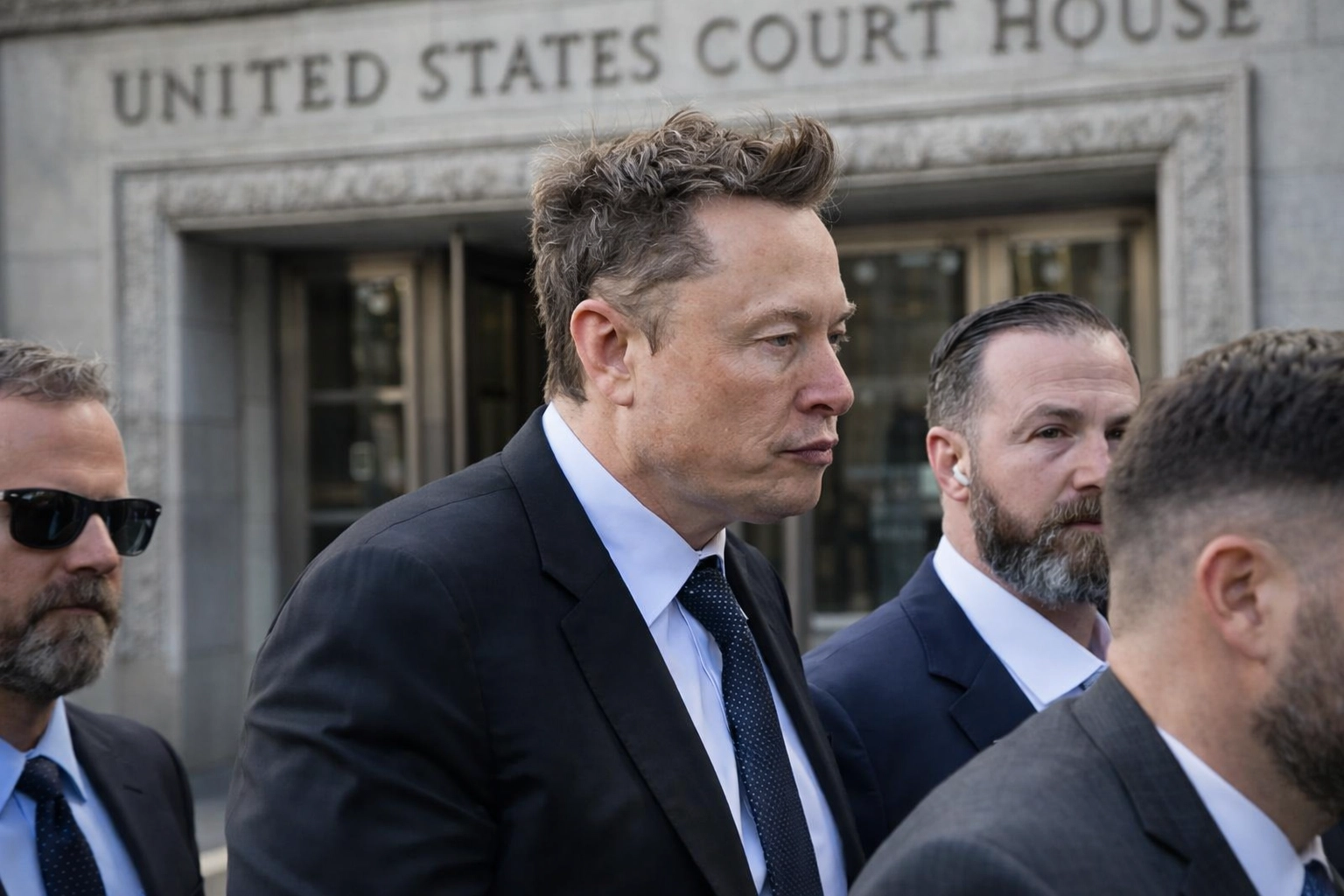
Elon Musk has once again found himself at the centre of a legal firestorm. A federal jury in San Francisco has ruled that the billionaire entrepreneur misled investors during his chaotic takeover of Twitter back in 2022. The verdict, delivered on Monday, marks a significant moment in the ongoing saga of Musk’s relationship with the social media platform now known as X. While Musk is no stranger to the courtroom, this particular case hits him where it hurts: his reputation for transparency and his wallet.
The class-action lawsuit, which represents a group of investors who sold Twitter stock between May and October 2022, argued that Musk deliberately drove down the share price through a series of misleading tweets. The jury agreed that two of his most infamous posts during that period were materially false. It is a decision that could see Musk on the hook for billions of dollars in damages, adding another layer of complexity to his already turbulent business portfolio.
The trial, which kicked off at the start of March, delved into the messy months following Musk’s initial 44-billion-dollar offer to buy the company. At the time, the world watched as the richest man on the planet seemingly changed his mind in real-time, using his own Twitter account to cast doubt on the deal. The jury’s job was to figure out if those public doubts were genuine concerns or a calculated attempt to manipulate the market.
How Two Tweets Moved Twitter’s Share Price
The heart of the legal battle centred on two specific dates: May 13 and May 17, 2022. On those days, Musk took to his keyboard to claim that the Twitter acquisition was "on hold." His reasoning? He alleged that the company had massively underreported the number of bot and spam accounts on the platform. Twitter had long maintained that bots made up less than 5% of its user base, but Musk publicly challenged this, suggesting the real number was much higher.
When those tweets hit the internet, the reaction was immediate. Twitter’s share price plummeted as investors began to fear that the 44-billion-dollar deal was about to collapse. Those who sold their shares during this period of uncertainty claim they were cheated out of a fair price. They argued that Musk was using the "bot problem" as a smokescreen to negotiate a lower purchase price or to find a way out of a deal that he had come to regret.
The jury found that Musk’s statements about the bot counts were "materially false or misleading." This is a heavy blow for Musk’s legal team, who had argued throughout the trial that their client was simply expressing his honest opinions. They portrayed him as a passionate tech leader who was genuinely concerned about the integrity of the platform he was about to buy. However, the evidence suggested otherwise to the jury, who saw his actions as a breach of securities law.
The impact of those tweets cannot be overstated. In the world of high-stakes finance, words are just as powerful as cash. When a man of Musk’s influence suggests a multi-billion-dollar deal is on the verge of failure, the market reacts with speed and ferocity. By casting doubt on Twitter’s own data without providing immediate evidence, Musk created a vacuum of confidence that cost individual and institutional investors dearly.
Jury Finds Liability, While Intent Is Still Disputed
Interestingly, while the jury found Musk liable for fraud regarding those specific tweets, they did not go as far as to say he was part of a "deliberate scheme" to defraud investors. This is a nuanced distinction that Musk’s lawyers have already latched onto. It suggests that while the information he shared was false, he might not have been operating with a long-term, calculated plan to deceive everyone for his own gain.
The jury also absolved Musk of fraud allegations related to comments he made on a popular podcast during the same period. In that appearance, Musk had expanded on his theories about spam accounts and the platform’s management. The legal team successfully argued that those comments were more akin to casual conversation and didn't carry the same weight as his official public declarations on Twitter.
This partial victory offers a small silver lining for the billionaire, but it doesn't erase the liability for the tweets. The San Francisco court has been the stage for several of Musk’s legal dramas, including the 2018 "funding secured" trial where he was actually cleared of wrongdoing. This time, however, the outcome is different. The jury’s decision to hold him responsible for misleading investors highlights a growing trend of holding tech executives accountable for their social media output.
The trial also featured testimony from former Twitter executives and data scientists, many of whom testified that the 5% bot figure was accurate based on their internal methodologies. The clash between corporate data and Musk’s "gut feeling" was a central theme. The verdict suggests that in the eyes of the law, a billionaire’s intuition does not overrule a company’s disclosed financial data, especially when that intuition is shared with millions of followers.
Damages and What an Appeal Could Change
So, what does this actually mean for Musk’s bank balance? The exact figure for damages hasn't been set in stone yet, but the jury has provided a framework. They awarded shareholders between three and eight dollars per share for every day they held the stock during the relevant period. When you multiply that by the millions of shares traded during those months, the total could reach as high as 2.6 billion dollars.
This is a staggering amount, even for someone as wealthy as Elon Musk. While he certainly has the assets to cover it, the liquid cash required for such a payout could force him to sell even more of his Tesla stock, a move that often triggers further market volatility. Musk’s attorneys have already branded the verdict as "a bump in the road" and have confirmed their intention to appeal the decision. They remain confident that the ruling will be overturned in a higher court.
Beyond the immediate financial cost, this ruling sets a massive precedent for the future of corporate communication. For years, Musk has treated Twitter as a playground where he can speak his mind without the filters usually required of a CEO of a public company. This verdict sends a clear message: if you use social media to discuss material business facts, you better make sure those facts are accurate. The days of "moving fast and breaking things" in the world of securities law appear to be coming to an end.
As the legal teams prepare for the next round of appeals, the focus remains on the broader implications for the economy. If high-profile investors can successfully sue for damages based on social media posts, we might see a more cautious approach from tech leaders in the future. For now, Musk continues to run X, Tesla, and SpaceX, but this San Francisco verdict serves as a stark reminder that even the world’s most powerful people have to play by the rules when it comes to the stock market.
The saga is far from over. With the appeal process likely to drag on for months, if not years, the final cost of Musk’s "Twitter tangle" remains to be seen. What is clear, however, is that the 2022 takeover continues to haunt him, and the investors who felt slighted by his tweets have finally had their day in court. Whether this leads to a permanent change in how Musk communicates with the world is another question entirely.
The legal battle continues to develop, with further hearings scheduled to finalise the exact payout amounts for the class-action members. As always with Elon Musk, the world will be watching to see how he reacts to this latest setback in his high-speed career.