As we move through April 2026, the atmosphere across the UK is thick with a sense of weary familiarity. The latest round of industrial action within the National Health Service has taken hold, marking what many describe as a breaking point for a system that has been the backbone of British society for decades. While the headlines often focus on the staggering financial figures and the political sparring in Westminster, the actual story lives in the quiet hospital corridors and the living rooms of families waiting for news. This isn't just a dispute over pay scales and rotas; it is a profound human crisis that affects every single one of us.
At NowPWR, we believe in providing independent news uk residents can trust, moving beyond the soundbites to look at the real-world consequences of these events. The strikes, now entering their 15th round for resident doctors, have created a landscape of uncertainty. For those on the outside, it might look like a simple tug-of-war between the government and the unions. But when you step inside the wards, the reality is far more complex. It’s about people: tired, frustrated, and often heartbroken people trying to navigate a system that feels like it’s slipping through their fingers.
The financial cost is, of course, eye-watering. Recent data suggests that the ongoing strikes have cost the NHS more than £3 billion over the last three years. To put that into perspective, that’s roughly £50 million every single day that the picket lines are active. While that money covers emergency staffing and the logistical headache of rescheduling, the missed opportunity is what really stings. That £3 billion could have funded three brand-new hospitals or paid for over a million life-changing operations. Instead, it is being spent to keep the lights on during a period of unprecedented friction. This fiscal strain is a massive part of the pressure already felt in communities across the country.
The invisible burden on healthcare workers
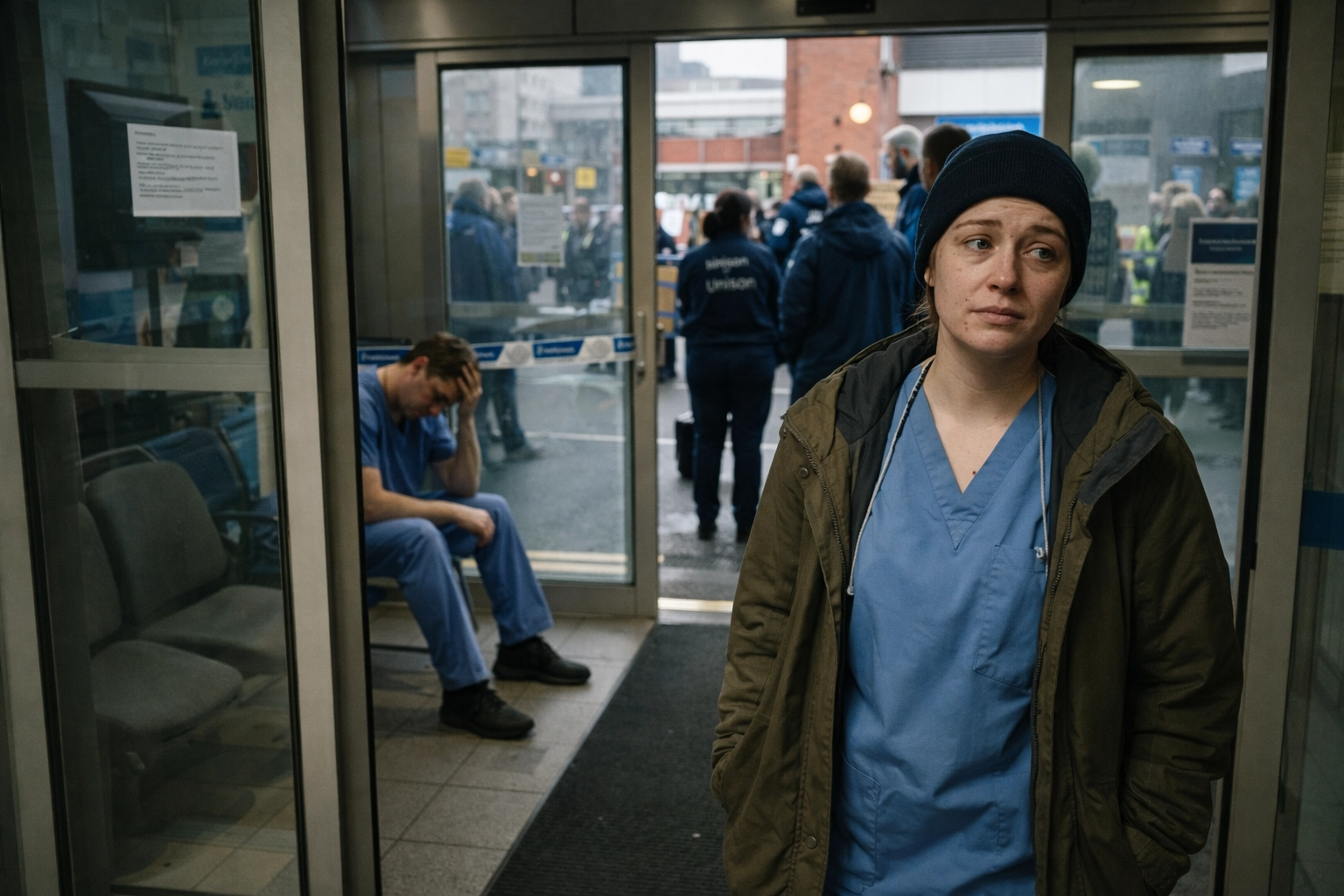
When we talk about the strikes, we have to talk about the people holding the stethoscopes. For many doctors and nurses, the decision to walk out isn't one made lightly. It’s a choice born out of years of feeling undervalued and overworked. We’ve heard many untold stories of junior doctors who, despite years of intensive training, find themselves struggling to keep up with the cost of living while working 60-hour weeks. The "pay erosion" isn't just a buzzword; for them, it's the reality of seeing their purchasing power diminish year after year while the pressure of the job only intensifies.
Burnout has become an epidemic within the profession. In the context of the NHS, it takes on a much grimmer tone. Doctors aren't just tired; they are morally distressed. They are working in an environment where they feel they can no longer provide the level of care their patients deserve. This leads to a "brain drain" that is hard to ignore. We are seeing some of our most talented medical professionals choosing to hang up their scrubs or move abroad to systems that offer better work-life balance and higher remuneration.
The human cost for the staff also includes the guilt associated with striking. No one goes into medicine to leave patients waiting. There are real conversations happening in break rooms across the country about the ethics of these actions. Many staff members feel that if they don’t stand up now, there won’t be a functional NHS left to protect in the future. It’s a high-stakes gamble with their own careers and the health of the nation, and the emotional toll of that responsibility is immense. The mental health of our frontline workers is a critical issue that often gets buried under the debate about percentage increases and budget deficits.
The ripple effect on patient lives
On the other side of the picket line are the patients. For the person whose hip replacement has been postponed for the third time, or the parent waiting for their child’s non-urgent but necessary surgery, the strikes are a source of deep anxiety. While emergency and urgent care are always maintained, the backlog of "pre-planned care" is growing at an alarming rate. It isn’t just about the delay; it’s about the life that is put on hold during that waiting period.
The disruption to outpatient appointments means that early diagnoses are being missed, and chronic conditions are being managed over the phone rather than in person. We have to consider the psychological impact on someone who has spent months mentally preparing for a procedure, only to have it cancelled at the eleventh hour. These aren't just statistics on a spreadsheet; these are individuals dealing with pain, limited mobility, and the fear that their condition might worsen while they wait for a new date.
The burden often falls on the families as well. When a patient can't get the treatment they need, their loved ones often have to step in as primary caregivers, sometimes taking time off work or sacrificing their own wellbeing to fill the gaps in the system. This creates a secondary layer of stress that ripples through the entire community. The trust between the public and the health service, once considered sacred, is being tested. While many still support the right of workers to strike, that support becomes harder to maintain when it’s your own family member sitting on a waiting list that seems to have no end.
Navigating the path to a resilient NHS
So, where do we go from here? The current situation is clearly unsustainable. The 15th round of strikes in April 2026 serves as a stark reminder that the traditional methods of negotiation are failing. We need a new approach that moves beyond the immediate pay dispute and looks at the structural integrity of the NHS. It is a serious political issue, but it is also a practical one that affects everyday life.
Addressing the crisis requires more than just a one-off payment to settle a strike. It requires a long-term commitment to workforce planning, improving working conditions, and modernising the infrastructure of the health service. The £3 billion lost to strikes could have been a transformative investment in the training of the next generation of healthcare professionals. Instead, we are caught in a cycle of reactive spending that does little to address the root causes of the discontent.
There is also a need for more transparent and real conversations between the government, the unions, and the public. The rhetoric on both sides often obscures the reality of the situation, making it difficult for the average citizen to understand what is truly at stake. Independent news uk outlets have a responsibility to cut through the noise and present the facts, however uncomfortable they may be. We need to ask the difficult questions: How much is a life worth? What is the fair price for the expertise of a surgeon? And how do we build a system that is resilient enough to withstand the challenges of the 21st century?
The ongoing strikes are a symptom of a much deeper malaise within the UK’s social and economic fabric. They highlight the tension between the rising costs of advanced medicine and the limitations of a tax-funded system. As we look forward, the focus must remain on the human beings at the heart of the service: both those who provide care and those who receive it. Only by acknowledging the profound human cost of the current stalemate can we hope to find a way forward that preserves the NHS for generations to come.
The situation remains fluid, and the impact of the current round of strikes will be felt for months, if not years, to come. As the nation watches and waits, the hope is that a resolution can be found that prioritises the health and dignity of everyone involved. For readers looking for independent news uk coverage grounded in untold stories and real conversations, this remains one of the clearest examples of how national policy decisions shape daily life in very personal ways.