



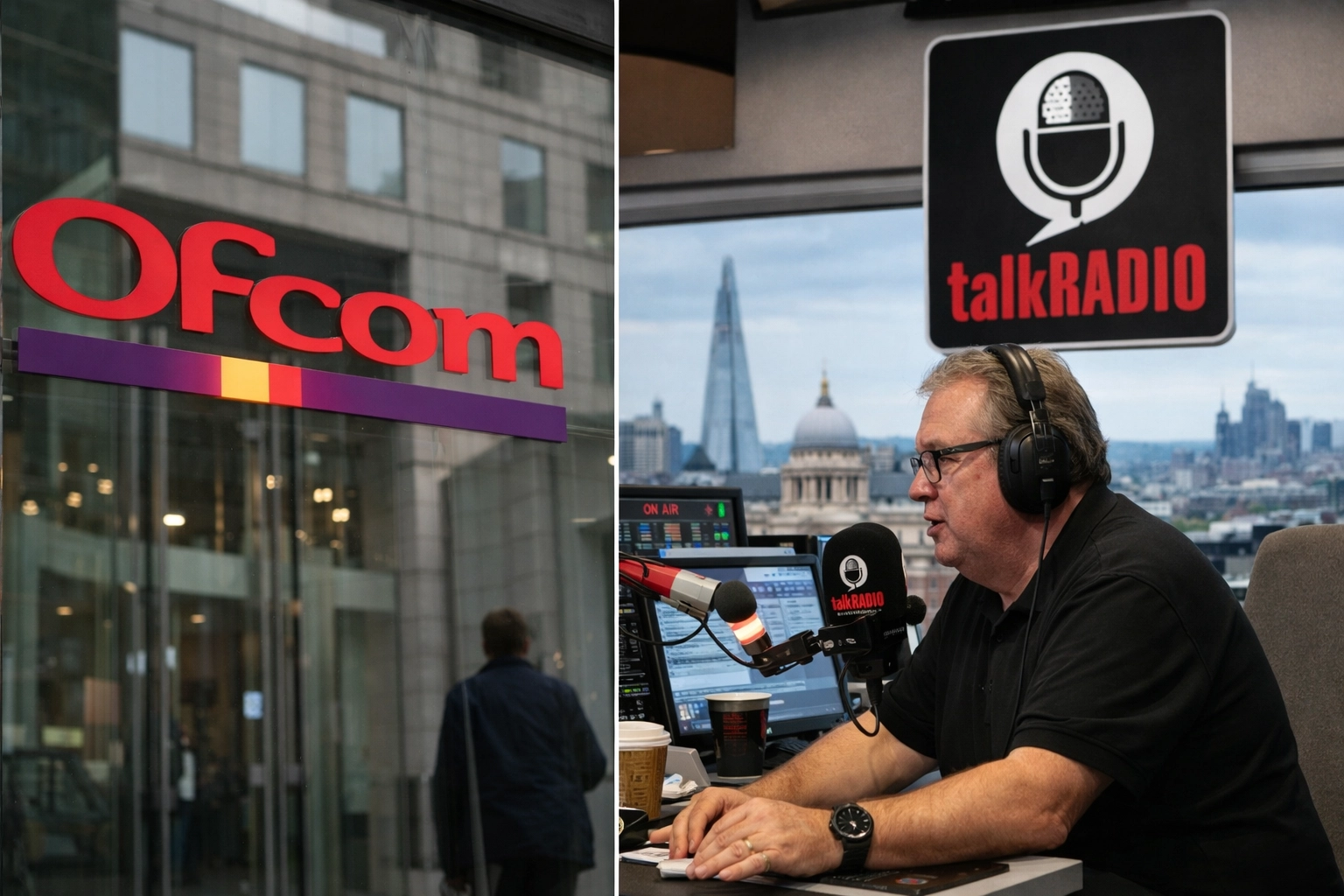
The UK media regulator Ofcom has confirmed a significant policy reversal by launching a formal investigation into climate change coverage on TalkRadio and TalkTV.
This move follows a sustained legal challenge and a surge of public complaints concerning the accuracy and impartiality of environmental reporting on the platforms.
The investigation represents the first time since 2017 that the regulator has specifically scrutinised climate-related content for potential breaches of the Broadcasting Code.
Initially, the regulator had declined to investigate more than 1,000 complaints submitted since 2020 regarding climate denialism on the network.
However, following a pre-action letter from the Good Law Project (GLP), Ofcom acknowledged that the broadcasts warranted a closer examination.
The focus of the inquiry rests on two specific programmes aired in November 2025, alongside a third separate case involving TalkTV.
At the heart of the matter is whether the broadcasters failed to provide a sufficient range of views or allowed "materially misleading" statements to go unchallenged.
The outcome of this investigation could set a new precedent for how scientific consensus is handled by opinion-led broadcasters across the United Kingdom.
The Legal Challenge and Regulatory U-Turn
The decision to open these investigations was not a spontaneous move by the regulator but the result of intense legal pressure.
In January 2026, the Good Law Project issued a formal request for Ofcom to explain its consistent rejection of climate-related complaints.
The GLP argued that by ignoring these complaints, Ofcom was effectively allowing "dangerous climate lies" to be broadcast without consequence.
The advocacy group highlighted that the frequency of climate denial on right-leaning channels had increased significantly over the past 24 months.
Upon re-evaluating the specific broadcasts flagged by the GLP, Ofcom stated that the content raised "potentially substantive issues" under the existing code.
The specific segments under review include a guest claim that climate change is a "deliberate effort to create fake anxiety" based on "false" information.
Another segment under fire featured a guest describing the government's energy policies as being "driven by pseudoscience" and "cultish behaviour."
Ofcom’s Broadcasting Code requires that "news, in whatever form, must be reported with due accuracy and presented with due impartiality."
While broadcasters are allowed to feature controversial opinions, they are obligated to provide context or alternative perspectives when the subject matter is a topic of significant public interest.
The regulator will now determine if these specific broadcasts crossed the line from provocative opinion into factual distortion.
This shift in stance suggests that Ofcom is tightening its oversight of how broadcasters handle established scientific facts versus political debate.
The reversal has been welcomed by environmental groups who argue that the "due impartiality" rule has often been used as a shield for spreading misinformation.
Impartiality Standards and the Scientific Consensus
Under Section Five of the Ofcom Broadcasting Code, "due impartiality" does not require equal time for every possible point of view.
Instead, it requires that broadcasters provide "due weight" to opinions based on their relevance and the weight of evidence behind them.
In the context of climate change, the scientific consensus is overwhelmingly settled, making the inclusion of denialist views a complex regulatory issue.
Ofcom has previously stated that for topics where there is a clear scientific consensus, the requirement for impartiality does not mean broadcasters must give a platform to opposing views that lack empirical support.
The current investigation will specifically look at whether TalkRadio and TalkTV failed to challenge guests who made demonstrably false claims about climate data.
Broadcasters often argue that their programmes are "personality-led" and therefore should be exempt from the strict impartiality rules that apply to traditional news bulletins.
However, Ofcom maintains that the rules on accuracy and misleadingness apply to all content, regardless of whether it is framed as news or opinion.
The distinction between a "controversial political opinion" and a "factual inaccuracy" is the primary battleground in this regulatory crackdown.
If a guest claims that Net Zero policies are economically damaging, that is generally viewed as a matter of political opinion.
However, if a guest claims that the Earth is not warming or that carbon dioxide does not contribute to the greenhouse effect, that falls into the category of factual accuracy.
The regulator is currently assessing whether the presenters on these programmes did enough to signpost these views as minority opinions or to provide counter-evidence.
A spokesperson for Talk confirmed that the company intends to cooperate fully with the investigation but maintained that they offer a platform for diverse viewpoints.
The results of this inquiry are expected to clarify exactly where the line sits for broadcasters operating in the opinion-heavy digital age.
Digital Evolution and the Rise of Independent News
This regulatory pivot comes at a time of rapid transition for the British media landscape, with more viewers turning to alternative news sites.
As traditional television audiences decline, the influence of independent news outlets and digital-first broadcasters has grown substantially.
TalkTV and TalkRadio have positioned themselves as challengers to the mainstream media, often catering to audiences who feel underserved by the BBC or Sky News.
This growth of alternative news sites has presented a challenge for Ofcom, which must balance freedom of expression with the protection of the public.
The regulator is aware that many independent news outlets operating purely online do not fall under the same strict statutory regulations as traditional broadcast channels.
However, because TalkRadio and TalkTV hold broadcast licences, they are legally bound by the same code as the UK’s longest-running news organisations.
The Good Law Project has suggested that if Ofcom fails to enforce these rules, it creates a "two-tier" regulatory system where newer channels can bypass standards.
The rise of these platforms has democratised information but has also led to concerns about the "echo chamber" effect and the spread of unverified claims.
Observers suggest that this investigation is a signal to all independent news outlets that broadcast licences carry heavy responsibilities.
The focus on climate change is particularly sensitive given the UK government’s statutory commitments to international climate targets.
Public health and safety are also considerations, as the regulator assesses whether the spread of "fake anxiety" narratives impacts public cooperation with environmental legislation.
As the investigation progresses, it will likely prompt a wider debate about how the UK regulates non-traditional media in a polarised political environment.
The final ruling could force alternative news sites to radically alter how they book guests and moderate live discussions on scientific topics.
For now, the investigation remains ongoing, with Ofcom expected to publish its full findings in the coming months.
Broadcasters across the industry are watching the case closely, as it will define the boundaries of "allowable" dissent on the most pressing issue of the 21st century.