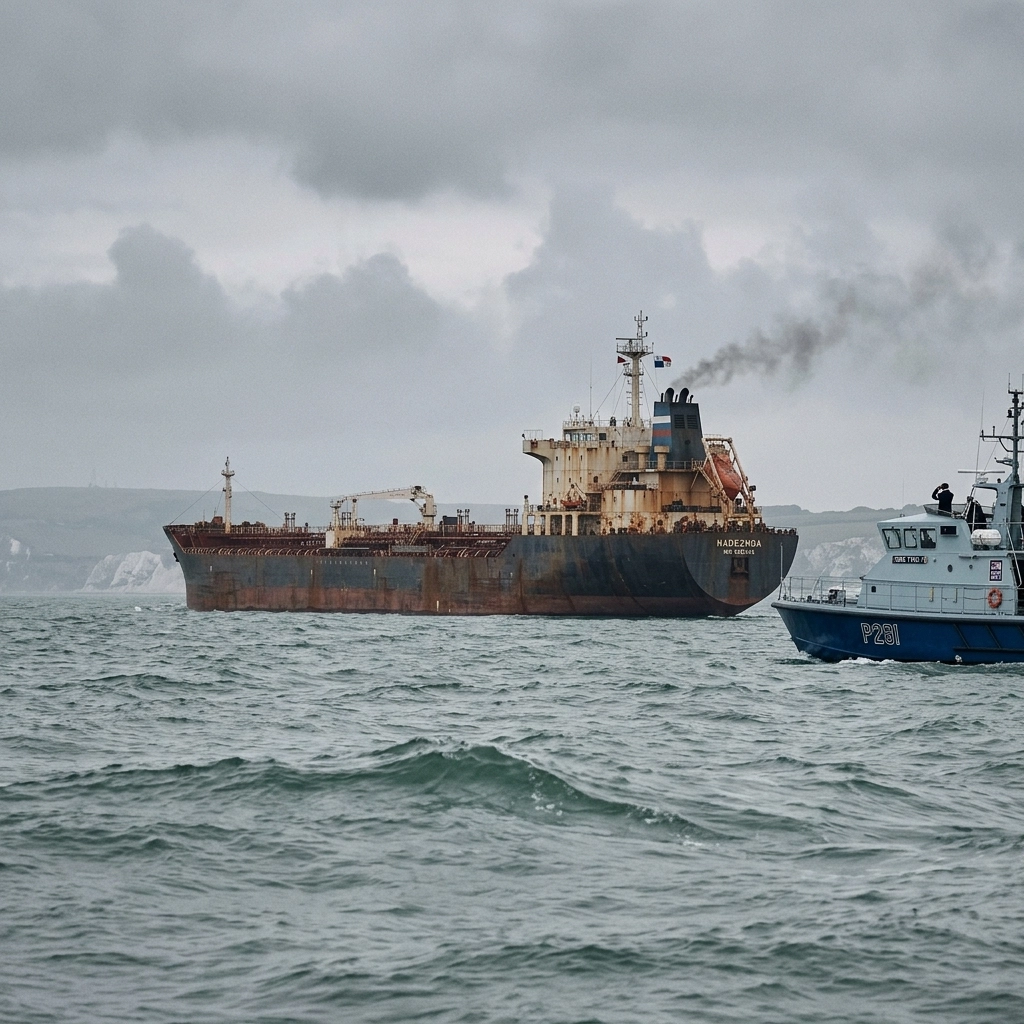
For many of us living along the coast or crossing the English Channel on a ferry, the sight of a massive oil tanker on the horizon is a common occurrence. These giants of the sea are the lifeblood of global trade, carrying the fuel that keeps the world moving. However, beneath the surface of this routine maritime activity lies a complex and dangerous game of geopolitical chess. Recently, a growing number of these vessels have become part of what experts call the "shadow fleet": a collection of aging, poorly maintained, and under-insured tankers used to bypass international sanctions.
As we navigate the complexities of 2026, the presence of these ships in British waters has become a flashpoint for national security and environmental safety. These aren't just any ships; they are a critical component of Russia’s strategy to fund its ongoing operations in Ukraine. By operating outside the traditional bounds of maritime law and insurance, this fleet ensures that Russian oil continues to reach global markets, despite the heavy sanctions imposed by the West. For those seeking independent news UK, the reality of these "ghost ships" passing just miles from our shores is one of the most significant untold stories of the current era.
The scale of the operation is staggering. It is estimated that roughly 75% of Russia’s crude oil is now transported via this decrepit fleet. These ships often engage in "flag-hopping," frequently changing their country of registration to evade detection, or "spoofing" their AIS (Automatic Identification System) signals to hide their true locations. When they enter the English Channel, one of the busiest shipping lanes in the world, they bring with them a level of risk that the UK government is now struggling to manage.
The Invisible Armada in Our Backyard
The English Channel serves as a primary artery for the shadow fleet. It is the most direct route between the Baltic ports, where much of Russia’s oil is loaded, and the markets of southern Europe and beyond. On average, about two dozen of these sanctioned ships traverse British waters every single week. These aren't the sleek, modern tankers operated by major global corporations. Instead, they are often vessels nearing the end of their operational lives: ships that would normally be destined for the scrap yard.
The danger isn't just political; it’s physical. Because these ships operate outside the mainstream insurance market, they often lack the comprehensive coverage required to handle a major maritime disaster. If one of these aging tankers were to suffer a mechanical failure or a collision in the narrow straits of the Channel, the environmental consequences for the British and French coastlines would be catastrophic. The "untold stories" here involve the coastal communities and local ecosystems that stand to lose everything in the event of an uninsured oil spill.
In response to this growing threat, the UK has officially sanctioned over 500 vessels associated with the shadow fleet. By early 2026, the government took a firmer public stance. Prime Minister Keir Starmer authorised the British military to board and detain sanctioned ships transiting through UK waters. This was seen as a bold move, intended to signal that Britain would no longer be a passive bystander to sanction-busting. However, the gap between political rhetoric and maritime reality remains wide. Since that announcement, ship-tracking data shows that dozens of these tankers have continued their journeys through the Channel, seemingly unbothered by the threat of military intervention.
The Legal Tangle of the High Seas
Why is it so difficult to stop these ships? The answer lies in a complex web of international maritime law. While the UK has the right to regulate its own territorial waters, the English Channel is subject to specific international agreements that guarantee the "right of innocent passage." To board a sovereign vessel in these waters, the UK would need to rely on what maritime security experts call "untested legal arguments."
Without a specific UN Security Council mandate: which is impossible given Russia’s veto power: the UK has to frame its actions as "countermeasures." This is a legal grey area. It involves arguing that the seizure of a ship is a justified response to Russia’s broader violations of international law. It’s a high-stakes legal gamble. If the UK boards a ship and a court later rules the action was illegal, it could lead to massive compensation claims and further escalate diplomatic tensions.
This legal uncertainty explains why the Ministry of Defence has been cautious. While the authorisation to board ships exists, enforcement is handled on a "case-by-case basis." Behind the scenes, it is likely that diplomatic pressure and intelligence-sharing are being prioritised over physical confrontations at sea. Meanwhile, other European neighbours have been more aggressive. France, Belgium, and Sweden have recently carried out operations to board and detain vessels suspected of being part of the shadow network. These actions serve as a reminder that while the UK weighs its legal options, the fleet continues to grow, and the ships continue to sail.
The crews on these ships also live in a state of perpetual limbo. Often made up of sailors from developing nations, they find themselves working on vessels that are effectively international pariahs. They operate with minimal support, often facing difficulties in accessing ports for basic supplies or medical help because their ships are blacklisted. This human element is frequently lost in the talk of sanctions and geopolitics, yet it is a central part of how the shadow fleet functions.
Beyond the Horizon of Global Sanctions
The persistence of the shadow fleet reveals a fundamental challenge in the modern global economy: as long as there is a demand for a commodity like oil, and a willing supplier, the market will find a way to connect them. Sanctions are a powerful tool, but they are not a silver bullet. The shadow fleet is a testament to the ingenuity: and the desperation: of a state determined to bypass international restrictions.
For the UK, the presence of these ships is a constant reminder of the limits of national sovereignty in a globalised world. We can pass laws in Westminster and issue statements from Downing Street, but the reality of the high seas is governed by a different set of rules. The English Channel remains a frontier where the world’s geopolitical tensions are played out in real-time.
As we look toward the rest of 2026, the pressure on the UK government to take more decisive action is likely to increase. Environmental groups are rightfully concerned about the "ticking time bombs" sailing past our beaches, while political allies expect the UK to lead the way in enforcing the sanctions regime it helped create. The story of the shadow fleet is far from over. It is a narrative of hidden ownership, secret transfers at sea, and a relentless pursuit of revenue at the expense of international norms.
In providing independent news UK, it is vital to shine a light on these hidden movements. The shadow fleet may try to stay in the dark, but its impact is felt by everyone. Whether it’s the price of energy, the security of our borders, or the health of our oceans, the "ghost ships" of the English Channel are a problem that cannot be ignored.
The situation remains a delicate balance of military readiness, legal maneuvering, and diplomatic strategy. The UK’s approach to the shadow fleet will define its role in the post-Brexit maritime landscape and its commitment to the international rules-based order. While the tankers continue to glide through the grey waters of the Channel, the world watches to see if the threat of detention will ever become a reality. For now, the shadow fleet sails on, a silent participant in a conflict that shows no signs of slowing down.
To maintain a secure and stable maritime environment, the international community will need to find new ways to cooperate, sharing intelligence and closing the legal loopholes that allow these vessels to operate. Until then, the English Channel will remain a busy thoroughfare for the most controversial fleet on the planet, carrying the untold stories of a world in flux.