



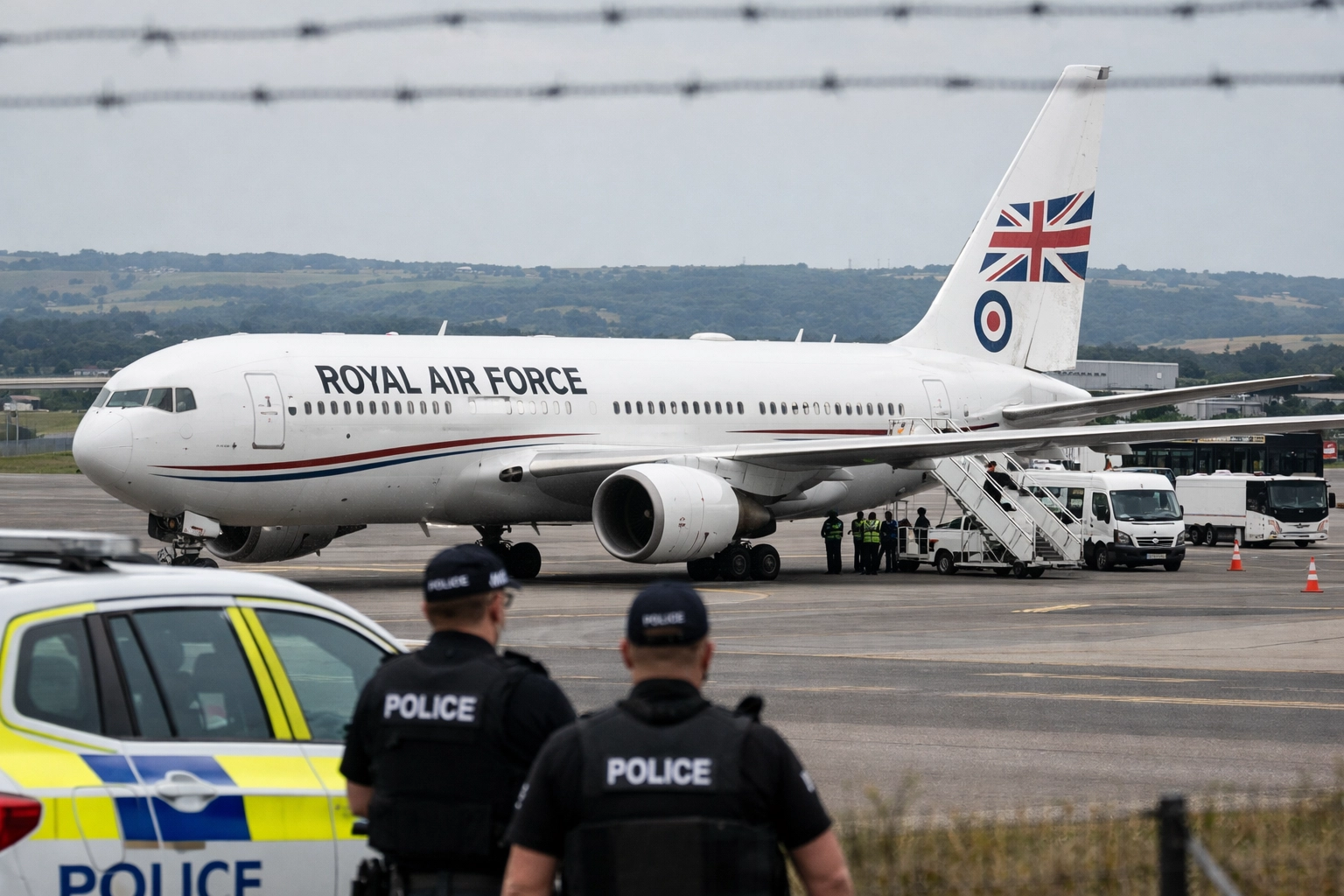
Rwanda has launched a formal legal challenge against the United Kingdom at the Permanent Court of Arbitration in The Hague, seeking more than £100 million following the collapse of the controversial migrant deportation scheme.
The legal proceedings, which opened in March 2026, represent a significant escalation in the deteriorating relationship between London and Kigali.
The dispute centres on unpaid financial obligations that Rwanda claims are due under the Migration and Economic Development Partnership (MEDP), a deal scrapped by Sir Keir Starmer’s government shortly after the 2024 General Election.
While the UK government contends that the termination of the deal extinguished its future financial liabilities, the Rwandan government argues that the UK is in breach of a binding international treaty.
This case marks a pivotal moment in uk political news, as the British taxpayer faces the prospect of a nine-figure bill for a policy that relocated only four people on a voluntary basis.
The outcome of the arbitration will likely set a global precedent for how international migration treaties are terminated and whether political shifts in one nation can legally override long-term financial commitments to another.
The Legal Battleground in The Hague
The case brought before the Permanent Court of Arbitration (PCA) focuses on the specific wording of the financial notes attached to the 2022 and 2024 iterations of the migration deal.
Rwanda’s legal team argues that the UK committed to a series of annual payments designed to build the infrastructure and capacity required to house thousands of asylum seekers.
According to the claim, two scheduled instalments of £50 million each: originally due in April 2025 and April 2026: remain unpaid.
The Rwandan government maintains that these funds were not contingent on the number of migrants sent, but were instead "capacity-building" grants that the UK legally bound itself to provide over a multi-year period.
Furthermore, Kigali is seeking an additional £6 million in compensation regarding a reciprocal agreement to resettle vulnerable refugees from the Democratic Republic of Congo (DRC).
Rwanda alleges that the UK breached this secondary agreement by failing to facilitate the promised relocations, leaving Rwanda to cover the ongoing housing and administrative costs for these individuals.
The UK’s defence, led by government lawyers, argues that the legal claims have "obvious weaknesses" and that the political termination of the scheme in July 2024 effectively ended the contract.
British representatives have stated they will "robustly defend" the position to protect the public purse, asserting that no further payments should be made for a programme that is no longer operational.
However, international law experts suggest that treaty obligations are often harder to dissolve than domestic contracts, especially when one party has already invested significant resources based on the agreement.
The arbitration panel in The Hague is expected to scrutinise the formal termination procedures outlined in the original treaty, which Rwanda claims the UK failed to follow correctly.
This legal friction provides a complex global business analysis of the risks involved when sovereign states enter into high-stakes, service-based partnerships that are subject to domestic political volatility.
A Sunk Cost for the British Taxpayer
The financial history of the Rwanda deal has been a source of intense scrutiny for independent news uk outlets since its inception under Boris Johnson’s administration in April 2022.
Before the scheme was eventually declared "dead and buried" by Sir Keir Starmer, the UK had already transferred approximately £240 million to £290 million to the Rwandan government.
These figures include initial transformation grants and additional payments made under the revised treaty signed by James Cleverly in late 2023.
Despite this massive investment, the project failed to achieve its primary objective of deterring small boat crossings in the English Channel.
During the two years the policy was active, only four asylum seekers were relocated to Kigali, and all of them were voluntary transfers who were offered financial incentives to move.
The Labour government’s decision to scrap the policy was rooted in the argument that the scheme was a "gimmick" that was both immoral and fiscally irresponsible.
However, the current legal battle suggests that the "sunk costs" of the project may continue to rise long after the flights were cancelled.
If the PCA rules in Rwanda's favour, the total cost of the failed venture could exceed £400 million, including legal fees and the disputed £100 million in outstanding payments.
This financial fallout has sparked renewed debate in Westminster regarding the oversight of international development spending and the accountability of the ministers who signed the original deals.
Critics of the deal argue that the lack of an "exit clause" in the financial notes was a fundamental failure of British diplomacy and legal drafting.
Conversely, supporters of the original scheme claim that the Labour government’s decision to cancel the deal unilaterally invited this litigation and that the costs are a direct result of "political posturing."
The economic implications extend beyond the direct payments, as the case raises questions about the UK's reliability as a partner in large-scale international projects.
As the arbitration continues, the British public remains focused on the mounting bill for a policy that failed to deliver its stated purpose.
Diplomatic Strains and the DRC Conflict
Beyond the courtroom in The Hague, the dispute is deeply entwined with a broader collapse in diplomatic relations between London and Kigali.
The UK government has suggested that Rwanda’s aggressive pursuit of the £100 million is a retaliatory move following the UK’s decision to suspend separate financial aid packages.
This suspension was triggered by international reports and UK intelligence alleging that Rwanda has provided support to the M23 rebel group operating in the eastern Democratic Republic of Congo.
The conflict in the DRC has led to a humanitarian crisis, and the UK, along with other Western nations, has increased pressure on President Paul Kagame to withdraw support for the insurgents.
Rwanda has consistently denied these allegations, but the diplomatic friction has made the resolution of the migration deal debt even more difficult.
Professor Phil Clark of SOAS University of London suggests that Rwanda is using the legal claim to "knock the international community back on its heels."
By forcing the UK into a public legal battle, Rwanda is reminding its global partners of its perceived "worth" in the spheres of migration management and international peacekeeping.
The tension highlights the difficulty of tying domestic immigration policy to complex foreign policy objectives in sensitive geopolitical regions.
The UK’s attempt to use Rwanda as a solution for its domestic asylum challenges has left it vulnerable to the shifting tides of African regional politics.
As the PCA deliberates, the UK government faces a delicate balancing act: defending the taxpayer against a £100 million claim while maintaining enough of a relationship with Rwanda to address regional stability in the Great Lakes.
The fallout of the MEDP serves as a cautionary tale for future governments considering "offshore" processing as a silver bullet for migration issues.
It demonstrates that the true cost of such deals is often hidden in the fine print of international law and the unpredictable nature of global alliances.
The case is expected to remain in the headlines for months, providing a sobering look at the long-term consequences of a failed political experiment.
The final ruling will not only determine the fate of the £100 million but will also redefine the boundaries of sovereign responsibility in the 21st century.