




British authorities have been granted unprecedented powers to board and inspect vessels suspected of belonging to Russia’s "shadow fleet" as they transit through UK waters. This legislative shift marks a significant escalation in the Western effort to choke off the Kremlin’s primary source of war funding.
The move comes as intelligence reports suggest nearly one out of every five tankers currently at sea is operating outside of standard maritime regulations. These vessels form a clandestine network designed to circumvent G7 sanctions and the $60-per-barrel price cap on Russian crude oil.
For months, these aging tankers have played a high-stakes game of cat and mouse with international regulators. By operating under obscure flags and utilizing shell companies, they have successfully moved billions of dollars in oil to markets across the globe.
The UK government's decision to authorise physical boardings signifies a departure from purely financial and diplomatic pressure. It places British maritime forces at the forefront of a physical crackdown on what is now considered a primary threat to both economic stability and environmental safety.
The architecture of the ghost fleet
The shadow fleet is not a unified entity but a fragmented web of over 1,000 vessels. Many of these ships are aging tankers that would otherwise have been destined for the scrapyard. Instead, they have been purchased by anonymous entities at inflated prices to keep Russian exports flowing.
These vessels often operate under "flags of convenience" from countries with limited maritime oversight. In many cases, ships have been found to change their registration multiple times in a single year to evade detection. This "flag hopping" makes it incredibly difficult for international bodies like the International Maritime Organization (IMO) to maintain accurate records.
Deception is built into the fleet's daily operations. "Spoofing" has become a standard tactic, where a ship’s Automatic Identification System (AIS) is manipulated to broadcast a false location. A tanker may appear to be anchored in safe waters while it is actually loading oil at a sanctioned Russian terminal hundreds of miles away.
Ship-to-ship (STS) transfers are another critical component of the fleet’s strategy. These transfers often take place in international waters, away from the prying eyes of port authorities. By pumping oil from a sanctioned vessel to a non-sanctioned one in the middle of the ocean, the origin of the cargo is effectively laundered before it reaches its final destination.
The scale of this operation is vast. Estimates indicate that the number of falsely flagged ships has more than doubled since late 2024. These vessels are now responsible for transporting approximately 50% of Russia’s total oil exports, alongside shipments from other sanctioned nations like Iran and Venezuela.
The financial infrastructure supporting the fleet is equally opaque. Payments are often processed through a labyrinth of offshore banks and crypto-exchanges, bypassing the SWIFT banking system. This ensures that the revenue generated from these sales continues to fund military operations despite global efforts to freeze Russian assets.
The environmental ticking time bomb
Beyond the geopolitical implications, the shadow fleet represents a catastrophic risk to the marine environment. Most of these tankers are well past their recommended operational lifespan, with many exceeding 20 years of service. Unlike the mainstream commercial fleet, these ships are frequently poorly maintained and lack proper insurance.
Mainstream insurers, largely based in the UK and Europe, are prohibited from covering vessels that carry Russian oil above the price cap. Consequently, shadow fleet tankers often rely on "grey market" insurance or carry no insurance at all. If a major spill were to occur in the English Channel or the North Sea, there would be no clear legal or financial path to cover the billions in cleanup costs.
The risk is amplified by the hazardous nature of ship-to-ship transfers. Conducting these operations in open water without the oversight of professional harbour masters significantly increases the likelihood of accidents. A collision or a hull failure involving a 20-year-old tanker could result in an ecological disaster that would devastate British coastlines for decades.
Security experts have also raised concerns that these vessels are being used for purposes beyond oil transport. There are growing suspicions that some ships within the shadow fleet are equipped with surveillance technology to monitor undersea infrastructure. The proximity of these tankers to vital internet cables and energy pipelines in European waters has put naval intelligence agencies on high alert.
In early 2026, reports emerged of "research" equipment being deployed from tankers near sensitive North Sea wind farms. While the primary mission of the fleet remains economic, the potential for dual-use operations adds a layer of complexity to the hunt. The ability of British forces to board these ships allows for a thorough inspection of equipment that goes beyond checking cargo manifests.
The environmental threat is not just theoretical. Small-scale leaks and "operational discharges" are becoming more frequent as these vessels avoid regulated ports where they would be subject to safety inspections. The cumulative effect of these minor incidents is already being felt by marine ecosystems in the Baltic and Mediterranean seas.
A new era of maritime enforcement
The hunt for Russian ships is part of a broader international crackdown. Since late 2025, the United States has successfully seized ten sanctioned oil tankers tied to Russia’s shadow network. These seizures have served as a blueprint for the UK’s new maritime policy, which seeks to turn the English Channel into a "no-go zone" for illicit trade.
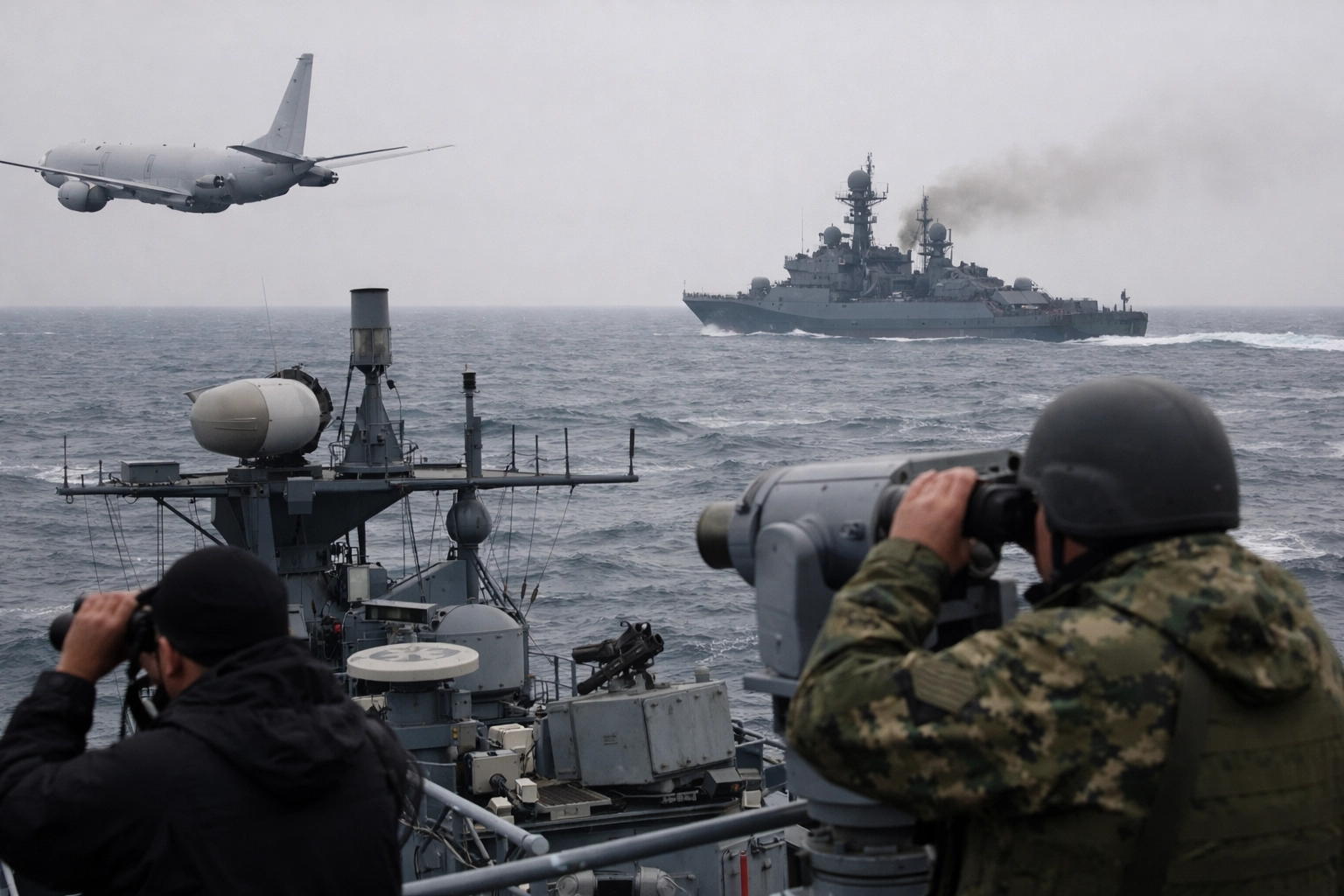
Enforcement is a logistical challenge that requires constant aerial and satellite surveillance. The Royal Navy, working alongside the Maritime and Coastguard Agency, is now tasked with identifying "high-interest" vessels as they enter the UK’s Exclusive Economic Zone. Once a ship is flagged, authorities have the right to demand documentation and, if necessary, board the vessel to verify its cargo and safety standards.
International cooperation is proving vital in this effort. Estonia and other Baltic nations have reported seeing between five and ten shadow fleet vessels in their waters at any given time. By sharing real-time tracking data, European allies are creating a digital "dragnet" that makes it increasingly difficult for these ships to operate without being shadowed by naval assets.
The legal framework for these actions is grounded in the United Nations Convention on the Law of the Sea (UNCLOS), specifically regarding the right of coastal states to protect their waters from environmental hazards. By reframing the shadow fleet as a safety and environmental threat, rather than just a political one, the UK has strengthened the legal basis for intervention.
However, the Kremlin has shown a remarkable ability to adapt. As soon as one shell company is sanctioned, three more appear to take its place. The hunt for Russian ships is likely to be a long-term campaign of attrition rather than a single decisive victory. The goal is to make the operation of the shadow fleet so expensive and risky that it ceases to be a viable way for Russia to fund its economy.
As we move through 2026, the focus is shifting towards the "middlemen" of the shipping world. This includes the ship managers, the fuel suppliers, and the private security firms that enable these tankers to stay at sea. By targeting the entire ecosystem of the shadow fleet, the UK and its allies hope to finally bring this ghost network into the light.
The coming months will test the resolve of British maritime forces. The first successful boarding and seizure of a shadow fleet tanker in UK waters will send a powerful message to the global shipping industry: the era of the unregulated, sanctioned tanker is coming to an end. The hunt is officially on.