



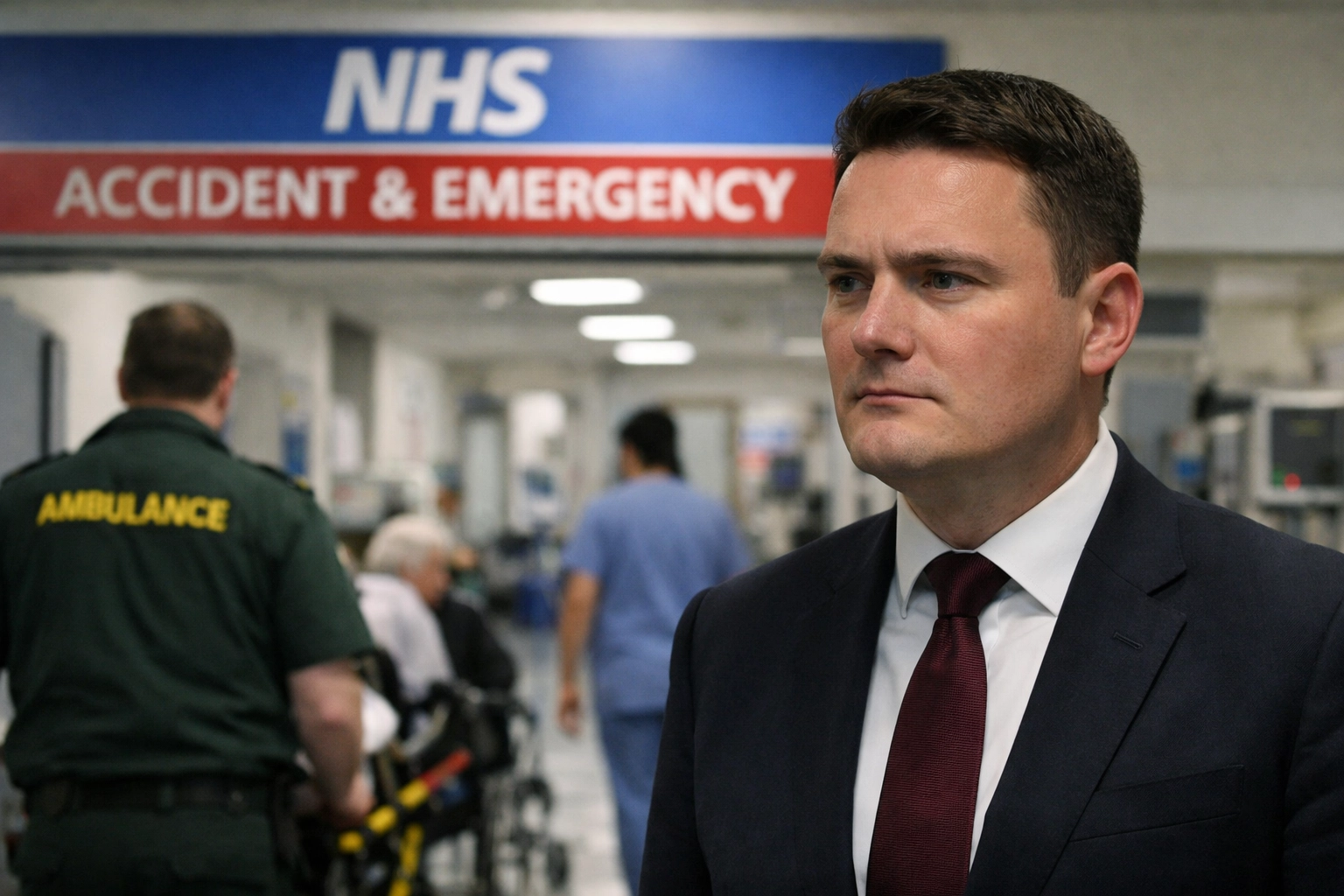
Health Secretary Wes Streeting has issued a final warning to the leadership of the country’s most consistently underperforming NHS trusts, declaring that the era of "turning a blind eye to failure" has officially come to an end. In a landmark speech delivered on 25 March 2026, Streeting outlined a radical shift in government policy that could see failing institutions dismantled or absorbed by more successful neighbouring providers. The move marks a significant escalation in the government's attempt to restore public confidence in a health service that continues to grapple with record-low satisfaction levels and systemic delivery delays.
The ultimatum serves as a clear signal that the Department of Health is moving away from a culture of indefinite support for struggling management teams. Instead, the focus has shifted toward high-stakes accountability, where the persistence of "chronic underperformance" will be met with structural intervention rather than just additional funding or temporary consultancy. For the trusts currently sitting in the lowest tier of performance metrics, the message is unambiguous: improve immediately or face the reality of being broken up.
The End of Institutional Tolerance for Failure
The Health Secretary’s directive targets a specific group of trusts that have remained in special measures or have consistently failed to meet core targets for elective care, A&E waiting times, and cancer treatment for several consecutive cycles. Historically, the approach to these "troubled" trusts has involved a revolving door of interim CEOs and expensive turnaround squads. Streeting has now categorised this approach as a failure of imagination and a waste of taxpayer resources. He argued that some organisations are fundamentally "too big to manage" or possess a culture so deeply entrenched in failure that only a total dissolution of the existing structure can offer a path forward.
Under the new framework, the government will no longer offer open-ended timelines for recovery. Trusts identified as chronically failing will be given a strictly defined period to demonstrate measurable improvement in clinical outcomes and operational efficiency. If these milestones are missed, the Department of Health will exercise powers to trigger a "structural re-organisation." In practice, this means the legal entity of the trust could be dissolved, with its hospitals and community services transferred to the management of a high-performing "buddy" trust or a regional healthcare hub. This is the most aggressive stance taken by a Health Secretary regarding hospital management in over a decade, reflecting the urgency of the current crisis.
Critics of the plan argue that breaking up trusts could lead to administrative chaos and further demoralise a workforce already stretched thin by the ongoing Junior Doctors’ disputes. However, the government insists that the status quo is no longer an option. The strategy is designed to create a "survival of the most efficient" model, where successful leadership is rewarded with larger portfolios and failing management is removed from the system entirely. Streeting’s rhetoric suggests that the "radical route" is not just a threat, but a planned phase of the broader NHS reform agenda intended to streamline the bureaucracy that many believe has stifled innovation at the frontline.
A System Strained by Public Record Lows
The backdrop to this ultimatum is a public that has grown increasingly weary of promises regarding NHS recovery. Recent polling data indicates that public satisfaction with the NHS remains at a historic low, driven by the perception that the service is "broken" despite increased investment. Patient stories of long waits in ambulances and years-long backlogs for routine surgeries have become a staple of the national news cycle, putting immense pressure on the government to show that it is taking direct action. Streeting’s move is a response to this atmospheric pressure, framing the "broken" parts of the system as specific management failures rather than an indictment of the entire national project.
By focusing on the trusts at the very bottom of the performance league tables, the government is attempting to isolate the "toxic" elements of the system. The Department of Health has pointed to a wide disparity in performance between trusts operating in similar socio-economic areas, suggesting that the problem is often one of local governance rather than national funding levels. The ultimatum is intended to force a standardisation of excellence, using the threat of dissolution to push local boards into adopting the practices of their more successful peers. It is a gamble that structural fear can drive operational efficiency in a sector that has traditionally been insulated from the pressures of a competitive marketplace.
However, the internal reality of the NHS in March 2026 is one of extreme fatigue. The service is still recovering from the logistical hangovers of the mid-2020s, and the threat of being "broken up" may find management teams more exhausted than motivated. There is also the logistical challenge of the "takeover" model. High-performing trusts are often already operating at maximum capacity; forcing them to absorb a failing neighbour risks dragging the successful institution down into the same mire of debt and operational delay. The Department of Health has yet to clarify the financial incentives that would be offered to successful trusts to take on these "rescue missions," leaving a significant question mark over the viability of the plan.
The Political Gamble of Structural Reform
Wes Streeting’s ultimatum is as much a political statement as it is a policy directive. By taking a hard line against "failing" public sector institutions, the government is attempting to reclaim the narrative on fiscal responsibility and service delivery. This approach aligns with a broader trend of "active interventionism" seen across other departments, including the recent oversight changes at the BBC and the crackdown on underperforming local councils. For Streeting, the political stakes are enormous. If he succeeds in turning around even a handful of these trusts through structural change, he will have a powerful case study for the effectiveness of "tough love" in the public sector. If it leads to service disruption or a management exodus, he will be blamed for destabilising the nation’s most cherished institution.
The reaction from medical unions and health think tanks has been cautiously hostile. While there is a consensus that the current system of "special measures" is ineffective, there is deep skepticism about whether changing the name on the front of the building or the CEO in the boardroom will fix the underlying issues of staffing shortages and crumbling infrastructure. Many frontline workers fear that a "break up" of a trust will lead to a period of bureaucratic paralysis, where clinical priorities are sidelined in favour of HR mergers and IT integration. The government, however, maintains that the "fear of failure" must be a tangible reality for those at the top if the culture of the NHS is to ever truly change.
As we move toward the next fiscal quarter, the first "ultimatum notices" are expected to be issued to the boards of at least five major trusts across the North and the Midlands. These organisations will become the testing ground for Streeting’s theory of radical accountability. The eyes of the entire healthcare sector, as well as those of a frustrated public, will be on these locations to see if a change in structure can finally deliver a change in results. For the staff on the wards, the hope is that this political maneuvering translates into better support and fewer roadblocks, but for the executives in the boardrooms, the countdown to a potential dissolution has officially begun. The "to be continued" nature of this story lies in the first set of performance data due this summer, which will determine if the Health Secretary is forced to follow through on his promise to break the system in order to fix it.