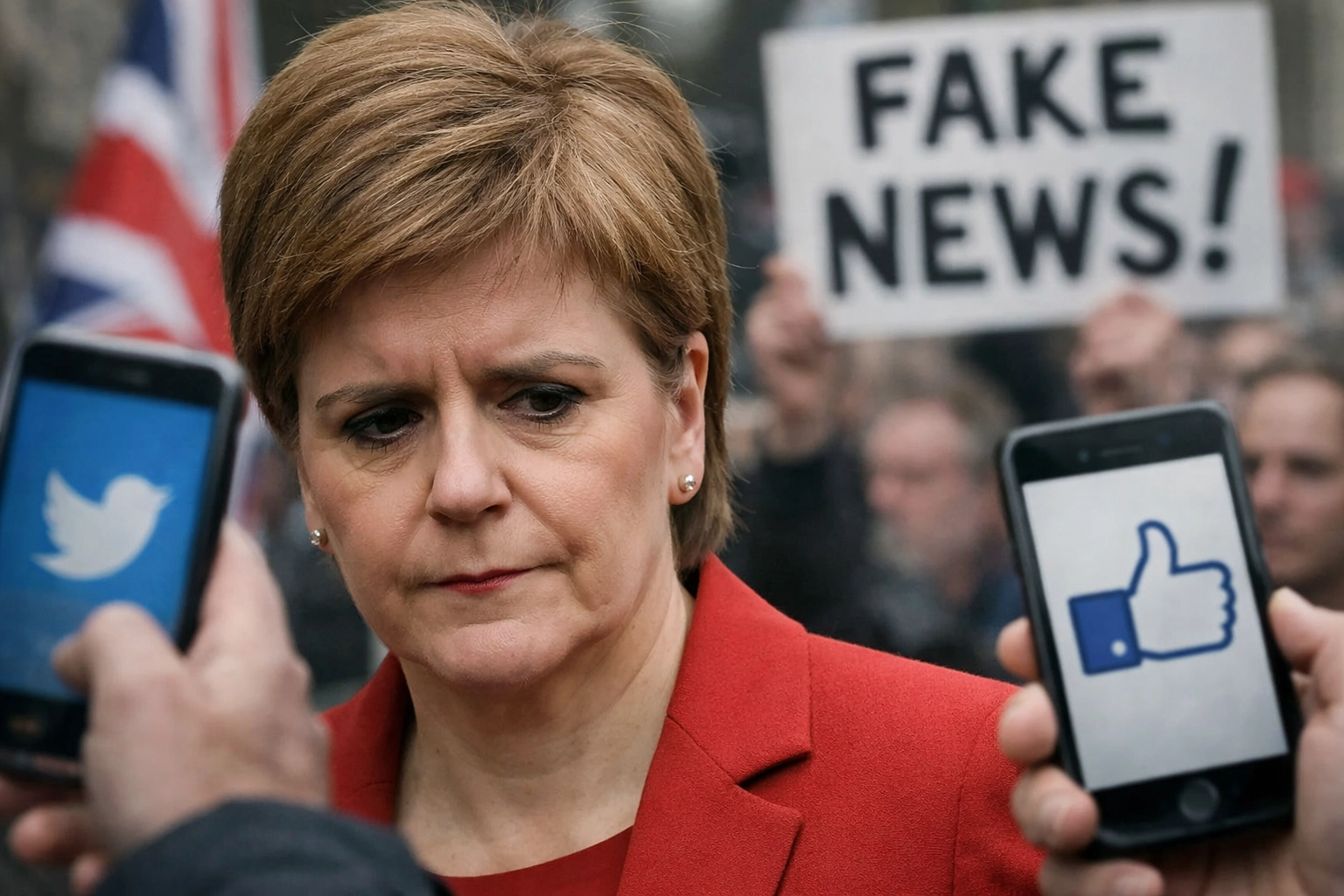
Former First Minister Nicola Sturgeon has delivered a stark parting warning to the political establishment, urging a retreat from the "poison" of social media and a return to civility. Addressing the Scottish Parliament in a significant farewell speech, the long-serving MSP cautioned that the digital echo chamber is increasingly distorting public life and deterring new talent from entering the arena.
Sturgeon, who served for 27 years in Holyrood, used her final moments on the chamber floor to reflect on the deteriorating state of political discourse. Despite commanding a massive digital following: including 1.3 million followers on X and nearly half a million on Facebook: she argued that the obsession with online metrics is creating a disconnect between representatives and the communities they serve. Her message was clear: while social media remains a powerful tool for communication, it must not be allowed to define the parameters of political reality or personal worth.
The warning comes at a time when the pressure on public figures has reached an all-time high, with digital platforms often acting as a catalyst for abuse rather than a forum for debate. Sturgeon’s intervention highlights a growing concern within global politics that the "real world" is being neglected in favour of performative digital interactions.
The digital divide between service and screen
The core of Sturgeon’s message focused on the necessity of maintaining a boundary between one’s public duties and their digital presence. She urged current and future politicians to remember that there is a "real world out there" beyond the screens that frequently dominate their daily lives. For a politician who rose to prominence alongside the explosion of social media, this admission serves as a significant pivot in her public stance.
Sturgeon noted that the people politicians are elected to serve do not reside within the confines of a trending topic or a viral post. By allowing digital platforms to dictate the political agenda, representatives risk losing sight of the tangible issues affecting their constituents. This disconnect, she suggested, leads to a hollowed-out form of representation where the noise of the few drowns out the needs of the many.
Furthermore, the former First Minister specifically highlighted the toxic impact of social media on female representation. She pointed out that the level of abuse directed at women in the public eye has become a significant barrier to entry. This digital hostility is not merely a nuisance; it is a systemic threat to the diversity of the political landscape. When talented women are deterred from seeking office due to the threat of online vitriol, the democratic process itself is impoverished. Sturgeon’s call for a more respectful environment is framed not just as a plea for kindness, but as a prerequisite for a functioning, representative parliament.
The statistics surrounding online abuse in the UK support this concern. Data suggests that female politicians are significantly more likely to receive threats and harassment than their male counterparts. Sturgeon’s farewell speech serves as a high-profile acknowledgement that the current trajectory of digital engagement is unsustainable if the aim is to foster an inclusive and healthy political culture.
A call for civility in a tribal landscape
Beyond the digital realm, Sturgeon’s reflections touched on the fundamental nature of political disagreement. Known for her own perceived tribalism during her leadership of the SNP, her parting advice was notably conciliatory. She urged her colleagues to think independently and to seek common ground across party lines, stating emphatically that "opponents need not be enemies."
This appeal for a reduction in political tribalism marks a shift in tone from the often-confrontational style of Scottish and UK politics over the last decade. Sturgeon argued that the hardening of party lines has created an environment where nuance is lost and cooperation is viewed as a weakness. By encouraging politicians to make friends across the aisle, she advocated for a return to a more deliberative and collaborative form of governance.
The former First Minister’s 27-year tenure in Holyrood provided her with a unique perspective on the evolution of the parliament. She described the privilege of serving as an MSP as "rare" and something that should be treated with the utmost respect. This respect, she argued, must extend to how politicians treat one another. The erosion of civility is not just an aesthetic issue; it impacts the quality of policy-making and the public's trust in the institution.
The transition from a high-stakes leadership role to a departing backbencher has allowed Sturgeon to critique the very culture she helped shape. Her emphasis on the human element of politics: the face-to-face interactions that occur away from the cameras and the keyboards: is a reminder of the foundational principles of parliamentary democracy. She suggested that by treating opponents with dignity, politicians can help restore faith in the system and ensure that the parliament remains a place for constructive debate rather than just partisan theatre.
The erosion of accountability through constant outrage
Perhaps the most prescient part of Sturgeon’s warning concerned the mechanics of accountability in the modern age. She cautioned that the current culture of "constant outrage" is making it harder, not easier, to hold those in power to account. In an environment where every minor disagreement or policy shift is framed as a scandal, the public risks becoming desensitised to genuine misconduct.
"If everything is a scandal or an outrage, nothing is," Sturgeon remarked, pointing to a paradox of the digital age. The flood of indignation often seen on social media platforms can obscure the most serious failures of governance. When the volume is permanently turned up to the maximum, the ability of the press and the public to distinguish between a genuine crisis and a manufactured controversy is severely diminished. This "outrage fatigue" ultimately benefits those who deserve scrutiny, as their actions are lost in the white noise of perpetual grievance.
Sturgeon’s advice to maintain a sense of perspective is a call for a more disciplined and focused approach to political critique. By being more selective and measured in their responses, politicians and the public can ensure that when a real scandal occurs, it receives the attention and consequences it warrants. This necessitates a move away from the "gotcha" culture that currently permeates both political reporting and social media interactions.
The former FM’s commitment to leading by example in creating a respectful environment also extends to how politicians handle the pressures of the 24-hour news cycle. The need for instant reaction and the constant demand for content have contributed to a political climate that prioritises speed over substance. By stepping back from the digital fray, Sturgeon suggested that politicians could reclaim the time and mental space needed for serious deliberation.
As Sturgeon moves away from the front lines of Scottish politics, her warnings remain as a blueprint for a potential reset. The question remains whether the political class and the wider public are willing to heed her advice and dismantle the poisonous structures of social media engagement that have come to dominate the landscape. The future of civility, accountability, and the very health of the democratic process may depend on a collective willingness to put down the screen and return to the real world.