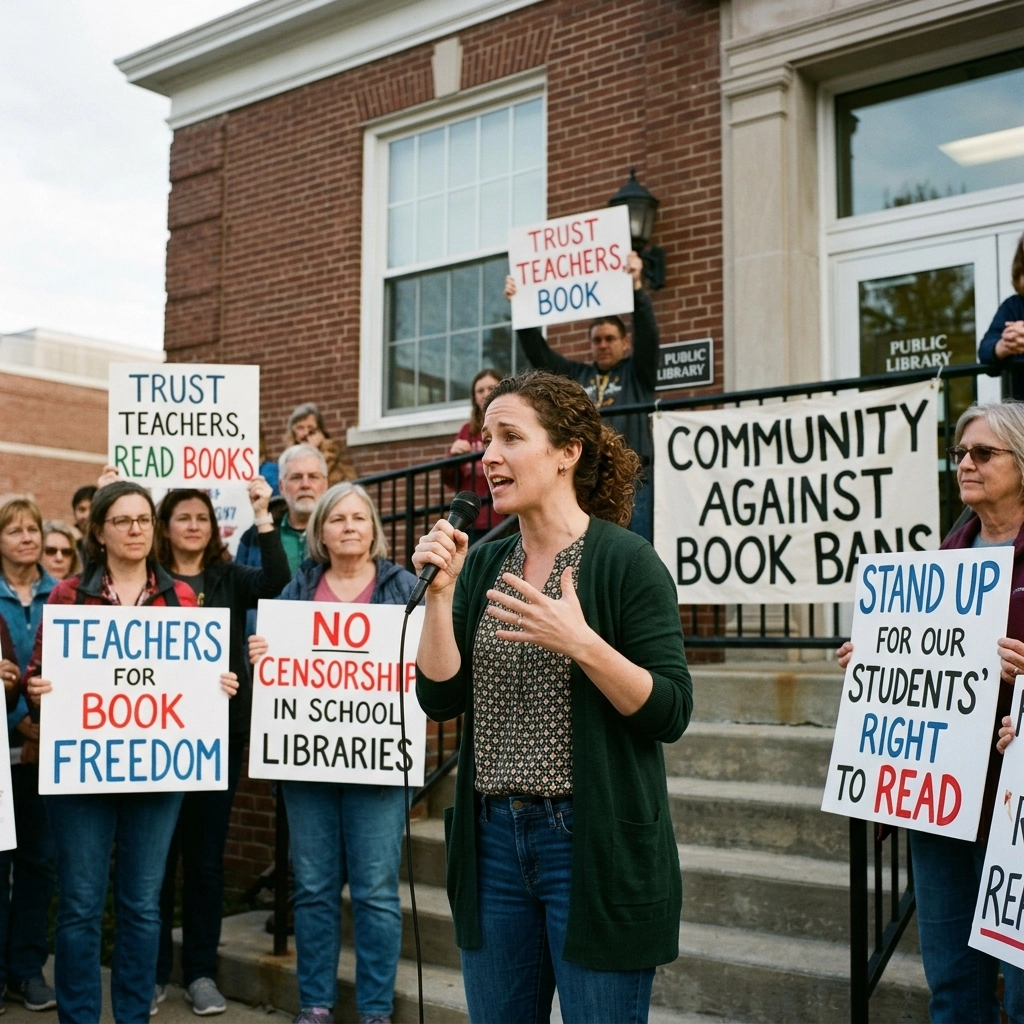
The landscape of modern education is currently facing a significant shift as the debate over book access in school libraries intensifies. Across various regions, teachers and librarians are no longer sitting on the sidelines. Instead, they are stepping into the legal and social arena to challenge what they describe as an unprecedented wave of censorship. This movement is not just about the contents of a bookshelf; it is a fundamental struggle over the First Amendment, the autonomy of educators, and the right of students to access a broad spectrum of ideas.
In recent years, the number of book challenges has reached record highs. Many of these challenges target materials that discuss race, gender, and LGBTQ+ identities. While proponents of these bans argue they are protecting children from inappropriate content, many educators view these actions as an attempt to erase diverse perspectives and limit the intellectual growth of the next generation. This conflict has moved from school board meetings to federal courtrooms, where the future of educational freedom is being debated.
The Legal Frontline in the Battle for Books
The legal battle against school library censorship has seen significant developments, particularly in the United States, where state laws have recently been enacted to restrict certain types of content in schools. One of the most prominent cases has emerged from Iowa, where the Iowa State Education Association (ISEA) took a stand against a sweeping state book ban law. This legislation, which resulted in the removal of hundreds of books from school shelves, was challenged in late 2023.
The lawsuit was not just a solo effort by a union; it brought together a diverse coalition including teachers like Alyson Browder and high-profile authors such as John Green and Jodi Picoult. Their collective argument focused on the "incredibly broad" nature of the law, which led to the removal of literary classics like Maya Angelou’s I Know Why the Caged Bird Sings and contemporary biographies of public figures with same-sex partners. In December 2025, U.S. District Judge Stephen Locher granted a preliminary injunction to block the law, noting that it was unlikely to satisfy the First Amendment. This victory provided a temporary reprieve for educators and students in Iowa, highlighting the power of legal intervention in protecting educational materials.
However, the legal path is rarely straight or simple. In Ohio, a different story unfolded for teacher Karen Cahall. She faced suspension from her district for maintaining a small collection of LGBTQ+ books in her classroom library. Unlike the Iowa case, the U.S. District Court in Ohio dismissed her lawsuit in September 2025. The ruling suggested that teachers in public schools do not have an unfettered First Amendment right to make independent "curricular and pedagogical choices." While this was a setback for Cahall personally, her story has become a rallying cry for others in the profession. It underscores the precarious position many teachers find themselves in: balancing their professional ethics with the evolving legal restrictions of their local districts.
The Personal and Professional Risks for Educators
The fight against censorship is not merely a matter of legal filings; it is a deeply personal struggle for the individuals involved. Educators often find themselves at the centre of a heated cultural debate, facing professional discipline, public scrutiny, and sometimes harassment. The case of Karen Cahall is a prime example of the risks involved. After her suspension, she did not retreat; instead, she launched a GoFundMe campaign to support LGBTQ+ advocacy efforts, continuing her work outside the classroom walls. This level of dedication illustrates the passion many educators have for ensuring their students see themselves reflected in the literature available to them.
Beyond the threat of suspension, there is a quieter, more pervasive form of censorship known as "soft censorship" or self-censorship. When laws are vague or penalties are severe, many teachers and librarians feel pressured to remove books proactively to avoid conflict. This creates a chilling effect in the classroom, where educators are hesitant to introduce complex or controversial topics for fear of retribution. This environment makes it increasingly difficult for students to engage with "untold stories" that challenge their worldviews or provide a sense of belonging for marginalised groups.
To combat this, organisations like the American Association of School Librarians (AASL) and PEN America have been providing resources to help educators navigate these challenges. They recommend that schools maintain robust collection development policies and provide clear training for staff on how to handle material challenges. By formalising these processes, schools can protect the professional integrity of their staff and ensure that any challenges to books are handled through a fair, transparent, and educational lens rather than a political one.
Amplifying Untreated Narratives Through Advocacy
As mainstream media outlets often focus on the loudest voices in the room, the nuances of these local battles can sometimes be lost. This is where the role of alternative journalism and independent news outlets becomes vital. These platforms are essential for surfacing the untold stories of small-town librarians and classroom teachers who are standing up for their students' rights. By providing a platform for these voices, independent news outlets ensure that the conversation remains grounded in the reality of the classroom rather than just the rhetoric of political campaigns.
The importance of diverse literature cannot be overstated. For many students, the school library is the only place where they can access books that deal with the complexities of identity, history, and social issues. When these books are removed, it sends a powerful message about whose stories are considered "appropriate" or "valuable." Advocacy groups argue that a school library should serve as both a mirror and a window: a mirror for students to see themselves and a window for them to see the world beyond their own experiences.
Teachers are increasingly turning to community organising to protect these resources. By working with parents, students, and local civil rights organisations, they are building a broad-base of support for intellectual freedom. They are also using reporting mechanisms provided by the National Coalition Against Censorship (NCAC) to document and track challenges. This data is crucial for understanding the scale of the problem and for building a case for legislative change at both the state and federal levels. The goal is to move away from a reactionary stance and toward a proactive defence of the right to read.
The movement to protect school libraries is growing in sophistication. Educators are no longer just defending individual books; they are defending the very concept of the library as a space for free inquiry. As the legal battles continue to play out in courts across the country, the resilience of these teachers and librarians serves as a testament to the enduring value of literature in our society.
In the face of shifting policies and legal uncertainties, the commitment of educators to their students' intellectual freedom remains a cornerstone of the modern school system. While the results of legal challenges may vary by jurisdiction, the collective effort to highlight these issues ensures that the debate remains a matter of national importance. Moving forward, the collaboration between professional organisations, legal experts, and community advocates will be essential in navigating the complexities of library management and educational autonomy. The ongoing dialogue surrounding these challenges reflects a broader societal commitment to the principles of diversity, inclusion, and the free exchange of ideas.