When we talk about the housing market in the UK, the conversation usually centres on high interest rates, the struggle for first-time buyers to get on the ladder, or the shortage of affordable rentals in major cities. These are all real concerns that dominate the headlines. But there is also a quieter, more desperate struggle happening in the background, one that rarely gets sustained attention. It is the story of millions of people living in homes that do not fit their bodies, their needs, or their safety. This is the invisible housing crisis facing disabled people and those with complex needs, and it is one of the untold stories that deserves far more attention.
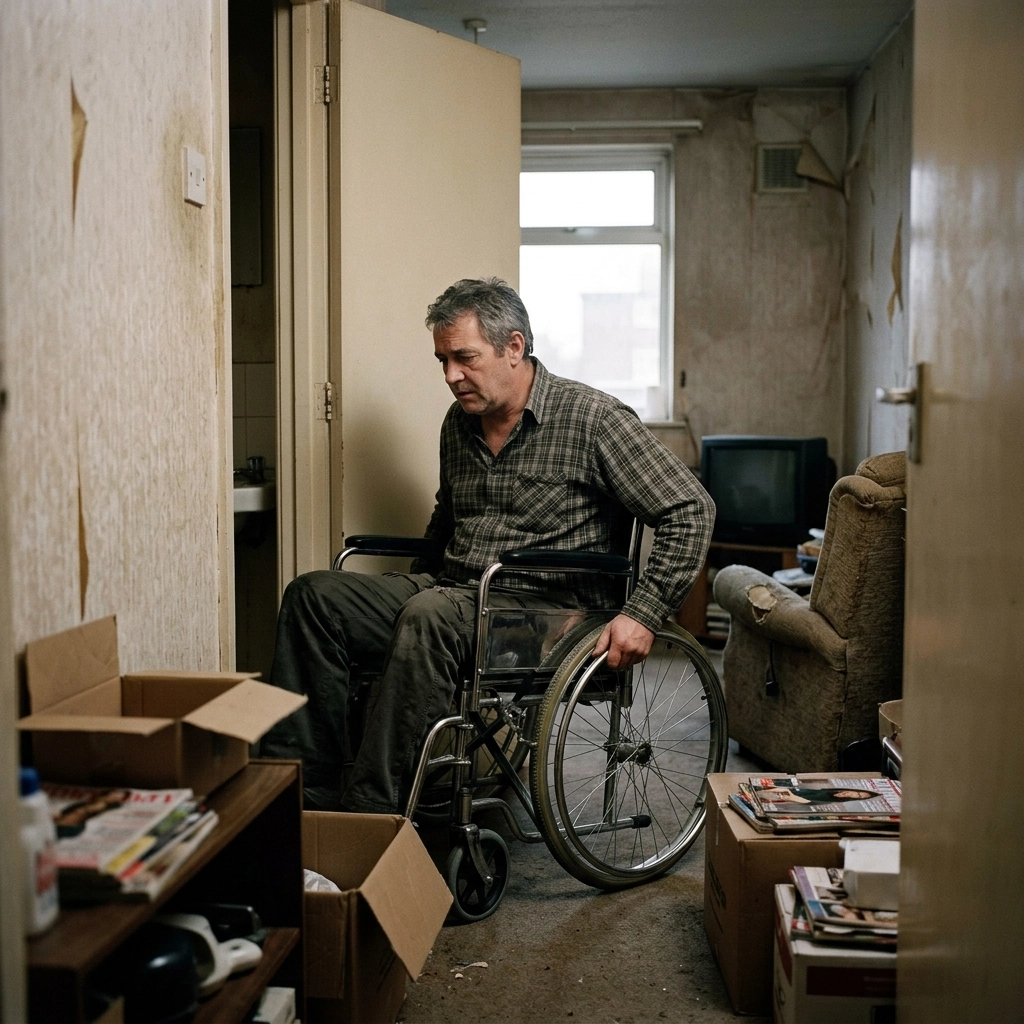
Home should mean safety, dignity and independence. Most people do not think twice about the width of a doorway, the height of a kitchen counter, or the couple of steps leading up to a front door. For someone using a wheelchair or living with serious mobility issues, though, those everyday details can become hard barriers. The reality for many disabled people in the UK is that they are stuck in accommodation that is not just unsuitable but sometimes dangerous. Whether it is being unable to use the bathroom without help or being confined to a single room because the rest of the house is inaccessible, the impact on mental health and day-to-day dignity can be huge.
As part of our commitment to independent news uk, we want to look beyond the surface of the housing shortage. We need to ask why, in 2026, homes are still being built in ways that leave so many people out. The data suggests that millions of people are living in housing that is either non-decent or inaccessible, often waiting years for basic adaptations that would let them live with more freedom and control.
The physical barriers keeping people trapped
One of the biggest hurdles is the physical condition of the UK’s housing stock. A huge share of homes were built decades, if not centuries, ago. They may have character, but they were not designed with accessibility in mind. Narrow hallways, steep stairs and tiny bathrooms are common. For someone with complex needs, finding a home that already meets those requirements can feel nearly impossible. Many end up in private rentals or social housing, where they then have to battle for the right to make adaptations.
Adaptations sounds like a simple word, but the process is anything but. To get a wet room installed or a ramp built, individuals often have to go through a rigorous and exhausting assessment process. Even when the need is clearly established, the funding: often provided through Disabled Facilities Grants: can take months or even years to arrive. During this time, people are effectively trapped. We hear stories of individuals who haven’t been able to leave their top-floor flats for years because the lift is broken or non-existent, or people who have to be carried up the stairs by aging relatives every single day.
It isn’t just about the old buildings, though. There is a systemic failure in how we design new developments. While there are regulations in place, they often represent the bare minimum. "Accessible and adaptable" housing is a category in planning law, but the percentage of new builds required to meet these standards is often negotiated down by developers looking to maximise profit. This creates a cycle where the supply of suitable housing never catches up with the growing demand. When we ignore these untold stories of restricted movement, we are essentially telling a portion of our community that their independence isn't a priority.
The economic gap in accessible housing
The housing crisis is also deeply economic. For disabled people, the financial barriers are often doubled. Statistically, disabled people are more likely to be on lower incomes because of the extra costs linked to equipment, care and transport, along with the ongoing difficulty of finding genuinely inclusive work. When your income is lower, your options in the housing market shrink fast. Too often, people are pushed towards the cheapest, oldest and least accessible parts of the rental market.
In the UK, benefits like Personal Independence Payment (PIP) or the disability elements of Universal Credit are designed to help cover these extra costs, but they rarely bridge the gap when it comes to housing. Market-rate rents in many parts of the country have outpaced the support available, leaving many with an impossible choice: pay for the care and equipment you need or pay for a roof over your head. This economic trap is a major reason why disabled people are disproportionately represented in the homeless population. Many find themselves in "temporary" accommodation that is entirely unsuitable for their needs, staying there for years because there is simply nowhere else to go.
Furthermore, the private rental sector is notoriously difficult for disabled tenants to navigate. There is a lingering stigma and, in some cases, outright discrimination. Landlords may be hesitant to allow modifications to their property, even if the tenant has the funding to pay for them and promises to restore the property later. There’s also the fear that a tenant with complex needs might be a "higher risk" or more difficult to manage. This leaves disabled people competing in a brutal market with one hand tied behind their back. As an independent news uk source, we see how the lack of affordable, specifically designed social housing is forcing people into precarious and degrading living situations.
A looming crisis for aging families
One of the most painful parts of this crisis is what is often called the "ageing caregiver" problem. For decades, many adults with intellectual or developmental disabilities have lived at home with their parents. In many cases, that was a conscious choice to avoid institutional settings and keep loved ones in a familiar, caring environment. But those parents are now reaching their 70s, 80s and 90s. Many are finding it harder to provide the physical care required, while living with the constant question of what happens when they are no longer there.
The lack of a clear pathway for these individuals to move into supported living or independent housing is a ticking time bomb. In many cases, there is no plan in place. Because the system is so stretched, local authorities often can’t offer a solution until a crisis occurs: usually the illness or death of the primary caregiver. This means that a person who has lived in the same home for 40 or 50 years is suddenly thrust into an emergency placement, often far away from their community and friends, while they are also grieving the loss of a parent.
This isn't just a failure of housing policy; it's a failure of social care. We need a system that plans for the future, rather than just reacting to emergencies. We need a diverse range of housing models: from fully supported group homes to independent flats with "floating" support. At the moment, the options are too binary: you either live with your parents or you are placed in a high-needs care facility. There is very little in between for those who want a level of independence but still need some assistance. The untold stories of these families, living in a state of perpetual anxiety about the future, highlight exactly why this issue needs more than just a passing glance in the news.
The housing crisis for the disabled is a complex web of architectural, economic, and social failures. It is a crisis that remains invisible to many because it happens behind closed doors, in homes that were never meant to be prisons. Addressing this requires a fundamental shift in how we view housing. It shouldn't be seen merely as a financial asset or a basic shelter, but as a foundation for human rights and dignity.
Solving this problem will require more than just building more houses; it requires building the right houses in the right places, with the right support systems attached. It means enforcing stricter accessibility standards on developers and ensuring that the grant systems for adaptations are fast, fair, and properly funded. Above all, it requires us to listen to the people living through these experiences and to ensure their voices are a central part of the conversation about the future of our communities. Only then can we begin to close the gap and ensure that everyone, regardless of their physical or cognitive needs, has a place they can truly call home.