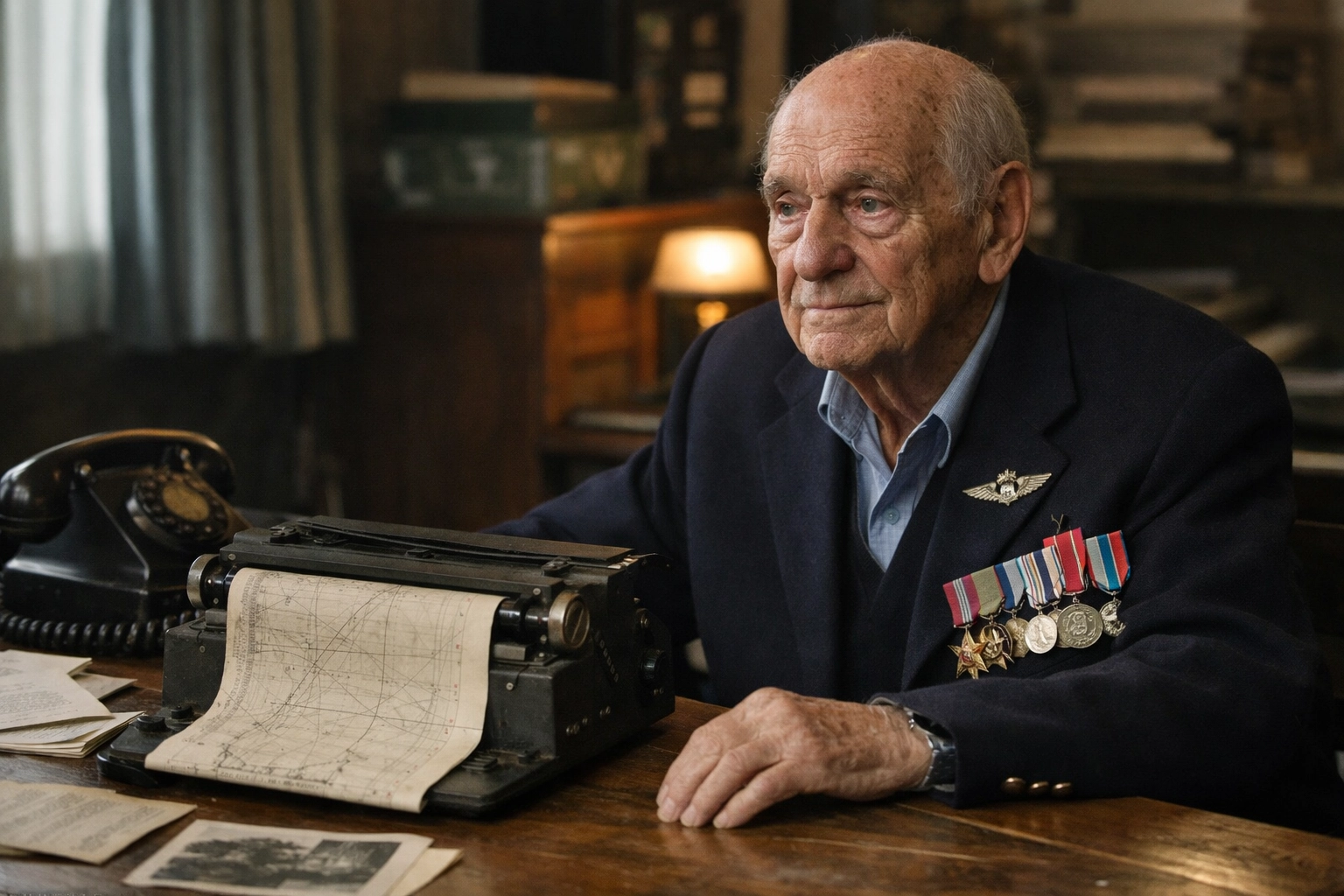
Kay Xuereb sits in her home in Malta, a centenarian whose memory remains as sharp as the plotting poles she once wielded in the depths of a limestone fortress. At 101 years old, Xuereb is believed to be the last surviving Maltese plotter from the Royal Air Force (RAF) operations during the Second World War. For decades, the specific details of her service remained shielded by the Official Secrets Act and a personal sense of duty. Today, her story offers a final, first-hand perspective on the Siege of Malta, a campaign that changed the course of the war in the Mediterranean.
The role of a plotter was one of intense precision and immense psychological pressure. Located deep beneath the Upper Barrakka Gardens in Valletta, the Lascaris War Rooms served as the nerve centre for the island's defence. It was here that Xuereb and her colleagues tracked the movement of every aircraft within range of Malta’s radar. They were the eyes of the commanders, translating invisible radio waves into physical markers on a giant map table. Every movement represented lives hanging in the balance, a reality that Xuereb remembers with sombre clarity.
During the height of the conflict, Malta earned the reputation of being the most heavily bombed place on Earth. Between 1940 and 1942, the island was subjected to over 3,000 air raids. The Axis powers, led by the Italian Regia Aeronautica and the German Luftwaffe, sought to neutralise Malta to secure supply lines to North Africa. For the women working in the tunnels below, the war was a series of wooden blocks pushed across a map, accompanied by the muffled roar of explosions vibrating through the rock overhead.
The Silent Sentinels of the Lascaris War Rooms
The Lascaris War Rooms were a top-secret complex of tunnels and chambers excavated by the British. These rooms were designed to withstand direct hits from the heaviest bombs available at the time. Inside, the atmosphere was thick with the smell of cigarette smoke, damp limestone, and the ozone of electrical equipment. Kay Xuereb was part of a select group of Maltese women recruited to work alongside the Women’s Auxiliary Air Force (WAAF). Their contribution was essential to the "Dowding System," the sophisticated integrated air defence network that had been adapted for the Mediterranean theatre.
Xuereb’s shift would begin with a descent into the cool, dark tunnels, leaving behind the heat and the rubble of Valletta. Once at the plotting table, she would don a headset and wait for reports from radar stations scattered across the island. These reports arrived as a series of coordinates and codes. With a long-handled rake, Xuereb would move markers: referred to as "plots": representing friendly Spitfires and Hurricanes or incoming enemy Junkers and Messerschmitts.
The "secret" of the plotters was not just the location of the bunkers, but the sheer speed at which they processed data. The margin for error was non-existent. If a plotter miscalculated the speed or heading of an incoming raid, the anti-aircraft batteries and fighter squadrons would be out of position. Xuereb recalls the silence that would often fall over the room during a major engagement. The only sounds were the scratching of the wooden poles and the calm, rhythmic voices of the controllers in the gallery above, directing pilots into the fray.
The emotional toll of this work was significant. Xuereb and her peers often knew the pilots by their call signs. They watched on the table as markers representing "friendly" aircraft slowed, wavered, and eventually disappeared. "We knew they might never come back," Xuereb has noted in recent reflections. This proximity to death, filtered through the abstraction of a wooden block, created a unique form of wartime trauma that many plotters carried in silence for the rest of their lives.
Mapping Survival Beneath the Siege of Malta
The strategic importance of Malta cannot be overstated. Had the island fallen, the British would have lost their primary base for intercepting Axis convoys heading to Erwin Rommel’s Panzer Army Africa. The work of plotters like Kay Xuereb was directly linked to the success of Operation Pedestal and other desperate supply missions that kept the island from starving. The information Xuereb handled allowed the RAF to husband its dwindling resources, ensuring that every gallon of fuel and every round of ammunition was used with maximum efficiency.
Life for the Maltese population during this period was a struggle for basic survival. Rationing was severe, and the constant threat of aerial bombardment forced thousands to live in makeshift shelters carved into the rock. Xuereb’s position gave her a dual perspective: she lived the hardship of the civilian population by day and managed the high-stakes tactical defence by night. This duality required a level of mental fortitude that became the hallmark of the "Fortress Island" generation.
The technical nature of Xuereb’s work remained classified long after the guns fell silent in 1945. The plotters were instructed never to discuss the details of the radar technology or the layout of the war rooms. For many Maltese women, the transition back to civilian life meant returning to traditional roles, with their wartime contributions largely unrecognised by the public. Xuereb herself moved on, but the memories of those shifts in the limestone deep remained a private archive of the island’s most desperate hours.
The "secret" finally being told is the acknowledgement of how close the system came to breaking. There were moments when the radar stations were bombed out, or when the number of incoming enemy plots simply overwhelmed the capacity of the table. Xuereb’s testimony highlights the human element behind the machinery of war. It was the steady hands of young women, often teenagers or in their early twenties, that maintained the order necessary to prevent total collapse during the dark days of 1942.
The Final Witness to a Fortress Island’s Resilience
As the last known Maltese plotter, Kay Xuereb represents a closing chapter in the history of the Mediterranean theatre. Her longevity has allowed her to see the Lascaris War Rooms transition from a secret military installation to a preserved museum. She has outlived almost all of her contemporaries, both the women who worked the tables and the pilots they guided through the clouds. Her story is now being documented by historians eager to capture the nuances of the plotting process before the living memory fades entirely.
Xuereb’s reflections in her 101st year are not of personal glory, but of a collective sense of purpose. She speaks of the camaraderie in the tunnels and the shared determination to see the island through the siege. The "secret" she tells is one of resilience. It is the story of a small island nation that refused to buckle under the weight of thousands of tons of explosives, aided by a hidden network of intelligence and the precision of those who mapped the skies.
The preservation of Xuereb’s account is vital for understanding the civilian-military integration that defined the Second World War. Maltese women like Xuereb were pioneers, stepping into roles that had previously been the exclusive domain of men or British personnel. Their proficiency changed the military’s perception of local recruitment and paved the way for future generations of Maltese women in the workforce.
Today, the markers on the plotting tables at Lascaris are static, frozen in a recreation of a long-past air battle. But for Kay Xuereb, those markers are still moving. She remains the final witness to the silent, underground war that saved Malta. Her story serves as a reminder that behind every historical victory are the untold secrets of individuals who performed extraordinary tasks under the most harrowing conditions. As she celebrates her second century of life, Xuereb stands as a living monument to the endurance of the human spirit in the face of total war.
The legacy of the plotters is finally being integrated into the broader narrative of the Battle of Malta. No longer just a footnote in military history, the work of Kay Xuereb and her colleagues is recognised as a pillar of the island’s defence. As the final voices of that era grow quiet, the clarity of Xuereb’s memory ensures that the secret world of the Lascaris plotters will be remembered not just as a technical feat, but as a human one.