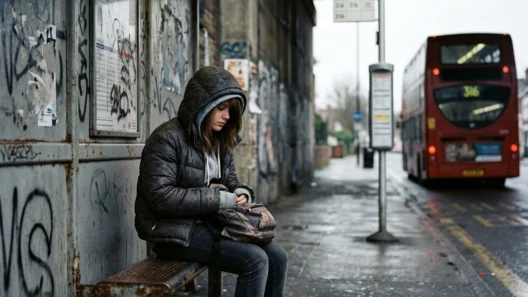
When we talk about the state of the nation, the conversation often drifts toward the economy, the latest political drama, or the rising cost of a pint. But beneath these loud, public debates lies a much quieter, more painful reality that thousands of families across Britain are living every single day. At NowPWR, we believe in providing independent news uk that looks past the surface. Today, we’re looking at the untold stories of the UK’s hidden care crisis: a system that is currently seeing some of our most vulnerable citizens falling through the cracks.
It’s easy to assume that if you’re sick, you go to the hospital, and once you’re better, you come home. That’s how a functioning society is supposed to work. But for a staggering number of people, particularly children and the elderly, that second half of the journey: the journey home: is being blocked by a crumbling social care infrastructure. This isn't just a matter of paperwork or minor delays; it is a fundamental breakdown in how we support those who cannot support themselves.
Growing up within four hospital walls
Perhaps the most heartbreaking aspect of this crisis involves the youngest members of our society. Recent data suggests that over 260,000 children in the UK have spent at least three weeks in a hospital bed during their childhood. Even more distressing is the fact that around 70,000 of these children have spent more than two months in a clinical setting. While some of this is due to complex medical needs, a significant portion of these children are medically fit for discharge. They are healthy enough to leave, but they have nowhere to go.
The reality for these families is a cycle of frustration. Imagine a child who has recovered from an illness or a surgery but is forced to stay in a sterile hospital ward because the community care package they need doesn't exist yet. Maybe they need a specific type of home nursing, or perhaps their family home needs adaptations that the local council hasn't approved or funded. In some extreme cases, children have spent half of their lives living in a hospital simply because there isn't a suitable social care placement available.
This isn't just about a lack of beds; it’s about a lack of coordination. We often see funding disputes between health services and social care departments, with each side arguing over who should pick up the bill for a child's long-term support. While the bureaucrats argue, the children miss out on the fundamentals of a happy childhood. They miss school, they miss playing with friends, and they miss the comfort of their own bedrooms. It’s a tragedy playing out in plain sight, yet it remains one of the many untold stories of our modern age.
This crisis is also disproportionately affecting those from deprived backgrounds and ethnic minority communities. When a family is already struggling with housing or financial instability, navigating the complex world of social care becomes an almost impossible mountain to climb. Without the right advocacy or the means to pay for private help, these children remain stuck in wards, becoming "bed blockers" through no fault of their own, while their potential for a normal life slowly withers.
The heavy weight on unpaid shoulders
While the situation in hospitals is critical, there is another crisis happening behind closed doors in millions of homes across the UK. There are roughly 5.7 million unpaid caregivers in this country: people looking after elderly parents, disabled partners, or children with long-term conditions. To put that in perspective, the care they provide is estimated to be worth around £132 billion every year. That is essentially a second NHS, run entirely on the love, sweat, and exhaustion of ordinary people.
The friendly, community-spirited image of the "family carer" often masks a much darker struggle. More than half of these caregivers report feeling that their role is completely unrecognised by the government and society at large. They are the invisible glue holding the system together, yet they are frequently left to reach breaking point without any formal support. Over 50% of unpaid carers report significant emotional and psychological distress, feeling trapped in a cycle of constant responsibility with no end in sight.
A major part of the problem is accessibility. It’s not just that support is scarce; it’s that it is incredibly difficult to find. Three-quarters of unpaid caregivers say they wouldn't even know how to begin accessing the support they are technically entitled to. They are navigating a maze of local authority websites, confusing criteria, and long waiting lists, all while trying to manage the 24/7 demands of looking after a loved one.
When we talk about independent news uk, we have to talk about the human cost of these statistics. We are talking about daughters who have had to quit their jobs to look after a parent with dementia, losing their own financial independence in the process. We are talking about elderly husbands struggling to lift their wives because they can't get a home visit from a social worker. These stories aren't always "newsworthy" in the traditional sense because they happen slowly, in private, and without a single explosive event. But they represent a massive failure of our social contract.
A system built on shaky foundations
The root of the problem often comes down to how adult social care is structured and funded in England. Over the last couple of decades, the system has become increasingly privatised. While private care isn't inherently a bad thing, the way it has been implemented has created a "double burden" for those in poorer areas. Private providers naturally gravitate toward affluent areas where there are more "self-funders": people who can afford to pay for their own care. This leaves socioeconomically deprived areas with a severe shortage of quality services.
As the share of publicly provided care has dropped by more than half since the early 2000s, local authorities have been left to pick up the pieces with dwindling budgets. Nearly nine out of ten directors of adult social services believe they simply do not have the funding or the workforce to meet the basic care needs of their communities. This isn't just about having enough people to help someone get dressed or eat a meal; it's about having the infrastructure to keep people safe and dignified.
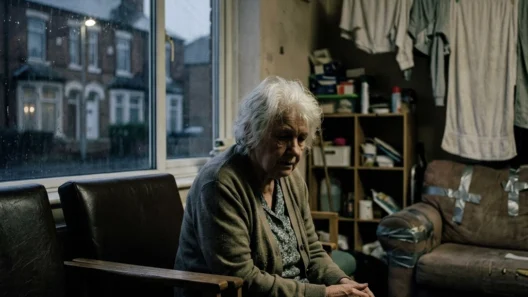
One of the most overlooked aspects of this crisis is the lack of accessible housing. We can't talk about social care without talking about the homes people live in. Thousands of people are currently living in housing that is actively making their health worse or making their care impossible to manage. Whether it's a lack of wheelchair ramps, bathrooms that are impossible to use, or simply homes that are too cold and damp, the housing crisis is inextricably linked to the care crisis.
When people fall through these cracks, the impact ripples out through the entire community. It leads to more pressure on the NHS, as people end up in A&E for issues that could have been prevented with better home care. It leads to rising tensions in UK communities as families feel abandoned by the state. And ultimately, it leads to a society where the measure of your worth is determined by your ability to navigate a failing system.
The UK's care crisis is a complex, multi-layered issue that won't be solved overnight. It requires more than just a quick injection of cash; it requires a fundamental rethink of how we value care, how we support caregivers, and how we ensure that a "medically fit" child actually has a home to go back to. As we continue to cover the most important untold stories across the country, it is clear that the voices of those in the care system need to be heard now more than ever.
Addressing these gaps in social care and housing is not just a policy requirement: it is a moral one. Until every person, regardless of their age or ability, has access to a safe home and the support they need to thrive, the "hidden" crisis will continue to haunt our society, leaving thousands of our neighbours to struggle in the shadows.