Robert Forrester spent two decades patrolling the riverbanks and industrial corridors of Lancashire as an officer for the Environment Agency. For most of that time, he was a dedicated public servant tasked with protecting the natural world from the excesses of industry. However, for the last seven years, he has lived a double life as one of the most significant whistleblowers in the history of British environmental regulation.
The man who spent years operating under pseudonyms to leak damning data about the state of Britain's waterways has finally stepped into the light. His decision to reveal his identity follows a long-running legal battle and a settlement that has finally granted him the freedom to speak. Forrester’s journey from a loyal employee to a public agitator highlights a systemic crisis within the organisations designed to keep the nation’s water safe.
Forrester's story is not merely one of personal conscience but a detailed account of how a regulatory body allegedly turned its back on its primary mission. From his Preston-based office, he witnessed the gradual erosion of enforcement powers and a shifting culture that he claims prioritised the needs of water companies over the health of the environment.
The scale of the scandal he uncovered has touched every corner of the United Kingdom, sparking national outrage over sewage discharges and toxic runoff. Yet, the roots of his dissent began with a single, devastating incident in West Lancashire that the public was never supposed to fully understand.
The catastrophic failure of oversight in West Lancashire
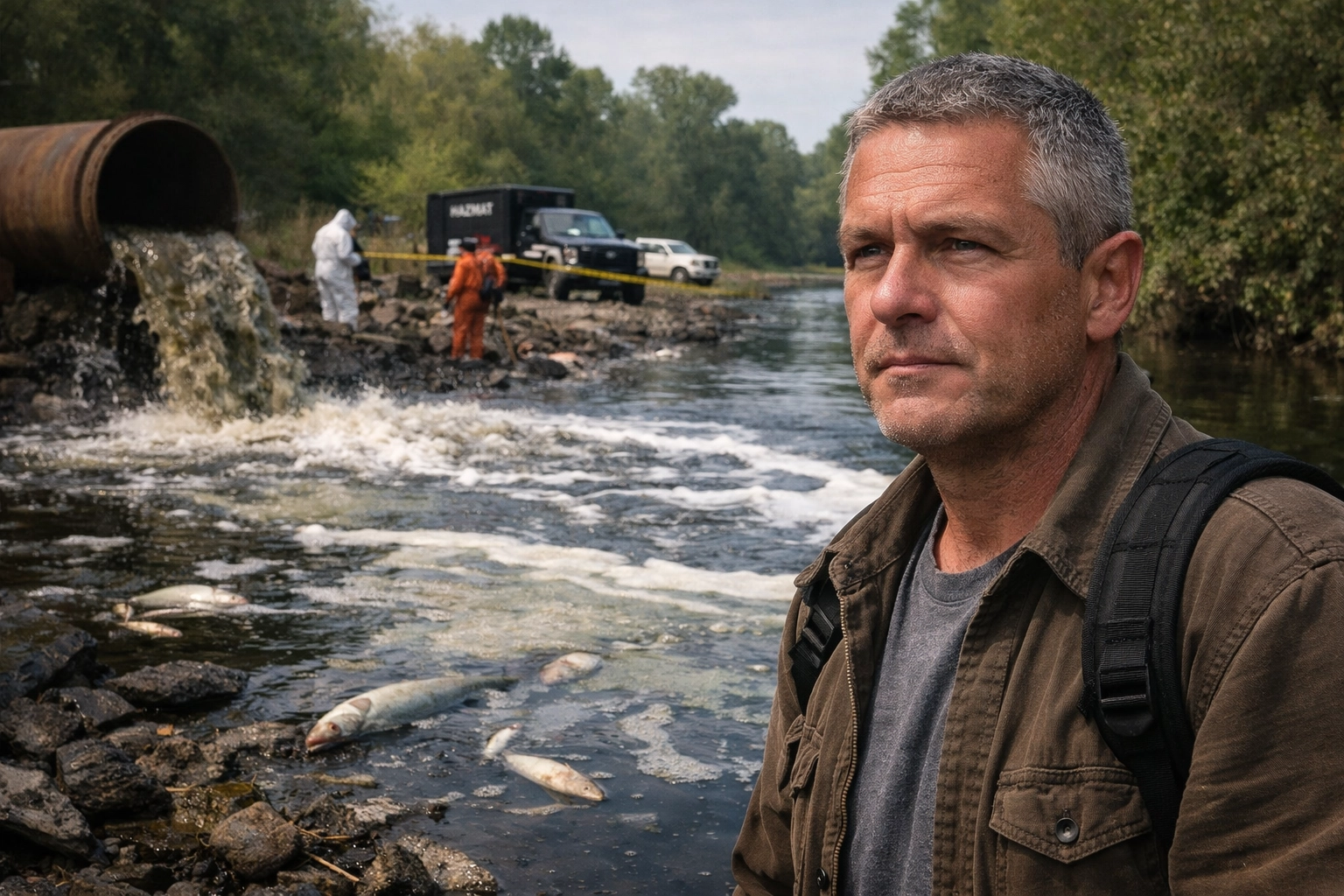
The defining moment of Robert Forrester’s career occurred when industrial waste was discharged into a sewer system in West Lancashire. This was not a routine spill; the waste contaminated the local groundwater and breached a drinking water pipe at an adjacent property. For a period of two to three weeks, residents unknowingly consumed water containing carcinogens at concentrations estimated to be 1,000 times above safe limits.
The Environment Agency itself categorised the event as a "Category One" incident. This is the most serious designation available to the regulator, reserved for events that cause major, long-lasting, or far-reaching harm to the environment or public health. Under standard protocols, such a classification should have triggered immediate and rigorous enforcement action against those responsible.
Instead, Forrester watched as the machinery of the state ground to a halt. Despite the severity of the contamination and the direct risk to human life, no prosecution was mounted and no significant fines were issued. The lack of accountability for the West Lancashire incident became the catalyst for Forrester’s transition from a concerned employee to an internal insurgent.
He began to realise that the failure to prosecute was not an isolated error but part of a broader, more disturbing trend. Data he later accessed suggested that the Environment Agency had entered a period of managed decline, where the threshold for taking legal action against polluters had been raised to almost impossible levels.
Forrester saw a system where the "polluter pays" principle had been replaced by a "polluter persists" reality. This frustration led him to take the first steps toward whistleblowing, documenting the gap between the Agency's public statements and its private failures.
The West Lancashire case remained a dark secret for years, known only to those involved and the residents who had been poisoned. Forrester knew that if change were to happen, the evidence would have to come from the inside, bypassing the official channels that had already failed.
A clandestine campaign to expose the regulatory void
Driven by a sense of duty to the public, Forrester began an extraordinary campaign of internal espionage. He adopted a pseudonym to file Freedom of Information (FOI) requests against his own employer, seeking data that was technically public but effectively buried under layers of bureaucracy. This allowed him to gather a national picture of regulatory failure without immediately alerting his superiors to his activities.
The data he retrieved was staggering. It painted a picture of an Environment Agency that had shifted its focus from active regulation to passive observation. Forrester found evidence that the Agency was increasingly fulfilling the demands of the water industry rather than holding it to account, effectively turning a blind eye to widespread pollution.
As his collection of evidence grew, Forrester began to share his findings with environmental campaigners and investigative journalists. He became a primary source for some of the most impactful reporting on the UK water crisis, providing the hard data needed to prove that the visible pollution in rivers was the result of policy decisions made behind closed doors.
He documented how water companies were permitted to discharge untreated waste into rivers and coastal waters with minimal fear of reprisal. The "ghost in the machine" approach allowed him to remain anonymous for several years, even as his leaks began to dominate the national news cycle and put immense pressure on government ministers.
However, the strain of leading a double life within a high-pressure government agency began to take its toll. Forrester was constantly at risk of discovery, knowing that his career and pension were on the line if his identity was ever linked to the data breaches. He was essentially investigating his colleagues and superiors while sitting just desks away from them.
The turning point came in 2021 when the Environment Agency finally identified Forrester as the source of the leaked information. The response was swift; he was suspended from his duties and faced an internal investigation that threatened to end his professional life in disgrace.
Legal vindication and the birth of a national movement
Following his suspension, Forrester did not retreat. Instead, he initiated employment tribunal proceedings, claiming that he had been subjected to retaliation for his role as a whistleblower. He argued that his actions were protected under the law because they were taken in the public interest to expose wrongdoing and health risks.
The legal battle lasted for years, during which time the public's anger over the state of British rivers reached a breaking point. Forrester’s story became so central to the national conversation that it was dramatised in the Channel 4 documentary drama "Dirty Business." The character of Hanna Swift was based directly on his experiences, bringing his struggle to a mainstream audience while he remained legally gagged.
Just as the drama aired, Forrester reached a settlement with the Environment Agency. The terms of the settlement finally allowed him to step forward and claim his work. For the first time in seven years, he could speak candidly about his role in exposing the scandal and the specific failures he witnessed during his twenty years on the job.
The revelation of his identity has transformed him from an anonymous source into a symbol of the environmental movement. His story has provided a human face to the technical data of water pollution, illustrating the personal cost of standing up to institutional failure. He remains a vocal critic of the current regulatory framework, calling for a total overhaul of how water companies are monitored.
The impact of Forrester's whistleblowing is still being felt across the UK. The Environment Agency has faced intense scrutiny from parliamentary committees, and the issue of water quality has become a major political battleground. His leaks provided the foundation for legal challenges and policy shifts that are only now beginning to take effect.
While Forrester is now free to speak, the rivers he spent his life trying to protect remain in a precarious state. The systemic issues he identified: underfunding, lack of enforcement, and industry capture: continue to plague the British landscape. His transition from an officer to a whistleblower serves as a stark reminder that sometimes the greatest threat to the environment is the very system meant to save it.
Forrester’s journey has ended with his freedom, but the battle for the health of Britain’s waterways is far from over. His legacy is a public that is now fully aware of what is happening beneath the surface of their local rivers, and a regulatory body that can no longer hide behind a veil of secrecy.