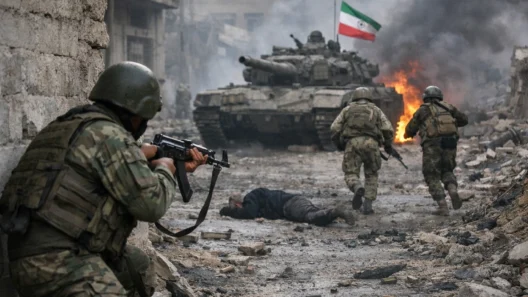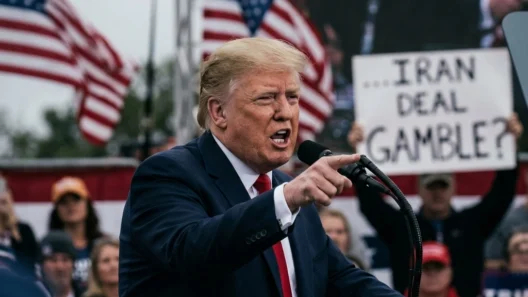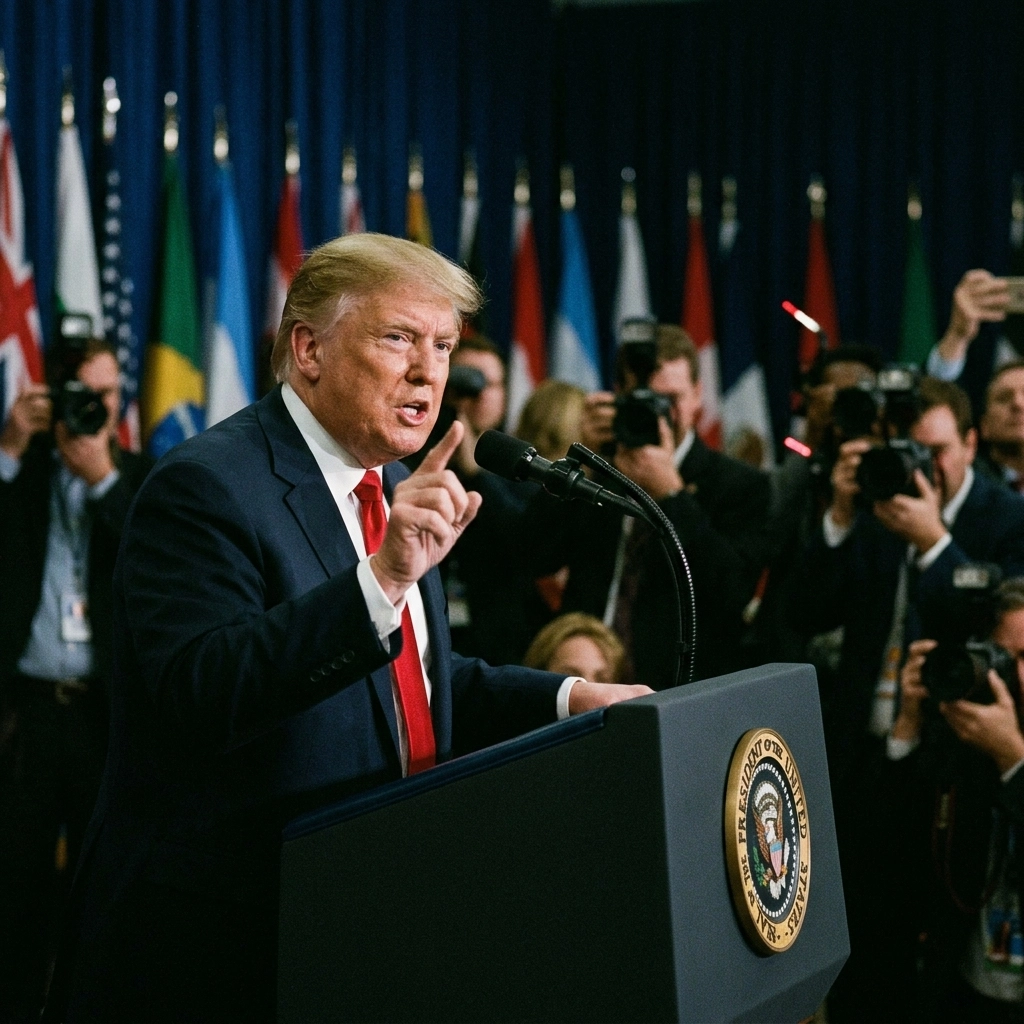
The international landscape shifted significantly this week following President Trump’s national address regarding the ongoing conflict with Iran. For those following the developments closely, the rhetoric coming out of Washington suggests a pivot that few were prepared for. While the administration has been vocal about its military objectives for months, the latest update indicates that the theatre of war is expanding far beyond the traditional borders of the Middle East. This transition into what the President describes as a 'dangerous new phase' has caught the attention of world leaders and market analysts alike, as the focus moves from conventional military strikes to a more complex, multi-dimensional struggle.
In his address, the President maintained that the primary goals of the United States: specifically the degradation of Iran’s nuclear programme and its immediate military capabilities: have been almost entirely achieved. However, instead of a de-escalation or a clear path toward a ceasefire, the message was one of continued pressure. The paradox of claiming victory while simultaneously threatening more intense strikes has left many questioning what the actual endgame looks like. For the global community, the lack of a defined exit strategy is perhaps the most unsettling aspect of this new development.
The shift from physical battlefields to global tech targets
One of the most startling revelations to emerge in recent days is the Iranian government’s decision to designate major American technology companies as legitimate military targets. This includes household names like Google, Apple, and Meta. This shift marks a significant escalation in how modern warfare is conducted, moving away from the exchange of munitions to the targeting of digital infrastructure. From a global business analysis perspective, this is a move that could have catastrophic consequences for the world economy. These platforms are not just social media sites; they are the backbone of international communication, commerce, and data management.
By targeting these tech giants, Iran is attempting to strike at the heart of American soft power and economic stability. This strategy suggests that the Iranian leadership recognises they cannot win a conventional war against the US Navy or Air Force, so they are instead prioritising asymmetrical tactics. Many alternative news sites have been discussing the potential for a 'global tech war' for years, but seeing it manifest as official state policy is a different matter entirely. If these companies are successfully compromised, the ripple effects would be felt in every corner of the globe, affecting everything from personal banking to international logistics. The administration has responded by suggesting that any cyber-attack on these entities would be treated with the same severity as a physical attack on US soil, further heightening the stakes.
This digital front creates a unique set of challenges for the US military and intelligence communities. Protecting a physical border or a carrier strike group is one thing, but securing the vast, sprawling networks of private tech companies is another. It blurs the line between civilian and military targets, a distinction that has already been stretched thin during this conflict. As the 'dangerous new phase' unfolds, the role of these corporations will likely become as central to the war effort as any traditional military branch.
Naval tensions and the volatility of the Persian Gulf
While the digital threats grow, the situation on the water remains incredibly tense. In the Persian Gulf, the theatre of operations continues to expand as Iran-linked forces and Houthi rebels from Yemen intensify their activities. Recent reports have confirmed fresh strikes on vessels linked to the United States and its allies, proving that the maritime corridors remain a primary flashpoint. This is particularly concerning given the current status of the USS Gerald Ford. As the world’s largest naval warship, its presence: or lack thereof: is a major factor in the regional power balance. With the vessel currently out of active service during this critical period, the US has had to rely on a more distributed naval strategy, which some analysts argue leaves commercial shipping more vulnerable.
The Houthi rebels have shown an increasing level of sophistication in their attacks, using a mix of drones and anti-ship missiles to disrupt one of the world's most vital energy arteries. This isn't just a military problem; it’s an economic one. The constant threat of regional conflict in the Gulf pushes insurance premiums for shipping through the roof and threatens the stability of global oil prices. When we look at global business analysis regarding the energy sector, the instability in the Strait of Hormuz is always the 'X' factor that can derail even the most optimistic forecasts.
The President’s rhetoric suggests that the US is prepared to escalate its way out of this situation, but history suggests that such a path is rarely straightforward. By threatening even more intense strikes in the coming weeks, the administration is betting that a show of overwhelming force will eventually force Iran to the negotiating table. However, critics of this approach point out that without a meaningful peace process or a willingness to make diplomatic compromises, the cycle of retaliation is likely to continue. The Iranian response has been to double down on their regional proxies, creating a web of conflict that is becoming increasingly difficult to untangle.
Strategic uncertainty and the search for an exit strategy
The most pressing concern for many observers is the apparent absence of a clear exit strategy. President Trump has often spoken about ending 'forever wars', yet the current trajectory in Iran seems to point toward a prolonged engagement. The 'dangerous new phase' implies an expansion of the conflict’s scope, but it doesn't necessarily provide a roadmap for its conclusion. This lack of clarity is being debated heavily across various alternative news sites, where commentators are split on whether the administration is playing a complex game of brinkmanship or if it has genuinely reached a strategic impasse.
Military analysts warn that targeting civilian infrastructure or escalating strikes without a diplomatic fallback could provoke a massive retaliatory response from Iran that could encompass the entire Middle East. There is also the risk of 'mission creep', where the initial goals of degrading nuclear capabilities expand into a broader effort to force regime change: a goal that would require a much larger and more permanent American presence in the region. The volatility of the situation is compounded by the fact that the international community is far from united on the best way forward. While some allies support the 'maximum pressure' campaign, others are deeply concerned about the potential for a total regional collapse.
As we move toward the middle of 2026, the focus will remain on whether the US can balance its military objectives with the need for long-term stability. The integration of cyber warfare, the ongoing naval skirmishes, and the high-stakes rhetoric from both Washington and Tehran have created a powder keg. For businesses and investors, the key will be to stay informed through a variety of sources, including global business analysis and insights from alternative news sites, to navigate the uncertainty. The coming weeks will likely determine whether this 'dangerous new phase' leads to a breakthrough or a breakdown in international relations.
The current state of affairs between the United States and Iran represents a pivotal moment in modern geopolitics. With the transition into a phase that encompasses both high-tech cyber threats and traditional naval warfare, the complexity of the conflict has reached an all-time high. The implications for global trade, digital security, and regional peace are profound. As the situation continues to evolve, the need for clear strategic goals and a viable path toward de-escalation becomes increasingly urgent for all parties involved.