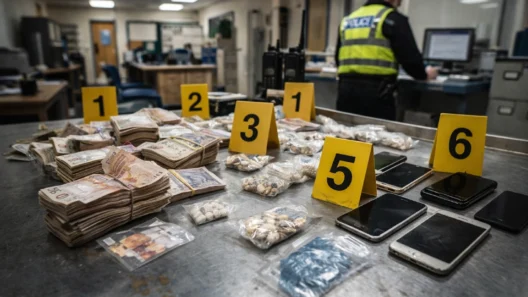
The landscape of substance abuse in Britain is shifting in a way that is both unexpected and deeply concerning. While public attention often remains fixed on the long-standing battles against class A drugs like cocaine or heroin, a different kind of emergency has been quietly unfolding in school playgrounds and suburban streets. This is the reality of the ketamine crisis, a situation that is no longer confined to the fringes of the underground rave scene but has found its way into the hands of children as young as 10 years old.
As we look at independent news uk today, the narrative surrounding drug use is evolving. We are no longer just talking about teenagers experimenting in their late teens; we are seeing a generation of primary school-aged children being exposed to a powerful dissociative anaesthetic. The scale of the problem is vast, and the implications for the future of public health and community safety are immense. By focusing on these real problems, we can begin to understand how a surgical drug became disturbingly easy for young children to access across the UK.
The hidden reality of the ketamine epidemic
The rise of ketamine use among the very young is not a sudden fluke but the result of a perfect storm of high availability and low cost. In areas across Greater Manchester and Cheshire, reports have surfaced of children as young as 10 being involved in both the consumption and the supply of the drug. For many of these children, ketamine is not viewed with the same level of fear as other substances. It is often perceived as a "cheap high," with some reports suggesting that a "bump" of ketamine can be purchased for less than the price of a fizzy drink or a bag of crisps. This affordability makes it uniquely accessible to school-aged children who have very little disposable income.
What makes this situation particularly harrowing are the untold stories of how these children are pulled into the trade. It is rarely a case of a child seeking out a high-level dealer. Instead, recruitment often happens through peer groups or older siblings, creating a cycle of dependency and exploitation. In many instances, young children are used as "runners" or "mules" because they are less likely to attract police attention. This reflects a wider pattern in which vulnerable minors are drawn into criminal networks long before many adults even realise what is happening.
The sheer volume of ketamine on the streets has led to an eight-fold increase in people requiring medical treatment for the drug since 2015. While the government launched a public awareness campaign in late 2025 specifically targeting the 16 to 24-year-old demographic, the data suggests that the age of first use is dropping significantly below that bracket. When a 12-year-old is using the drug regularly and a 13-year-old is dealing it, the traditional methods of drug education and prevention are clearly failing to keep pace with the reality on the ground.
How digital markets and social media are fueling the fire
One of the most significant drivers of the current crisis is the ease with which ketamine can be sourced online. The modern drug market does not always require a meeting on a dark street corner. For the tech-savvy "Generation Alpha," buying drugs can be as simple as sending a direct message on a popular social media app or browsing a decentralised marketplace. Encrypted messaging services have allowed dealers to advertise their "menus" directly to young people, often using colourful emojis and slang that bypasses automated moderation systems.
This digitisation of the drug trade has created a layer of anonymity that emboldens both the seller and the buyer. To a 10 or 11-year-old, the process of ordering something online feels familiar and relatively safe, masking the very real danger of what they are actually purchasing. There is also the issue of purity; ketamine sold on the street or via social media is frequently "cut" with other substances, ranging from baking soda to much more dangerous synthetic chemicals, increasing the risk of accidental poisoning or overdose.
The online world also plays a role in the social glamorisation of the drug. Short-form video platforms often feature content that, while not explicitly promoting drug use, depicts the "k-hole" — a state of intense dissociation caused by high doses — in a way that can seem intriguing or even funny to an impressionable audience. This normalisation makes it harder for parents and teachers to step in early. When a drug starts circulating through trends, jokes and coded posts, the jump from online curiosity to real-world experimentation can happen far too quickly. That leaves families trying to deal with a digital influence that is hard to spot and even harder to challenge.
The devastating long-term impact on the next generation
The medical consequences of ketamine use in children are nothing short of catastrophic. Ketamine is a powerful anaesthetic designed for use in controlled medical or veterinary settings. When used recreationally and frequently, it causes irreparable damage to the internal organs, most notably the bladder and kidneys. This condition, often referred to as "K-bladder," causes the lining of the bladder to shred, leading to extreme pain, the passing of blood, and in many cases, the need for surgical removal of the bladder.
Urology nurses in the North West have reported a terrifying trend: children as young as 12 requiring major surgery that will leave them using a stoma bag for the rest of their lives. For a child whose body is still developing, the impact is even more severe. Medical professionals have warned that some of these young users are effectively reducing their life expectancy by 30 years or more. The real problems here are not just about temporary intoxication; they are about a lifetime of chronic pain and disability.
Beyond the physical toll, the psychological impact on children is profound. Ketamine is a dissociative drug, meaning it detaches the user from reality. For children dealing with trauma, poverty, or difficulties at school, this escape is incredibly addictive. However, chronic use leads to memory loss, cognitive impairment, and severe depression. When addiction takes hold at age 10 or 11, the child’s educational and social development grinds to a halt. They are often withdrawn from the school system, further isolating them and pushing them deeper into the hands of those who exploit them.
The strain on the UK's social and health infrastructure is reaching a breaking point. Addiction specialists have noted that treatment centres are being overwhelmed by the influx of young ketamine users. The £310 million investment into drug treatment services announced by the government is a necessary step, but many experts argue that it does not address the specific needs of children. A 10-year-old addict cannot be treated in the same way as a 40-year-old addict. The support systems required involve a complex mix of paediatric care, family therapy, and intensive safeguarding, all of which are currently underfunded and overstretched.
As we look deeper into this crisis, it becomes clear that the UK is facing a generational challenge. The combination of low cost, ease of access through digital platforms, and a lack of awareness about the severity of the physical damage has created an environment in which ketamine can thrive. Addressing this issue requires more than police crackdowns or generic school assemblies; it requires a fundamental shift in how digital spaces are monitored and how the most vulnerable members of society are supported.
The UK ketamine crisis is a stark reminder that the nature of drug abuse is constantly changing. What was once a niche substance is now a serious threat to the health and safety of children across the country. By shedding light on these untold stories and acknowledging the severity of the situation, there is a better chance of meaningful intervention before more lives are permanently damaged. The focus must remain on practical solutions to these real problems, so the next generation is better protected from a drug that is increasingly targeting them.
In conclusion, the rise of ketamine use among children as young as 10 represents a significant and escalating challenge for the UK. The intersection of affordable supply, digital accessibility, and devastating health consequences has created a crisis that demands immediate and multifaceted action. Protecting the youth from the long-term physical and psychological effects of this drug is a priority that involves not only law enforcement and healthcare but the entire community. Monitoring the evolution of these trends remains essential for any effective response to substance abuse in the modern era.