For many of us, international trade feels like something that happens in high-rise offices or on massive cargo ships far out at sea. It is the kind of thing you hear about on the news and assume will not really change your day-to-day life. However, recent shifts in global trade policy are starting to land a lot closer to home. With the introduction of new 15% baseline tariffs on US imports, the ripple effects are beginning to reach British high streets and kitchen tables.
The economic landscape is shifting rapidly, and for the average consumer, this means the cost of living could be about to take another unexpected turn. We are looking at a situation where the UK's unique position in the global market is being put to the test. While the headlines often focus on the political drama between world leaders, the real story is found in the price tags of the goods we buy every single week. From the electronics we use to stay connected to the food and drink we enjoy, the financial pressure is mounting.
Understanding the complexity of these changes requires a deep dive into global business analysis. It is not just about a simple percentage increase; it is about how those costs move through a complex supply chain before they eventually hit your bank balance. As we navigate this new era of protectionism, it is essential to keep a close eye on independent news UK sources to see how these policies evolve and what they mean for the British pound.
Direct Impacts on Your Weekly Shop and Household Bills
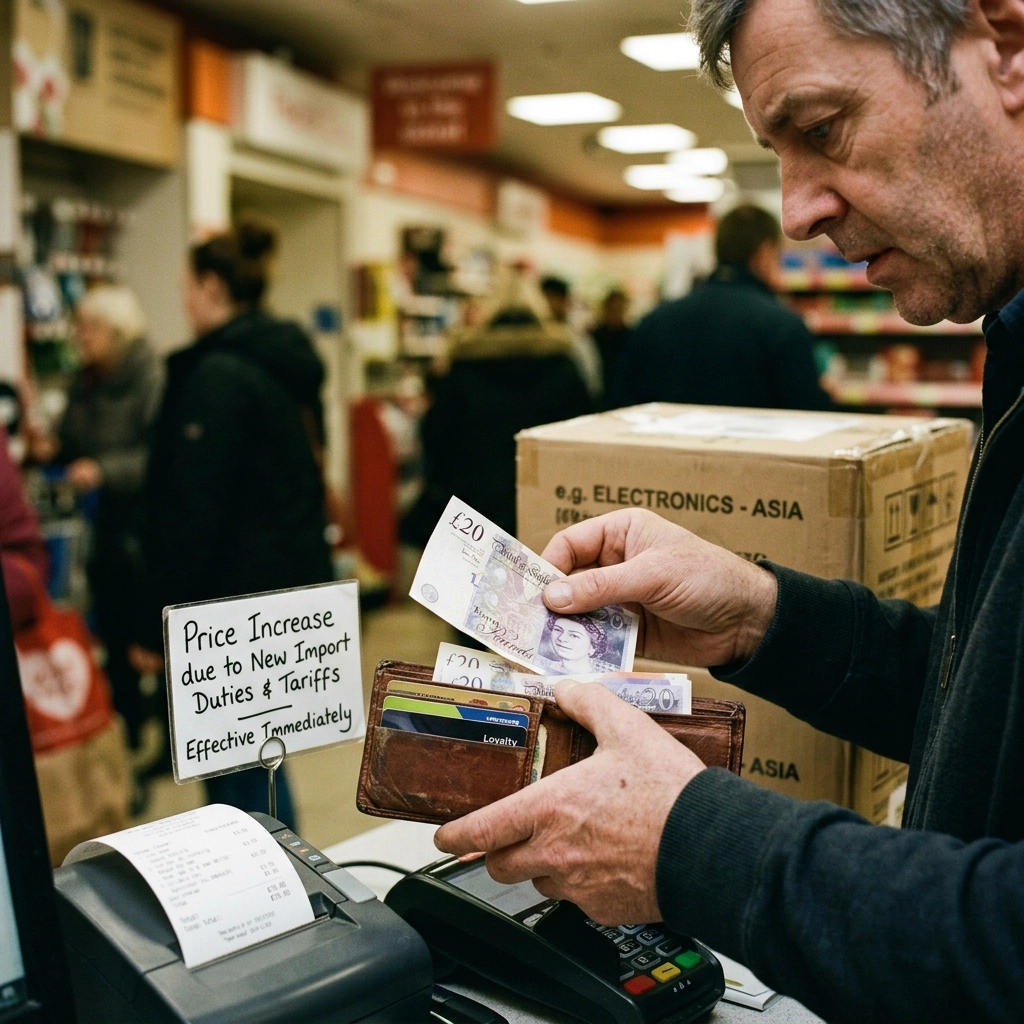
The most immediate concern for most people is how these tariffs translate into the cost of everyday items. When a tariff is placed on an import, the company bringing those goods into the country has to pay that extra fee. Most of the time, businesses cannot afford to simply absorb those costs, especially after the economic challenges of the last few years. Instead, those costs are passed down to the consumer in the form of higher retail prices.
UK exporters are currently staring down the barrel of approximately $4 billion: which is about £2-3 billion: in additional costs. That is a staggering amount of money that effectively vanishes from the economy or, more accurately, is extracted from the pockets of shoppers. If you are looking to upgrade your smartphone, buy a new laptop, or even just refresh your wardrobe, you might find that your budget does not go quite as far as it used to. Electrical goods, clothing, and textiles are among the hardest-hit sectors.
It is not just the high-tech gadgets that are at risk. The food and drink sector is also feeling the heat. Many ingredients and finished products that we rely on come through trade routes now subject to these new levies. While some items are protected under existing UK-US trade agreements: such as certain automotive parts and pharmaceuticals: the broad nature of a 15% baseline tariff means that very few corners of the retail market remain completely untouched. For families already balancing tight budgets, even a 5% or 10% increase in the price of essential goods can make a significant difference at the end of the month.
The luxury market provides an even more startling example of how these percentages stack up. While a Chanel handbag might not be a weekly purchase for most, the fact that prices could spike by over £1,500 due to these trade shifts illustrates the scale of the problem. When luxury prices rise, it often signals a broader trend of inflation that eventually trickles down to more modest brands and essential goods.
The Struggle for British Exporters and the Job Market
While we often focus on what we buy, it is equally important to consider what we produce. The UK is a nation of exporters, from high-end machinery to world-famous spirits. When the US imposes tariffs, it makes British products more expensive for American consumers. This leads to a drop in demand, which in turn puts pressure on British businesses to cut costs. Unfortunately, in the world of global business analysis, cutting costs often means looking at the largest expense on the balance sheet: the workforce.
The uncertainty surrounding trade policy is a major headache for business owners. If a company does not know if its products will be affordable in their biggest export market next month, they are much less likely to hire new staff or offer significant pay rises. We are seeing a "wait and see" approach taking hold across many industries. This stagnation in hiring and wage growth comes at a time when workers are already dealing with the rising costs of living, creating a double-whammy for personal finances.
There is also the question of retaliation. If the UK government decides to respond with its own set of tariffs on American goods, it could trigger a trade war. While this is sometimes seen as a necessary political move to protect national interests, it rarely benefits the consumer. Trade wars tend to escalate costs on both sides, making everything more expensive while stifling innovation and growth. Independent news UK outlets have been highlighting the delicate balancing act the government must perform to support British industry without making the inflation problem even worse for the general public.
Smaller businesses are particularly vulnerable in this climate. Unlike major multinational corporations, small to medium-sized enterprises (SMEs) often lack the cash reserves to weather a prolonged period of high tariffs. These are the businesses that make up the backbone of the UK economy and provide a huge portion of local employment. If they are forced to scale back or close down because their export markets have dried up, the impact on local communities could be profound.
Broader Economic Consequences and the Inflation Game
The impact of tariffs extends far beyond the price of a single item; it influences the entire national economy through the lens of inflation. When the cost of imports rises, the Consumer Price Index (CPI) tends to follow suit. This puts the Bank of England in a very difficult position. Their primary tool for controlling inflation is adjusting interest rates, but the current situation is far from straightforward.
On one hand, if tariffs drive inflation higher, the Bank might feel compelled to keep interest rates high or even raise them further to prevent the economy from overheating. High interest rates are a mixed bag for the public. If you have significant savings, you might see a better return on your money. However, if you have a mortgage or any kind of debt, higher rates mean higher monthly payments, further squeezing your disposable income. It is a complex puzzle where every move has a potential downside.
On the other hand, if the tariffs lead to a significant economic slowdown by making trade more difficult, there will be pressure to cut interest rates to stimulate growth. This creates a state of "uncertainty" in the financial markets. For homeowners, this means mortgage rates could fluctuate wildly as lenders try to predict which way the Bank of England will jump. Staying informed through independent news UK platforms is becoming increasingly important for anyone trying to plan their long-term financial future, such as those looking to buy a home or renew a fixed-rate mortgage.
Furthermore, the UK is currently operating with a 10% tariff rate in some areas, which is notably lower than the 20% being faced by the European Union. While this might seem like a "win" in relative terms, it still represents a significant barrier to trade compared to the previous status quo. Being "less worse off" than your neighbours is cold comfort when your own bills are rising. The global business analysis suggests that we are entering a period of prolonged economic volatility where traditional trade rules are being rewritten on the fly.
Ultimately, the cost of new tariffs is not just a figure on a spreadsheet; it is a real-world tax on the British public. Whether it shows up in the price of a new pair of shoes, the interest rate on a car loan, or the lack of a year-end bonus at work, the impact is tangible. As the global political climate continues to shift, the importance of understanding these economic mechanisms has never been clearer. We must remain vigilant and informed as we navigate these choppy financial waters, ensuring that we are as prepared as possible for the changes still to come.