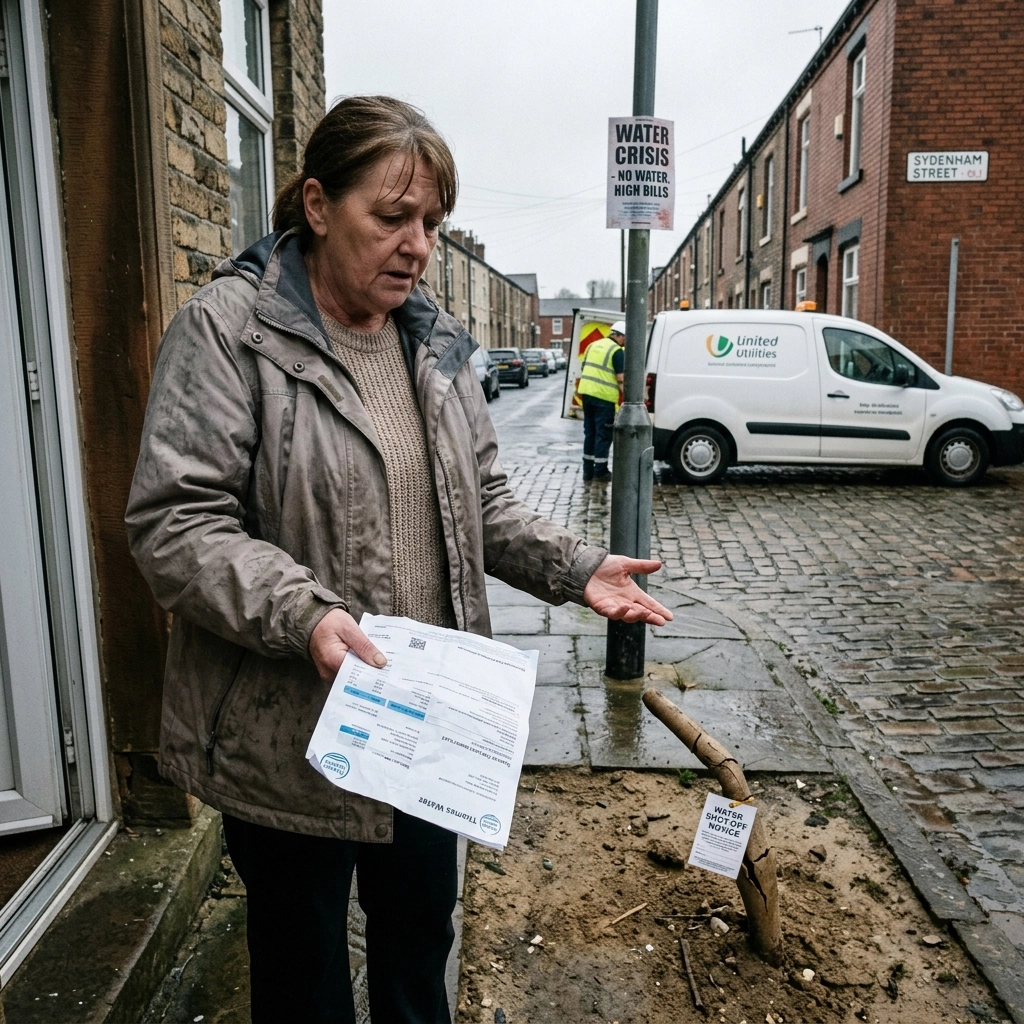
The United Kingdom is facing a systemic collapse of its water infrastructure as private utility companies continue to prioritise shareholder dividends over essential maintenance. Recent data reveals that a significant portion of household bills is being diverted away from network upgrades, leaving the nation reliant on a crumbling Victorian-era system that is increasingly unable to cope with modern demands. As the climate changes and the population grows, the gap between the nation’s water needs and its current capacity is widening at an alarming rate.
While many nations manage water as a public utility, the UK remains one of the few countries where the entire sector is under private control. This model is now under intense scrutiny following reports that billions of pounds have been extracted in profits while leakage rates remain high and sewage overflows become a frequent occurrence in British rivers and coastal waters. Public anger has reached a peak as the cost of living crisis intensifies, with families forced to pay higher rates for a service that many experts describe as unfit for purpose.
For those seeking independent news uk, the focus has shifted toward the transparency of these utility giants. Investigative reports have highlighted how debt-laden financial structures are used to facilitate payouts to international investors, often at the expense of local environmental health. The situation has prompted calls for a fundamental rethink of how a basic human necessity is managed within a market-driven framework.
The financial paradox of infrastructure and dividends
The core of the current crisis lies in the financial prioritisation of senior management bonuses and shareholder returns over the physical replacement of aging assets. Since privatisation in 1989, water companies have paid out over £70 billion in dividends, a figure that critics argue should have been reinvested into the network. This financial strategy has left the UK with a water system that still relies heavily on 19th-century cast-iron pipes, which are prone to bursting and leaking millions of litres of treated water every day.
Internal industry data and independent audits suggest that the maintenance backlog is now so severe that it would take decades of sustained high-level investment to rectify. The Channel 4 programme Dirty Business brought these untold stories to light, demonstrating how the pursuit of profit has directly led to the neglect of reservoirs and treatment plants. Instead of building new storage capacity to secure the nation’s future, companies have focused on cost-cutting measures that satisfy short-term financial targets but compromise long-term resilience.
Leaking pipes are only one aspect of the physical decline. The lack of modern sewage disposal facilities has resulted in the routine discharge of untreated waste into the UK’s waterways. This practice, originally designed as an emergency measure for extreme weather events, has become a standard operational procedure for many providers. The environmental degradation caused by these spills has decimated local ecosystems and posed significant health risks to the public, further fuelling the debate over whether the current regulatory framework is capable of holding private companies to account.
The role of Ofwat, the industry regulator, has also come under fire. Critics argue that the regulator has been too lenient, allowing companies to accrue massive debts to fund dividends while failing to enforce strict investment mandates. As these companies struggle under the weight of their own debt interest payments, the burden is being passed on to the consumer through inflation-bled price hikes. This cycle of financial extraction and infrastructure neglect is now seen as the primary driver behind the instability of the UK’s water security.
Environmental projections and the 2050 shortfall
The Environment Agency has issued a stark warning regarding the future of water availability in England. Without significant intervention and a total overhaul of the current management strategy, the country could face a shortfall of approximately 5 billion litres of water per day by 2050. This projected deficit is driven by a combination of rapid population growth in already water-stressed regions, increased agricultural demand, and the escalating impacts of climate change.
Climate models indicate that rainfall patterns in the UK are becoming increasingly volatile. While winters are expected to be wetter, leading to more frequent flooding, summers are projected to be significantly drier and hotter. The current infrastructure is ill-equipped to handle either extreme. The lack of new reservoirs means that excess winter rainfall cannot be effectively stored for use during summer droughts, while inadequate drainage and flood management systems lead to widespread property damage and the contamination of clean water sources during heavy downpours.
Agriculture remains one of the most vulnerable sectors in this brewing crisis. Farmers rely on consistent water supplies to maintain food production, yet they often face the strictest abstractions during periods of drought. Furthermore, the inadequate oversight of farm waste has contributed to the pollution of groundwater, complicating the treatment process and increasing the energy required to provide safe drinking water. This intersection of agricultural needs and environmental mismanagement creates a precarious situation for the UK’s food security.
The demand from households is also increasing as urban areas expand. In regions such as the South East, the water stress is already at a critical level. Planners and environmentalists argue that without a massive shift toward water efficiency and the construction of large-scale transfer networks, these regions will face regular and severe restrictions within the next decade. The 5 billion litre gap is not a distant possibility but a looming reality that requires immediate and massive capital expenditure: funding that currently remains tied up in corporate profit structures.
Regulatory oversight and the call for systemic reform
As the public becomes more aware of the scale of the problem, the pressure for systemic reform has become unavoidable. The debate is no longer just about the price of water, but about the fundamental ethics of the private sector managing a national monopoly. Political leaders are facing increasing calls to either renationalise the industry or implement a "public interest" model that legally mandates the prioritisation of environmental protection and infrastructure over shareholder returns.
Current oversight mechanisms have struggled to keep pace with the sophisticated financial engineering employed by water firms. While some companies have been fined for environmental breaches, these penalties are often viewed by critics as a "cost of doing business" rather than a genuine deterrent. To address this, some advocates suggest the introduction of criminal liability for executives who oversee systematic environmental damage, alongside a total ban on bonuses for companies that fail to meet leakage and sewage targets.
The social impact of the water crisis is also becoming a key political issue. High bills are disproportionately affecting low-income households, leading to calls for a more equitable charging system. There is a growing sentiment that the public is being asked to pay twice: once through their monthly bills and again through the environmental and health costs of a failing system. The demand for untold stories regarding the internal workings of these utilities has led to a rise in whistleblower activity, further exposing the gap between corporate rhetoric and operational reality.
Looking ahead, the UK must decide whether to continue with a model that has prioritised short-term financial gain for nearly four decades or to transition toward a resilient, long-term strategy. The path to 2050 requires not just billions in investment, but a cultural shift in how water is valued as a national asset. Whether through stricter regulation or a total change in ownership, the current trajectory of bills funding dividends at the expense of the environment appears increasingly unsustainable. The coming years will be a test of the government's resolve to put the nation’s taps and rivers ahead of international balance sheets.