The landscape of modern warfare is shifting rapidly, and nowhere is this more evident than in the recent escalation of long-range operations. In recent weeks, the conflict has moved far beyond the immediate front lines, reaching deep into the industrial heartlands of Eastern Europe.
Ukraine has significantly intensified its use of unmanned aerial vehicles (UAVs) to target critical infrastructure. The focus has turned squarely towards major Russian ports, specifically those responsible for the processing and export of oil and gas. These facilities are the lifeblood of the regional economy, providing the essential revenue required to sustain prolonged military efforts.
By targeting these high-value maritime hubs, the strategic intent appears to be two-fold: to disrupt the logistical flow of fuel and to diminish the financial resources available to the Kremlin. The precision and scale of these attacks have surprised many international observers, highlighting a significant leap in domestic drone technology and operational planning.
The impact of these strikes is being felt across the Baltic and Black Seas. From the massive terminals at Ust-Luga to the busy docks of Novorossiysk, the frequency of "deep strikes" is creating a new set of challenges for regional security and global energy markets.
A Shift in Strategic Targeting
The recent wave of drone activity represents a fundamental change in how the conflict is being managed. Historically, much of the focus remained on territorial gains and defensive lines within the immediate borders. However, the focus has now expanded to include the systematic degradation of industrial capacity. On 25 March alone, reports suggest that nearly 400 drones were launched in a coordinated effort across more than ten Russian regions, including occupied Crimea.
This was not merely a symbolic gesture. The scale of the assault was designed to overwhelm existing air defence systems. When hundreds of drones are deployed simultaneously, even the most sophisticated radar and surface-to-air missile batteries can struggle to track and neutralise every single threat. This "swarming" tactic ensures that while many drones may be intercepted, a significant number still reach their intended targets.
The reach of these operations is particularly notable. Some of the drones travelled more than 900 kilometres to reach their destinations. For context, this puts major facilities near Saint Petersburg and deep into the Urals within range. The technical feat of maintaining control and navigation over such vast distances indicates a high level of sophistication in both the hardware and the software being utilised by Ukrainian engineers.
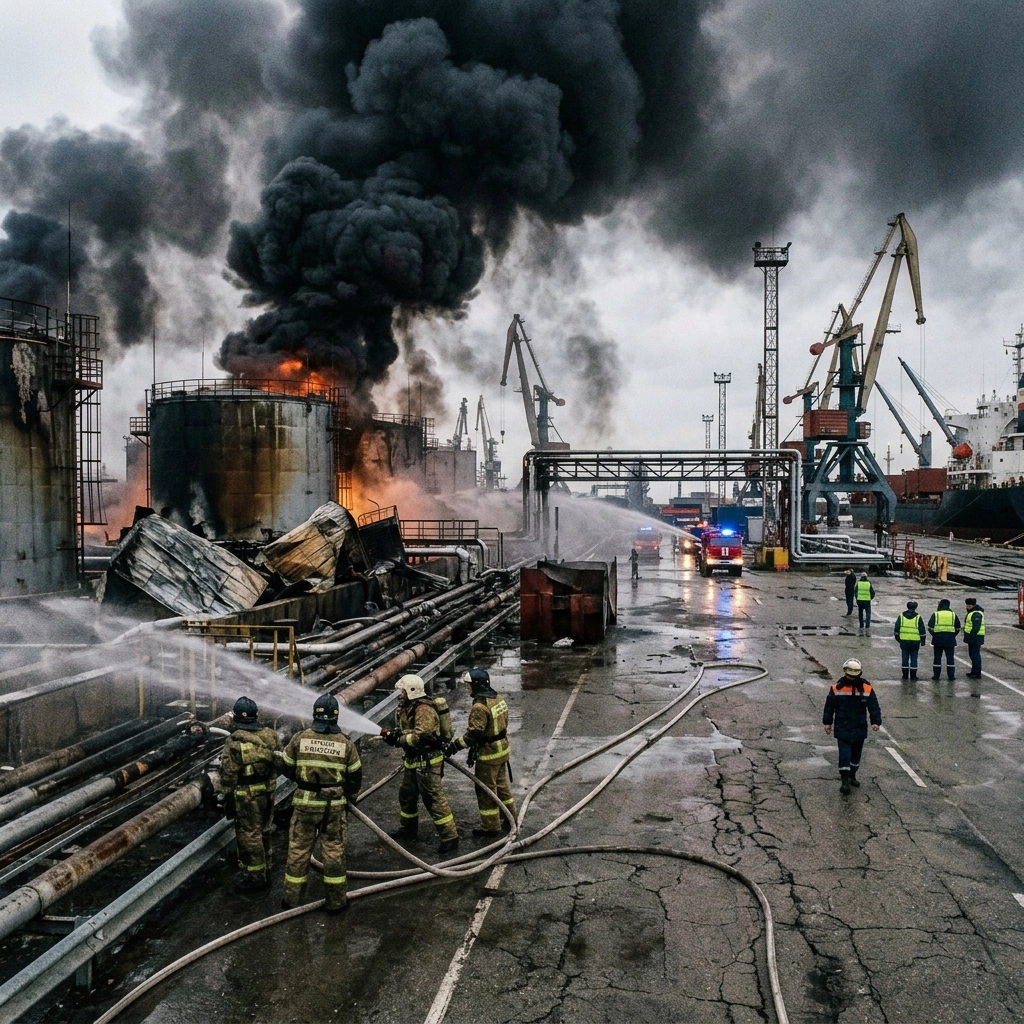
One of the most frequent targets has been the Ust-Luga port on the Baltic Sea. In a single week at the end of March, the facility was struck multiple times, leading to large-scale fires and extensive damage to the oil and gas terminals. The Security Service of Ukraine (SBU) has described these operations as a direct hit to the "energy heart" of the opposition. The damage to these terminals is not easily repaired, especially given the current restrictions on importing specialised western components.
The shipyard in Vyborg and refineries in Ufa have also seen significant activity. By hitting a combat icebreaker and various processing units, the strikes are affecting both the naval capabilities and the civilian industrial output of the region. This multi-pronged approach ensures that the disruption is felt across multiple sectors of the economy simultaneously.
The Economic Cost of Attrition
The primary objective behind the targeting of port infrastructure is economic attrition. It is estimated that these strikes have already reduced Russia's oil export capacity by at least 40 per cent. In a global economy where oil prices are frequently volatile, any reduction in supply or the ability to transport fuel has immediate and severe financial consequences.
The Baltic ports of Primorsk and Ust-Luga are essential for the transport of crude oil and petroleum products to international markets. When these terminals are out of commission, the backlog of tankers grows, and the cost of insurance for maritime transport in the region skyrockets. This creates a bottleneck that limits the conversion of natural resources into liquid capital.
Furthermore, the destruction of specialised infrastructure like gas fractionation plants involves more than just a loss of product. These are highly complex industrial environments. Repairing them requires a level of engineering expertise and access to specific parts that are increasingly difficult to source. Every day a terminal is offline represents millions of pounds in lost revenue and a further strain on the national treasury.
The timing of these strikes is also significant. With global oil prices rising due to instability in other parts of the world, there was a potential for increased revenue to flow into the wartime budget. By systematically dismantling the export infrastructure, Ukraine is attempting to neutralise this financial advantage. It is a strategy of "cutting the purse strings" rather than just engaging on the battlefield.
While Russia has reported shooting down dozens of drones during these overnight attacks, the sheer volume of the incoming UAVs means that the "leakage rate": the percentage of drones that get through: is high enough to cause substantial damage. The cost of a single drone is a fraction of the cost of the missile used to shoot it down, and an even smaller fraction of the value of the infrastructure it targets. This asymmetry makes drone warfare an incredibly cost-effective tool for economic disruption.
Navigating the New Geopolitical Reality
The intensification of drone strikes on major ports is forcing a reassessment of security protocols across the region. For years, these ports were considered safe zones, far removed from the physical dangers of the front lines. That sense of security has been shattered. The ability of relatively low-cost drones to travel nearly 1,000 kilometres and strike with precision has changed the risk profile for all industrial assets in the region.
This new reality is also creating a ripple effect in international relations. The global energy market is sensitive to any disruption in the flow of Russian oil, and these strikes contribute to the general atmosphere of uncertainty. International shipping companies are having to weigh the risks of operating in the Baltic and Black Seas, potentially leading to higher freight costs and shifts in trade routes.
From a military perspective, the success of these long-range operations suggests that air defence assets may need to be redeployed. If major ports and refineries deep within the country are under threat, assets previously stationed near the front lines may be moved back to protect the industrial heartland. This creates gaps in the frontline defences, which can then be exploited in other ways.
The psychological impact on the workforce and the local populations near these ports should also not be underestimated. Large-scale fires at industrial sites are highly visible and serve as a constant reminder of the ongoing conflict. This visibility counters any official narrative that suggests the conflict is confined to a specific geographical area or that it is not affecting the daily lives of citizens in major transport hubs.
As we look toward the future, it is clear that the use of UAVs will continue to evolve. We are likely to see even greater ranges, improved stealth capabilities, and more sophisticated autonomous navigation systems. The "battle for the ports" is just one chapter in a much larger story of how technology is redefining the boundaries of modern engagement.
The situation remains fluid, with both sides adapting their tactics to the changing technological landscape. While the physical damage to the ports can eventually be repaired, the strategic shift towards economic and industrial targets marks a point of no return in the nature of this conflict.
The drone strikes on major Russian ports represent a significant escalation in the scope of the war. By moving the focus to high-value economic infrastructure, Ukraine is attempting to undermine the financial foundations of its opponent's military efforts. The success of these operations, measured in the substantial reduction of oil export capacity and the disruption of major maritime hubs, highlights the growing importance of long-range UAV technology. As the conflict continues, the ability to protect: or destroy: critical industrial assets far from the front line will likely remain a decisive factor in the overall trajectory of events.