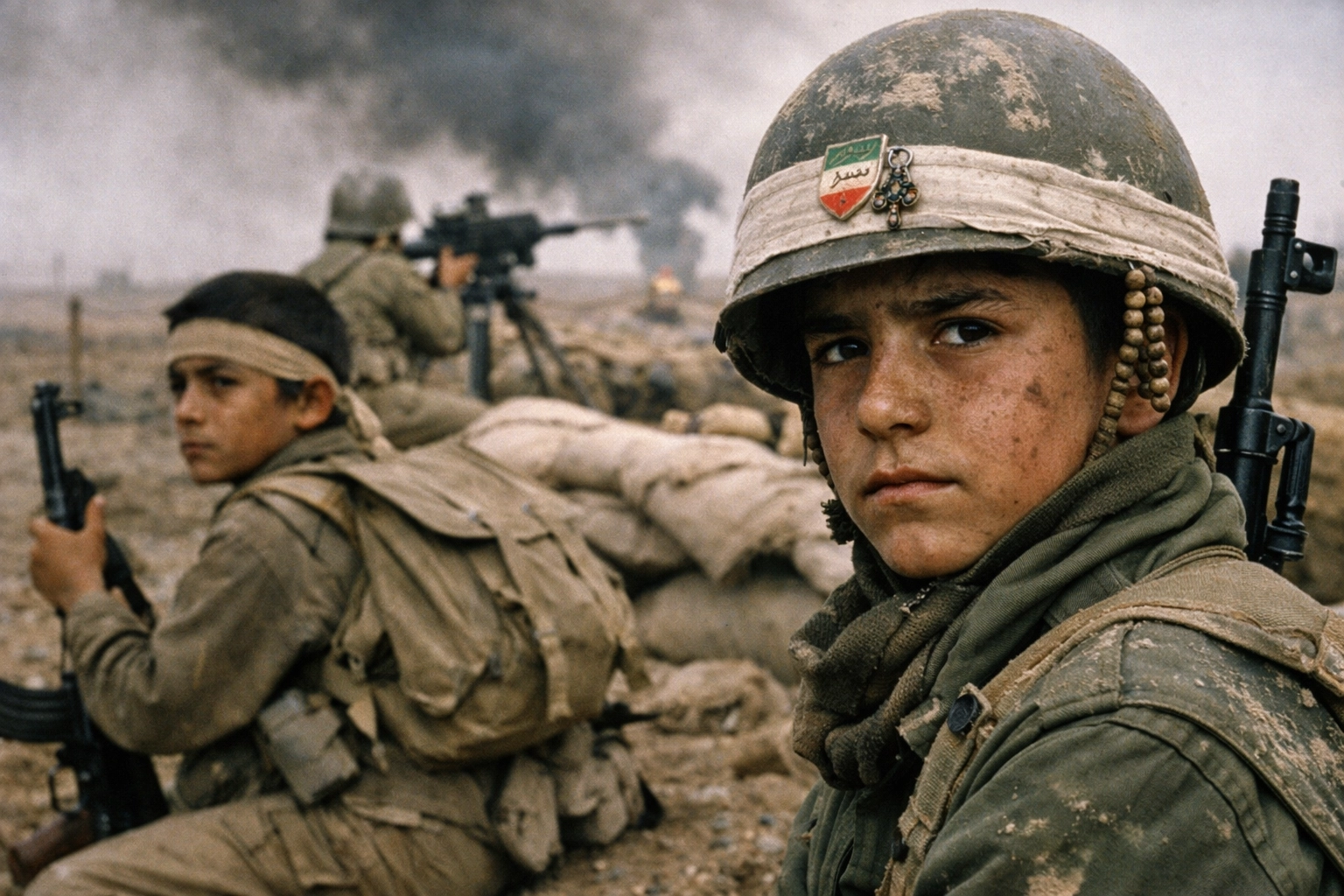
When we look at the headlines coming out of the Middle East, it often feels like we are seeing a cycle of events that never truly reaches a resolution. For those of us following independent news uk, the focus is often on high-level diplomacy or large-scale military movements. However, beneath the surface of these major political shifts lie the untold stories of individuals whose lives have been irrevocably altered by conflict. Perhaps none are more harrowing than the accounts of Iran child soldiers: a topic that has recently resurfaced with devastating new evidence that points toward a potential war crimes investigation.
The use of children in armed conflict is one of the most profound violations of international law, yet it remains a recurring shadow in certain regions. In Iran, the history of involving youth in military operations is not just a relic of the past; it is a contemporary crisis that demands our attention. Recent investigations have brought to light a particularly tragic case: an 11-year-old boy who was killed at a checkpoint. This incident serves as a grim reminder that the exploitation of children in state-sponsored military roles is a practice that continues to claim the most innocent lives.
As we dive into these complex narratives, it is important to maintain a friendly and open dialogue. We are looking at these events not just as distant reports, but as human stories that require empathy and a commitment to the truth. By examining the facts, we can better understand why these actions are being scrutinised on the global stage and what they mean for the future of human rights in the region.
The Heartbreaking Reality at the Checkpoint
The story of the 11-year-old boy killed at a checkpoint is a chilling entry in the catalogue of untold stories surrounding this issue. Independent investigations have revealed that this child was not an accidental bystander but was actively positioned in a high-risk military environment. In many cases, these children are recruited under the guise of national service or religious duty, often with very little understanding of the dangers they face. When a child as young as 11 is lost in such a manner, it raises immediate and urgent questions about the chain of command and the legal responsibilities of the state.
This specific discovery has sent shockwaves through the international community. It isn't just about a single life lost, as tragic as that is; it is about the systemic failure to protect the vulnerable. Reporting on the ground suggests that children are frequently utilised at checkpoints to monitor traffic, provide surveillance, or even serve as a first line of defence. The psychological pressure placed on these youngsters is immense. They are taught to view their roles as a supreme sacrifice, often before they have even had the chance to finish primary school.
When we talk about a war crimes investigation in this context, we are looking at the deliberate recruitment and use of children under the age of 15. International statutes, including the Rome Statute of the International Criminal Court, are very clear on this. Using children in this way is a direct violation of their fundamental rights. The incident at the checkpoint provides a tangible piece of evidence that can be used to hold those in power accountable. It moves the conversation from general allegations to a specific, documented instance of state-sponsored child endangerment.
The Long Shadow of the Sacred Defence
To truly understand how we reached this point, we have to look back at the historical precedent set during the Iran-Iraq War in the 1980s. During this period, the concept of the "Sacred Defence" was used to mobilise the entire population, including students. It is estimated that between 33,000 and 45,000 Iranian students were killed during that eight-year conflict. These weren't just older teenagers; many were boys as young as nine or ten years old.
The methods of recruitment used then were remarkably similar to those being uncovered today. Children were often encouraged to tamper with their birth certificates to appear older, or they joined the Basij Resistance Force bases under the influence of intense state propaganda. In school classrooms, the idea of martyrdom was glorified, making it difficult for young, impressionable minds to resist the call to the front lines. Some of the most horrific accounts from survivors involve children being used as "human waves" to clear minefields, literally using their bodies to pave the way for adult soldiers.
One survivor, who is now in his fifties, recalls enlisting at the age of 14. He speaks of how the war robbed him of his youth, his education, and his ability to form normal relationships. These long-term psychological scars are a testament to the cruelty of using Iran child soldiers. The trauma doesn't end when the guns go silent; it persists through generations. By revisiting these untold stories, we can see that the current use of children at checkpoints is not an isolated incident but part of a long-standing and deeply ingrained military strategy that prioritises ideology over the lives of children.
A Global Push for War Crimes Investigation
In the modern era, the reach of these practices has expanded beyond Iran's borders. Evidence has surfaced showing that the recruitment of children has extended to Afghan refugee populations living within Iran. Boys as young as 12 have been documented fighting in foreign conflicts, such as the war in Syria, as part of Iranian-organised brigades. This international dimension only heightens the need for a comprehensive war crimes investigation. It shows a pattern of behaviour that spans decades and borders, suggesting a policy that views children as expendable assets in geopolitical power plays.
The legal framework for addressing these issues is robust, but the challenge lies in enforcement. Independent news uk outlets and human rights organisations play a crucial role in gathering the evidence necessary to trigger international action. Every testimony from a survivor and every report from a checkpoint brings us one step closer to justice. The goal is not just to document the horror, but to create a legal and social environment where the recruitment of children becomes an unthinkable act for any state.
The international community is increasingly calling for transparency. We need to know who is signing the orders that put 11-year-olds in harm's way. We need to understand the funding structures that support the Basij and other paramilitary groups involved in recruitment. Advocacy groups are pushing for more stringent sanctions and for the inclusion of child recruitment as a primary focus in any future diplomatic negotiations with the Iranian government. By keeping these stories in the public eye, we ensure that the victims are not forgotten and that the pressure for change remains constant.
It is a difficult subject to engage with, but ignoring it only allows the cycle to continue. At NowPWR, we believe that sharing these facts is a vital part of our commitment to ethical reporting. You can read more about how we handle such sensitive topics in our editorial standards and ethics policy. Understanding the depth of the crisis is the first step toward advocating for a world where no child is ever asked to carry a weapon or stand guard at a military checkpoint.
The situation involving Iran child soldiers is a stark reminder of the work that remains to be done in the realm of global human rights. The discovery of an 11-year-old killed at a checkpoint is a tragedy that should never have happened, and it serves as a powerful catalyst for a formal war crimes investigation. Through the lens of independent news uk, we can continue to bring these untold stories to light, providing a platform for the voices that have been silenced for too long.
Accountability is the only path forward. As more evidence comes to light, the international community must decide how it will respond to these clear violations of international law. The children of today deserve the simple joys of adolescence: school, play, and safety: rather than being drafted into conflicts they didn't create. By focusing on the facts and maintaining a friendly yet firm stance on human rights, we can contribute to a future where every child is protected from the horrors of war.