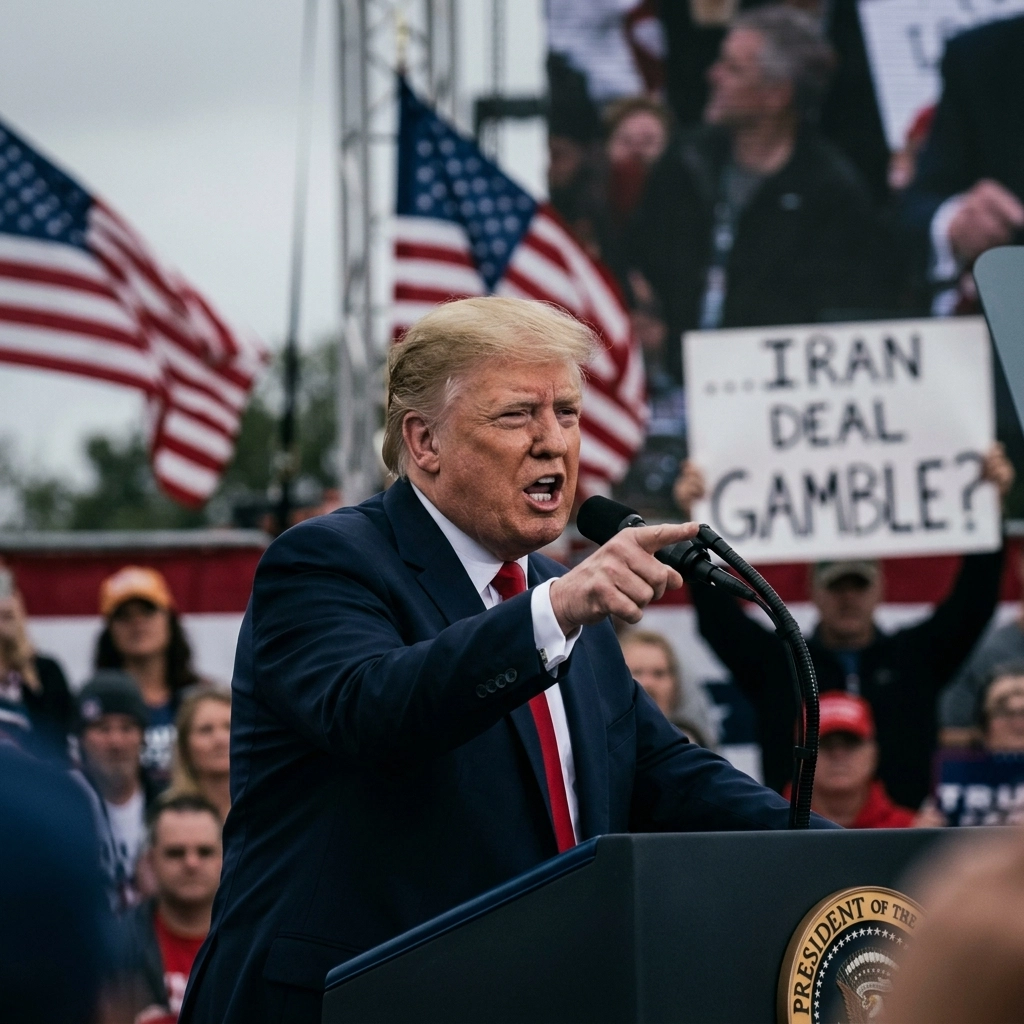
The political landscape in the United States is rarely a quiet affair, but as the mid-term elections approach, the volume has been turned up to a deafening roar. At the centre of this storm is a calculated, albeit high-risk, shift in foreign policy that has caught many international observers off guard. Donald Trump has pivoted towards an aggressive military and diplomatic campaign against Iran, a move that seems to fly in the face of his earlier populist promises to end "forever wars." For those following uk political news, the ripples of this American shift are felt deeply within the halls of Westminster, as the Special Relationship is once again tested by a White House that appears ready to upend the global status quo.
This isn't just about regional stability in the Middle East; it is a domestic gamble of significant proportions. The administration is pushing a narrative of strength, attempting to consolidate a base that values "America First" toughness, even if that toughness requires a military footprint that many voters previously rejected. Through the lens of alternative journalism, we can see a more complex picture than the standard talking points suggest. It is a story of a president betting that a show of force abroad will distract from or even solve political vulnerabilities at home, regardless of whether the public is actually on board with a new conflict.
The 15-point plan and the price of pride
Central to this escalation is a reported 15-point framework that the Trump administration has laid out as the minimum requirement for any de-escalation with Tehran. These aren't just minor adjustments to previous agreements; they are foundational demands that would essentially require a total overhaul of the Iranian state's regional and domestic strategy. The framework insists on the complete dismantling of nuclear facilities at Natanz, Isfahan, and Fordo. Furthermore, it demands that Iran surrender all enriched nuclear material to the International Atomic Energy Agency (IAEA) and completely abandon its use of armed proxies, specifically naming Hezbollah and the Houthis.
For the Iranian leadership, these terms are viewed as nothing short of a demand for unconditional surrender. Prohibiting any uranium enrichment on Iranian soil is a red line that Tehran has held for decades, viewing it as a matter of national sovereignty and scientific progress. From an objective standpoint, these terms appear designed to be rejected. By setting the bar so high, the administration creates a scenario where conflict or extreme economic pressure becomes the only "logical" next step when the other side fails to comply. It is a classic negotiation tactic turned into a high-stakes geopolitical standoff, and it leaves very little room for the kind of nuanced diplomacy that European allies often advocate for.
The fallout of this strategy is significant for international relations. While the White House portrays this as a necessary step to ensure global safety, many critics argue it is an intentional provocation. By demanding what is essentially a "humiliating" concession, the administration is backing a regional power into a corner. In the world of alternative journalism, this is often highlighted as a move that prioritises political optics over actual long-term stability. If the goal is truly to prevent a nuclear-armed Iran, critics argue that a more collaborative approach would be more effective than a list of demands that no sovereign nation could realistically accept without facing internal collapse.
Mid-term calculations and the voter disconnect
The timing of this aggressive stance is no coincidence. With the mid-term elections looming, the White House is acutely aware of its standing with the electorate. Interestingly, research suggests that Trump was aware that a potential conflict with Iran could actually cost him votes. The American public, weary from decades of intervention in the Middle East, has shown little appetite for a new military campaign. Yet, the decision to proceed suggests a different kind of political calculus. It is a bet that the image of a strong, decisive leader will outweigh the specific anxieties about the costs of war.
This creates a fascinating disconnect between the administration's actions and the public's desires. Trump’s original political brand was built on the idea of bringing troops home and stopping the expenditure of American blood and treasure on foreign soil. To pivot so sharply towards an aggressive stance against Iran is a risky move that could alienate the very isolationist base that helped propel him to power. However, the gamble seems to be that by framing the Iran issue as an immediate and existential threat, the administration can rally the public around the flag, a tactic that has historically worked in the short term for various leaders facing domestic pressure.
From a British perspective, watching these developments through the filter of uk political news, there is a palpable sense of unease. The UK has traditionally sought to act as a bridge between the US and the rest of the world, particularly concerning the Iran nuclear deal. As the US moves toward a more confrontational footing, the UK is forced to choose between its closest security ally and its commitment to international frameworks and European partnerships. The mid-terms aren't just an American event; they are a pivot point that could redefine how the West interacts with the Middle East for the next decade, and the internal logic of the Trump campaign is driving that change.
Diplomacy on the fly in a divided landscape
Perhaps the most concerning aspect of this new strategy is the perception that it is being "winged." Analysts and former officials have noted that there appears to be no clear, preconceived strategy behind the 15-point plan other than maximum pressure. This lack of a structured endgame is a hallmark of the current administration’s approach to foreign policy, where the process of disruption is often valued more than the eventual outcome. For Iran, this creates a dangerous situation. If they believe the US is "negotiating with themselves" and is fundamentally divided at home, they may see little reason to engage in good-faith discussions.
Iranian officials have pointed to the deep political divisions within the US as a sign of weakness. When a country appears to be at war with itself internally, its external demands carry less weight. The perception that the US is "divided" undermines the credibility of its threats and the stability of its promises. If Tehran believes that a change in the mid-terms or a future presidential election will result in another 180-degree turn in policy, they are more likely to wait out the current pressure rather than make permanent concessions. This "strategic patience" on the part of Iran clashes directly with the "maximum pressure" of the US, creating a stalemate that could easily boil over into kinetic conflict.
In the end, the aggressive gamble in the lead-up to the mid-terms represents a defining moment for the Trump presidency. It is a test of whether a leader can redefine his platform on the fly and whether the electorate will follow him into a confrontation they previously said they didn't want. The result of this gamble will not only determine the balance of power in Washington but will also set the tone for international security in the years to come. As we navigate through the noise of mainstream headlines, the reality remains that the path to the mid-terms is being paved with high-stakes foreign policy decisions that carry consequences far beyond the ballot box.
The situation remains fluid, and as the 18:00 publication deadline approaches, the eyes of the world are fixed on the White House. Whether this aggressive stance pays off at the polls or leads to a deeper entanglement in the Middle East is the question that remains unanswered. For now, the administration continues its march toward the mid-terms, doubling down on a strategy that prioritises strength and disruption over the traditional norms of international diplomacy.