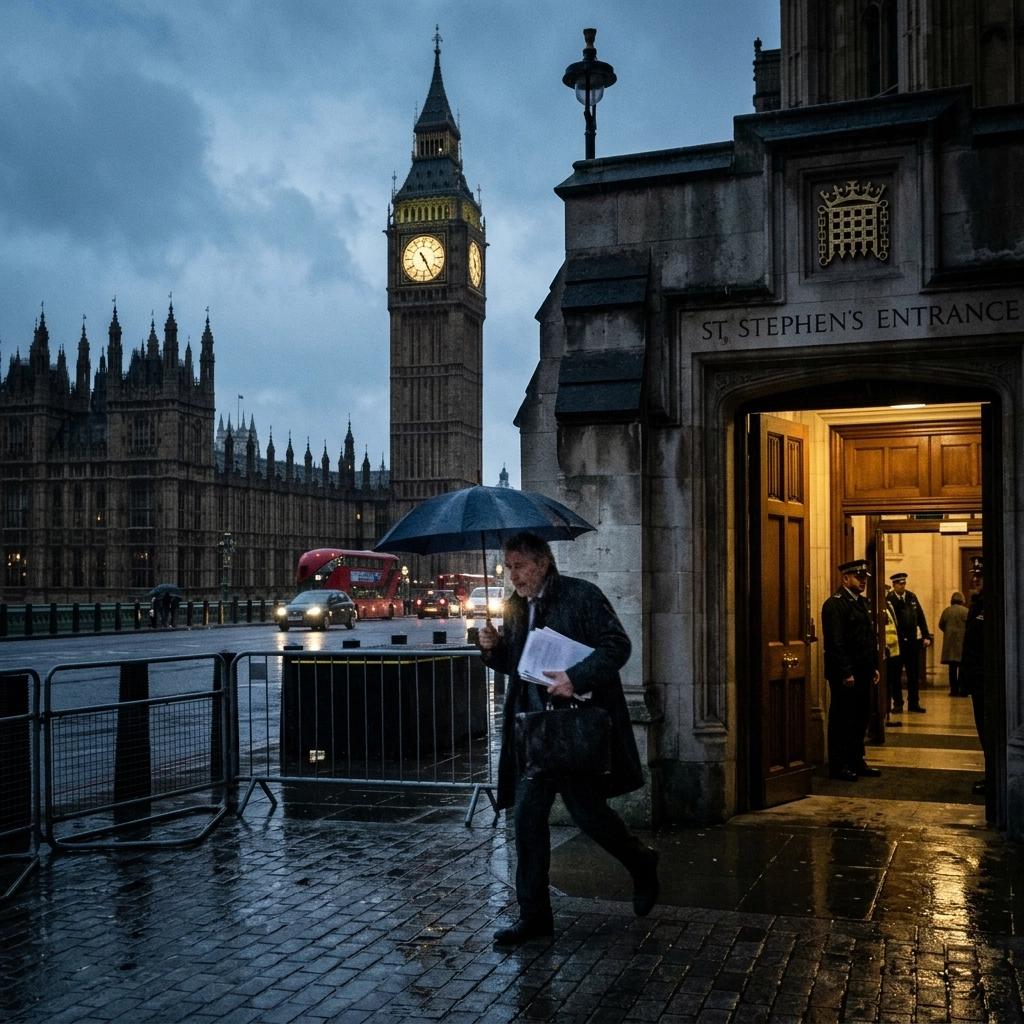
Understanding where the money goes in British politics can feel like trying to read a map in a thick London fog. We all know money plays a role in how the country is run, but the finer details are usually buried in spreadsheets and registers that few people have the time to dig through. Recent scrutiny of MPs’ financial interests has exposed a landscape of second jobs, major donations and overlapping networks of influence that too often slip past public view. It’s exactly why independent news uk matters so much: these untold stories about who helps shape political debate deserve proper attention.
Transparency should not be a luxury in a democracy; it should be the starting point. When people talk about "dark money", they are not always talking about something obviously illegal. More often, they mean legal but murky routes through which money reaches politicians, parties and connected organisations. Whether that comes through consultancy fees, donations from overseas-registered firms or support for think tanks with unclear backing, the effect is much the same: the public is left asking whose interests are really being heard in Westminster.
The Gaps in Financial Oversight
One of the clearest problems in recent investigations into Westminster finances is how easy it can be for money to move around without serious checks. Political parties in the UK still face limited legal requirements to verify exactly where some donations originate. In everyday life, people often face tougher identity and source-of-funds checks when opening a bank account or setting up a small charity than a political party does when accepting a large donation. That leaves a gap where the real source of wealth can be hidden behind company structures and layered ownership.
Right now, much of the burden for checking donations can fall on individual MPs, even though they may not have the time, expertise or resources to investigate every donor properly. A growing number of campaigners argue that responsibility should sit more squarely with political parties and be enforced more firmly by the Electoral Commission. Without that change, the system continues to leave room for wealthy donors to gain access and influence far beyond what most voters could ever expect. And that is really the heart of the issue: not just where the money comes from, but what that money can quietly buy.
Questions over oversight do not stop at donations. They also apply to second jobs and outside earnings. Some MPs say external work gives them useful experience beyond Parliament, but the scale of some payments naturally raises eyebrows. When an MP is paid a very large sum for a small number of hours in a consultancy role, people are right to ask what that payment is actually for. If the answer is vague, transparency is not doing its job.
The Lobbying Loophole and Shadow Staffers
Lobbying rules in Westminster are often presented as safeguards, but in practice they still leave plenty of room for influence to stay out of sight. The rules covering consultant lobbyists apply to a narrow slice of activity, which means some individuals and organisations can avoid meaningful disclosure altogether. If someone falls outside the formal definition or registration requirements, they may still be able to influence policy without the public ever seeing a full picture of who they represent.
That problem becomes even more serious when outside-funded staff are involved. So-called shadow staffers can work close to MPs and ministers, helping with research, policy thinking and day-to-day political work while being paid by external groups. Even when arrangements are declared, they can still blur the line between public decision-making and private interests. It is one of those untold stories that sounds technical at first, but it has real consequences for how policy is shaped behind closed doors.
Another major concern is the difficulty of getting information once questions are raised. Freedom of Information requests can be delayed, narrowed or refused, especially when journalists and campaigners ask about meetings, correspondence or links between politicians and powerful interests. When government starts to look like a black box, trust naturally suffers. Transparency only means something if the public can access information without having to fight for every scrap of it.
Think Tanks and the Fight for Information
Dark money does not only travel through direct donations or paid roles. A huge amount of political influence also moves through think tanks, which often help shape the language, arguments and policy ideas that dominate public debate. Many play a legitimate role in democratic life, but concerns grow when influential groups do not clearly disclose who funds them. If an organisation is helping frame national policy while keeping its financial backers out of view, the public is left without the context needed to judge its work fairly.
That matters because think tank reports can carry real weight in Westminster. A paper calling for deregulation, tax changes or cuts to oversight may look independent on the surface, but it can be difficult to assess properly if the funding behind it remains hidden. Without that transparency, the national conversation can be nudged in a particular direction by interests operating well behind the scenes. For readers who care about independent news uk and the value of untold stories, this is exactly the sort of issue that deserves closer attention.
The wider battle over Freedom of Information makes that challenge even harder. When details about government contact with anonymously funded groups are withheld, suspicion grows and accountability weakens. Better disclosure alone will not solve every problem, but it would make the system easier to scrutinise and harder to quietly influence. Recent findings suggest the current rules are no longer strong enough for modern politics, and pressure for reform is only likely to grow. A healthier democracy depends on clearer disclosures, stronger oversight and a public that can see who is really shaping the decisions made in its name.