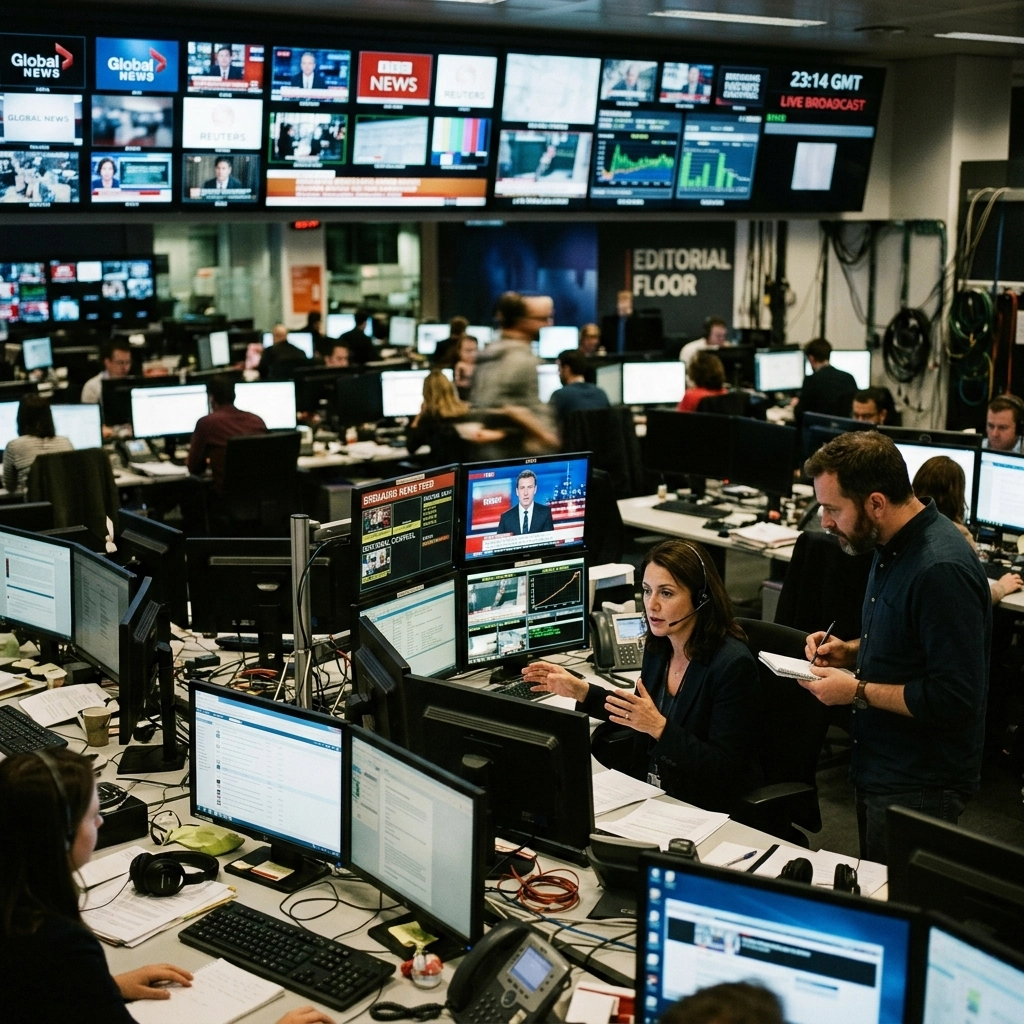
When you sit down with a coffee and scroll through your morning news feed, it’s easy to feel like you’re getting a direct window into the world. We tend to think of journalists as fly-on-the-wall observers, capturing reality as it unfolds. However, the reality behind the camera is often far more complicated. The stories that make it to your screen aren’t just a reflection of what happened; they are the result of a complex web of permissions, corporate interests, and carefully managed access.
Understanding who controls the narrative is essential for anyone interested in media transparency. In a world where information is the most valuable currency, knowing who owns the mint is just as important as knowing what the coins are worth. From the boardrooms of London and New York to the frontlines in the Middle East, the "news" is frequently a curated product, shaped by the people who hold the keys to the kingdom.
The Price of Physical Access
One of the most significant, yet least discussed, ways that news is controlled is through the management of physical access. For a journalist to report on the ground, especially in conflict zones or areas controlled by non-state actors, they often need permission from the people in charge of that territory. This creates a transactional relationship that can quietly influence the final report.
Take, for instance, Hezbollah reporting. When international news crews head to Southern Lebanon or parts of Beirut, they aren’t just wandering around with cameras. Access is usually facilitated through a media office. While this is necessary for the safety of the crew, it comes with invisible strings. Minders may accompany journalists, and certain areas or people might be "off-limits." If a reporter wants to maintain their access for future stories, there is an unspoken pressure to frame the narrative in a way that doesn’t result in them being banned or expelled.
This isn’t just limited to one group or region. It is a universal challenge in journalism. Whether it’s a government press office in a Western capital or a militant group in a remote province, the gatekeepers control the "untold stories" by deciding which ones get told at all. When access is curated, the narrative is curated. The audience sees what the gatekeeper allows the camera to see, often without a disclaimer explaining that the journalist was only allowed to film in specific locations. This lack of transparency can lead to a skewed public perception, where the complexity of a situation is flattened into a one-sided story.
The Digital Gatekeepers of Information
Even when a journalist manages to capture an authentic, independent story, the journey to your screen is still fraught with obstacles. In the modern age, control has shifted from those who produce the news to those who distribute it. A small group of technology companies and corporate conglomerates now act as the primary gatekeepers of global information.
Recent research highlights a staggering level of consolidation. In the United States, for example, 90% of the media is controlled by just six massive corporations. This concentration of power means that a handful of executives have an outsized influence on what is considered "newsworthy." In the UK, the situation is similarly dominated by a few major players. This corporate control often prioritises profit and "safe" narratives over the kind of gritty, independent news UK audiences deserve.
Then there are the tech giants. Platforms like Google and Meta (which owns Facebook and Instagram) control how news is found, accessed, and funded. If an algorithm decides that a particular topic: perhaps a deep dive into media transparency or a controversial report on international relations: doesn't "engage" users, that story effectively disappears. These platforms don't just host the news; they shape it by rewarding certain types of content and burying others. When two or three companies control three-fifths of all advertising spend, they hold the power of life and death over smaller, independent outlets. This creates an environment where the most important "untold stories" are often the hardest to find, simply because they don't fit the algorithmic model of the big tech gatekeepers.
Restoring Media Transparency and Trust
So, how do we navigate this landscape? The first step is acknowledging that "neutral" news is often an illusion. Every story is a choice: a choice of what to include, what to ignore, and who to interview. To find the truth, we have to look for media transparency in the reporting process itself. We should be asking: Who paid for this trip? Who provided the access? And who stands to benefit from this specific framing?
The rise of independent news UK platforms is a direct response to this need for clarity. Independent journalists are increasingly bypassing the traditional gatekeepers, using decentralised platforms to reach their audience directly. By removing the corporate middleman, these creators can focus on stories that the big six might find too risky or "unprofitable." They can delve into the nuances of Hezbollah reporting without the fear of upsetting a corporate sponsor or a government entity that provides their main "in" to the region.
True transparency involves being honest with the audience about the limitations of a report. If a journalist is being "mindered," they should say so. If a story was produced under specific conditions set by a governing body, that should be part of the story. This level of honesty builds trust. It allows the reader to weigh the information and decide for themselves what to believe. In an era where "fake news" is a common cry, the best defence is not more control, but more openness.
The battle for the narrative is constant. On one side, we have the gatekeepers: the billionaires, the tech algorithms, and the groups that manage physical access. On the other side, we have the public's right to know. Supporting independent voices and demanding higher standards of transparency is the only way to ensure that the news we see is a reflection of reality, rather than a curated version of it.
Ultimately, the power to change the media landscape rests with the consumer. By diversifying our news sources and looking beyond the headlines of the major conglomerates, we can begin to uncover the untold stories that define our world. It requires a bit more effort to verify and cross-reference, but the reward is a much clearer picture of the world as it actually is, not just as someone else wants us to see it.
The structure of information distribution might be more concentrated than it was forty years ago, but the tools for finding the truth are also more accessible than ever. It is up to us to use them. Whether we are reading about local politics or international conflicts, staying informed means staying critical. Media transparency isn't just a buzzword; it’s a necessary tool for a functioning society. As we move forward into an increasingly digital future, let's make sure that the people controlling the news are held to the same standards as the news itself.