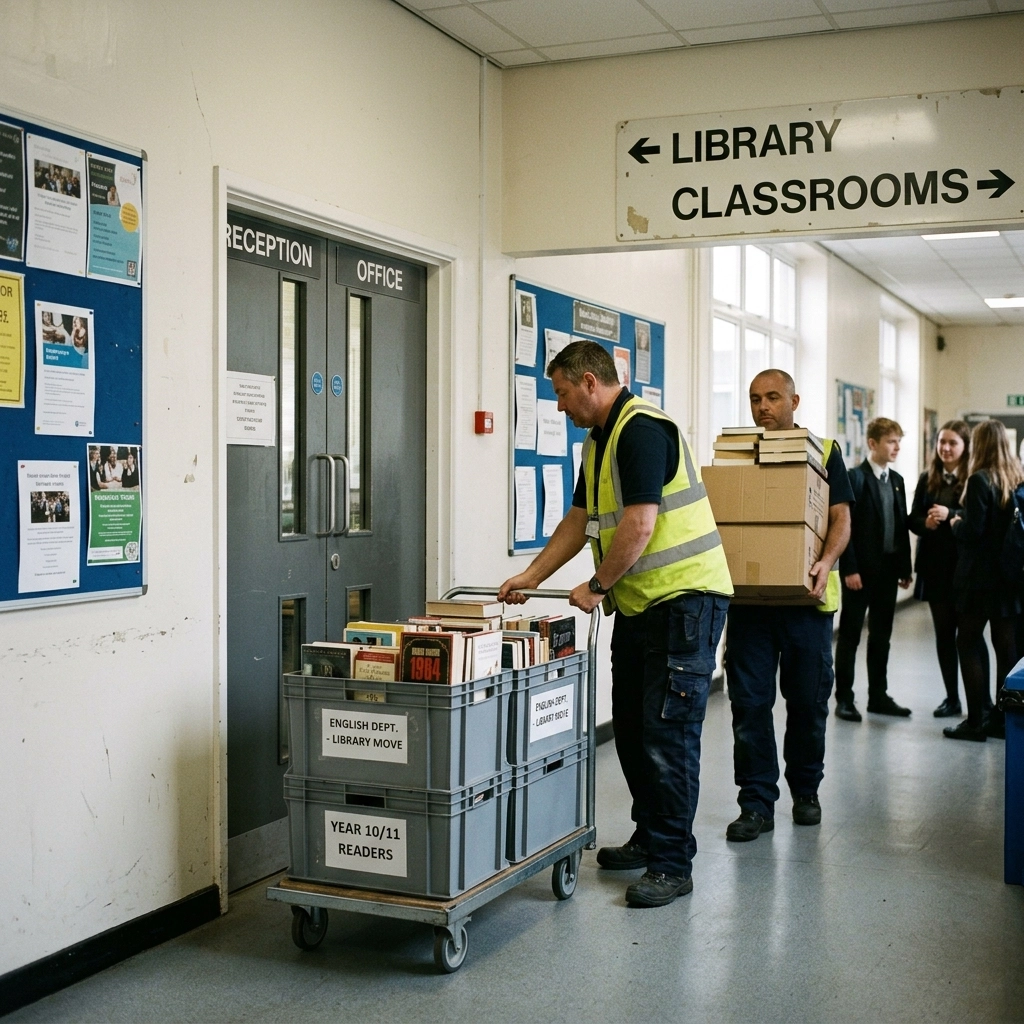
It is a bit of a cliché to say that we are living in an Orwellian world, but sometimes life mimics art in ways that are far too on the nose to ignore. Recently, a school in Greater Manchester found itself at the centre of a heated debate after it was revealed that George Orwell’s iconic novel, 1984, was removed from its library shelves. If you are familiar with the book, you will know the irony is almost painful. A story about a dystopian future where the government controls thought, rewrites history, and bans "subversive" literature was itself being flagged as inappropriate.
This development did not happen in a vacuum. It was part of a larger, systemic shift in how educational institutions handle their collections. In this particular instance, we aren't just talking about one book; nearly 200 titles were purged from the library’s collection. The reasons behind this move, and the methods used to execute it, have sparked a massive conversation about free speech, the role of technology in education, and the importance of uncovering the untold stories behind administrative decisions.
The situation has come to light thanks to the kind of investigative journalism UK readers rely on to understand what is happening behind the closed doors of our public institutions. When books start disappearing from school libraries, it is rarely a simple case of "making space" for new stock. There is usually a deeper narrative at play, one that touches on our current cultural anxieties and the way we use modern tools to solve age-old problems.
The role of AI in the modern library purge
The most striking detail of the Greater Manchester school incident is not just that books were removed, but how they were selected. The school utilised an AI-driven classification system to scan their library catalogue. This technology was designed to identify content that might be deemed "inappropriate" for students. In theory, such a tool sounds like a dream for overworked staff members who want to ensure that primary and secondary school children aren't accidentally stumbling across hyper-violent or adult-oriented material. However, the reality of algorithmic censorship is far more nuanced and, frankly, a bit messy.
When an AI scans a book like the graphic novel version of 1984, it doesn't see a profound critique of totalitarianism. It sees keywords. It sees depictions of conflict, perhaps some dark imagery, or themes of rebellion. Without the human capacity for context and literary analysis, the algorithm flags the work based on a rigid set of parameters. This "purge by proxy" led to the removal of nearly 200 books, a move that the headteacher reportedly supported. The automated nature of the process meant that classic works of literature were tossed into the same "inappropriate" bucket as material that might actually be unsuitable for younger readers.
This reliance on technology to make editorial decisions is a growing trend. It removes the human element of the librarian: the person who actually knows the students and understands the value of a challenging text. By outsourcing moral and educational judgment to a machine, the school inadvertently created a situation that felt eerily similar to the "Ministry of Truth" from the very book they were removing. These untold stories of how algorithms are shaping our children's access to information are becoming more common, and they require a critical eye to ensure we aren't accidentally deleting our cultural heritage for the sake of efficiency.
Supporting vulnerable students through literature
Beyond the headlines about George Orwell, there is a very human side to this story. A librarian at the school expressed deep concern about what these removals meant for the student body. For many children, particularly those from LGBTQ+ backgrounds or neurodivergent students, the library isn't just a room full of books. It is a safe haven. It is a place where they can find stories that reflect their own lived experiences: stories that might not be discussed in the general curriculum or on the playground.
When the AI-driven purge took place, it didn't just target political dystopias. It reportedly swept up a wide range of titles that addressed complex social issues, identity, and personal struggles. For a student who feels like an outsider, seeing a book on a shelf that mirrors their internal world can be life-changing. Removing these books under the vague umbrella of being "inappropriate" sends a silent but powerful message to those students: your story doesn't belong here.
The librarian’s testimony highlights the tension between institutional safeguarding and the genuine needs of the youth. While schools have a duty of care to protect children from harmful content, that protection shouldn't come at the cost of diversity and representation. The library is one of the few places in an educational setting where students have the agency to choose what they learn and what they explore. When that choice is narrowed by an invisible algorithm, the educational experience becomes thinner and less inclusive. This is why investigative journalism UK wide is so vital; it brings these quiet changes into the light, allowing parents and the public to ask whether we are truly protecting students or simply isolating them from the complexities of the real world.
Cultural sensitivity and the global trend of book banning
What happened in Greater Manchester isn't an isolated incident. It reflects a much larger global trend that we have seen gaining momentum in places like the United States. In various American states, book bans have become a fierce political battleground, with hundreds of titles being pulled from shelves due to parental complaints or legislative changes. Seeing these "book purges" migrate to the UK has caused a significant amount of alarm among free speech organisations and literary groups.
The UK has traditionally prided itself on a more liberal approach to library collections, focusing on the idea that exposure to different ideas: even uncomfortable ones: is a key part of growing up. However, the use of AI to "standardise" collections suggests that we might be moving toward a more restrictive model. The irony of 1984 being moved is a perfect symbol for this shift. Orwell wrote the book as a warning against the narrowing of thought and the restriction of language. By moving the book, the school inadvertently proved Orwell’s point about the power of institutions to control the narrative.
As we navigate these changes, cultural sensitivity remains at the forefront. It is important to acknowledge that schools are under immense pressure to satisfy a wide range of stakeholders, from concerned parents to government inspectors. However, that sensitivity should also extend to the authors whose works provide essential social commentary. We must ask ourselves if we are being sensitive to the right things. Are we being sensitive to the need for a safe environment, or are we being overly sensitive to ideas that challenge the status status quo? The move to restrict access to classic literature suggests a move toward a "sterilised" version of education, one that avoids conflict rather than teaching students how to navigate it.
The fallout from the Manchester school’s decision serves as a reminder that we must remain vigilant about how our public institutions operate. Whether it is through the lens of untold stories or the rigorous efforts of investigative journalism UK, the public deserves to know when the tools meant to help us are actually being used to limit our horizons. Books like 1984 were written to be read, debated, and understood: not to be filed away by a computer program that doesn't understand the weight of the words it is deleting.
In the end, the movement of 1984 in a UK school library is more than just a local news story. It is a reflection of how we view technology, censorship, and the purpose of education in the 21st century. While the books may have been removed from the shelves, the conversation they have sparked is only just beginning. It is up to us to ensure that the libraries of the future remain places of discovery, even if the truths found within them are sometimes uncomfortable.
The decision to use automated systems for library management should be scrutinised with the same intensity we apply to any other form of institutional policy. Education is about expanding the mind, and that process often requires us to engage with difficult, "inappropriate," and challenging themes. If we lose the ability to provide those experiences for our students, we risk creating a generation that is ill-equipped to handle the complexities of a world that is far from algorithmic. Ensuring that these stories remain available is not just a matter of library policy; it is a commitment to the fundamental principles of a free and open society.