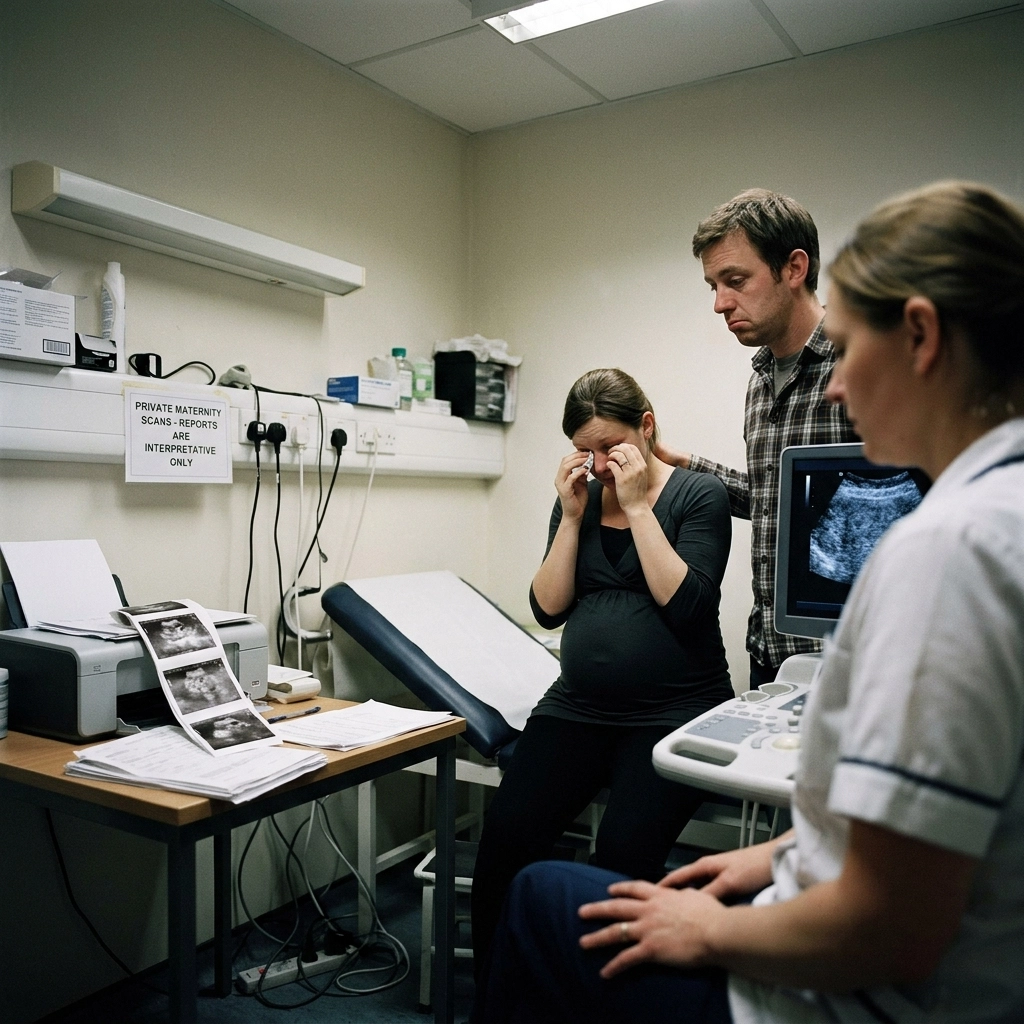
For many expectant parents, the wait between the initial 12-week NHS scan and the 20-week anomaly scan feels like an eternity. In those intervening weeks, the desire for reassurance and a glimpse of the growing life inside can be overwhelming. This emotional vulnerability has fuelled a massive boom in the private ultrasound industry across the UK. From high-street boutiques offering "reassurance" packages to 4D "souvenir" experiences, these clinics promise peace of mind for a price. However, behind the glossy filters and high-definition monitors lies a deeply concerning reality: a lack of regulation that is leaving families devastated.
At NowPWR, we focus on independent news UK audiences deserve, often highlighting the untold stories that fall through the cracks of the mainstream narrative. The story of Charlotte Tolley is one such account: a stark reminder of what happens when medical procedures are treated as mere retail experiences. Charlotte, like thousands of others, turned to a private clinic for what she thought would be a professional assessment. Instead, she was given a clean bill of health for a baby that was actually suffering from a life-altering condition.
The problem isn't just a single clinic or a one-off mistake. It is a systemic failure rooted in the way the UK regulates: or rather, fails to regulate: the profession of sonography. As we dive into these real life stories news platforms are finally beginning to acknowledge, it becomes clear that the "reassurance" being sold to parents is often nothing more than a dangerous illusion.
The Devastating Reality of Unregulated Scans
Charlotte Tolley’s experience serves as a harrowing case study for the entire industry. During her pregnancy, she visited a private clinic for a scan, hoping to see her baby and receive the professional confirmation that everything was developing as it should. The sonographer at the private boutique told her that everything looked perfect. Charlotte left the clinic with printed photos and a sense of joy, believing her baby was healthy.
It wasn't until her subsequent NHS scan that the truth emerged. The hospital sonographers quickly identified that Charlotte’s baby was missing half of its brain. This was not a subtle abnormality; it was a major structural defect that should have been obvious to any trained professional. The shock was compounded by the fact that she had been told only weeks earlier that there were no issues. The false reassurance provided by the private clinic didn’t just delay her medical care; it robbed her of time to process the news and make informed decisions about her pregnancy in a supportive, medical environment.
Charlotte’s story is far from unique. Across the country, parents are reporting similar failures. In some instances, private clinics have completely missed ectopic pregnancies: a life-threatening condition where the embryo implants outside the womb. These women were sent home with "all clear" reports, only to end up in emergency surgery days later when their fallopian tubes ruptured. In other cases, healthy pregnancies have been put at risk because private operators misdiagnosed blood clots as malformed fetuses, leading to recommendations for terminations that were entirely unnecessary.
The common thread in these stories is the "reassurance" label. Because many of these clinics market themselves as providing "souvenir" or "bonding" scans rather than medical diagnoses, they often sidestep the rigorous checks required in a clinical setting. Yet, to the average parent, a scan is a scan. They trust that the person holding the probe knows what they are looking at. When that trust is misplaced, the consequences are life-changing.
A Shadow System Without Professional Standards
The most shocking aspect of the private scan industry is that, in the UK, "sonographer" is not a protected title. This means that, technically, almost anyone can purchase an ultrasound machine, rent a space on the high street, and start charging parents for scans. While most NHS sonographers are highly trained radiographers or midwifes with postgraduate qualifications, the staff at private "boutique" clinics do not always meet these standards.
Because the title isn't protected by law, there is no mandatory register that these practitioners must join. In the NHS, if a medical professional is found to be incompetent or behaves unethically, they can be struck off a professional register, preventing them from practicing elsewhere. In the private sector, there have been recorded instances of individuals who were banned from NHS hospitals or struck off other medical registers continuing to find work in unregulated private scan studios.
The Society of Radiographers has been vocal about this "shadow system." They point out that while the Care Quality Commission (CQC) does inspect the premises of these clinics, their remit is often limited to the environment and general safety rather than the individual clinical competence of the person performing the scan. This creates a massive loophole. A clinic can have a clean waiting room and follow health and safety protocols, but still employ staff who lack the expertise to identify serious foetal abnormalities.
Furthermore, the equipment used in some high-street boutiques is geared towards "pretty pictures" rather than diagnostic accuracy. 4D scans, which produce video-like images of the baby’s face, are popular for social media, but they are not the tool used for medical screening. When parents opt for these "bonding" experiences, they are often unaware that the operator may not even be looking at the baby’s internal organs or brain structure. They are paying for a photo, but they leave believing they have received a medical check-up. This confusion is a core part of the problem, leading parents to bypass or de-prioritise essential NHS appointments because they feel they’ve already had a "better" scan privately.
The Urgent Fight for Accountability and Reform
The fallout from these missed diagnoses has sparked a growing movement calling for tighter regulation of the UK’s private maternity scan industry. Charlotte Tolley has become a prominent voice in this fight, advocating for a system where no parent is left in the dark about their child’s health due to the incompetence of an unregulated practitioner. The call is simple: the title of "sonographer" must become a protected one, requiring mandatory registration with a professional body like the Health and Care Professions Council (HCPC).
If sonography were a protected profession, every person performing a scan would be held to a national standard of training and ethics. It would ensure that if a practitioner misses a glaring abnormality like a missing portion of the brain or an ectopic pregnancy, there are clear channels for accountability. Currently, many parents who try to complain about private clinics find themselves hitting a brick wall. Because the clinics often frame their services as "non-medical," they claim they are not responsible for failing to provide a diagnosis.
There is also a push for better public education. Parents need to understand the difference between a clinical diagnostic scan and a "souvenir" session. While the desire to see a baby in 4D is understandable, it should never be a substitute for the comprehensive screening provided by the NHS. Experts suggest that private clinics should be legally required to display clear warnings that their scans are not for medical purposes, though many argue that even this is not enough. If an ultrasound probe is being used on a pregnant woman, the person behind it should be qualified to recognise when something is wrong.
As we continue to share these untold stories, it becomes evident that the current state of the industry is unsustainable. The emotional and physical risks to parents and babies are too high to allow the "Wild West" of private scanning to continue. For Charlotte and many others, the damage is already done, but their bravery in speaking out is the first step toward ensuring that "reassurance" actually means something for the next generation of parents.
The UK government and health authorities are under increasing pressure to close these regulatory gaps. Until that happens, the burden remains on parents to vet the clinics they visit, often during a time when they are at their most anxious. It is a weight that families should not have to carry. The technology exists to give us a window into the womb; it is high time the law ensures that the people operating that window are actually qualified to see what’s inside.