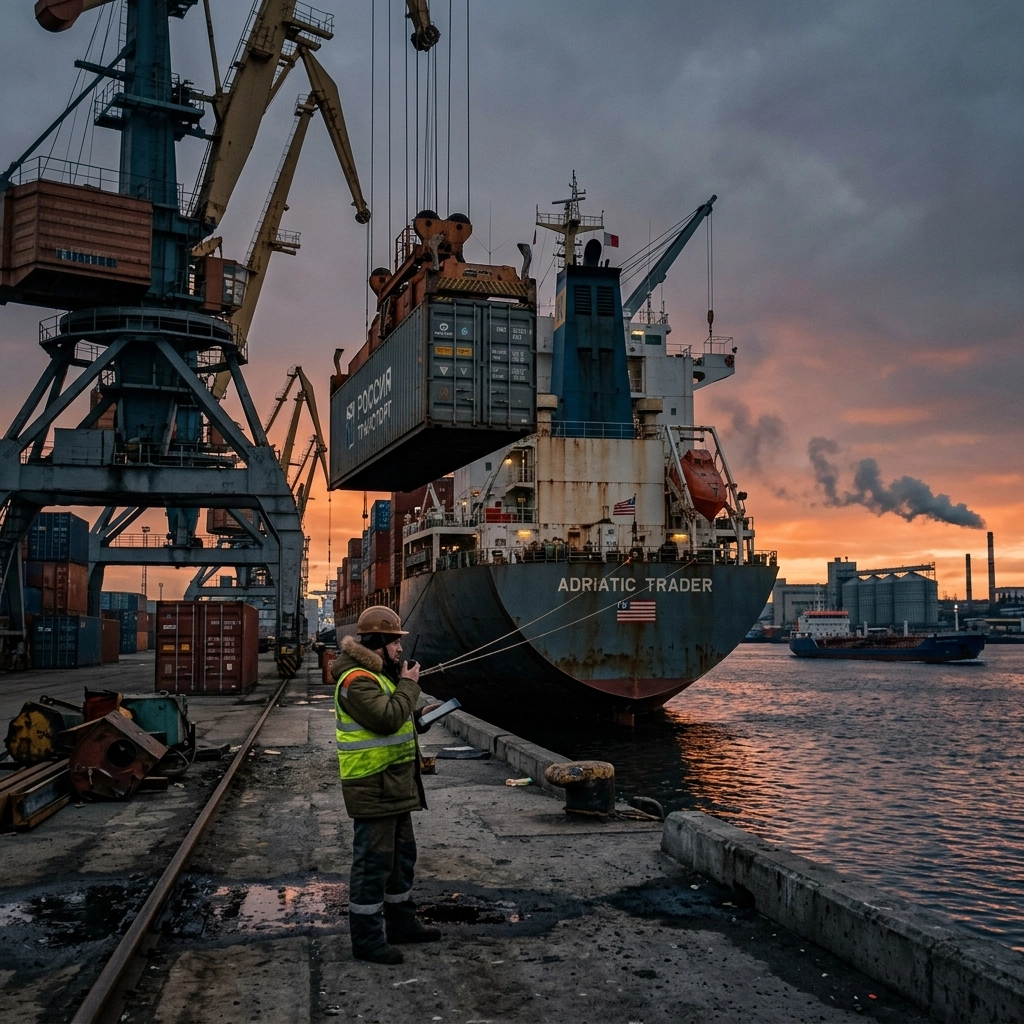
The landscape of international trade has undergone a seismic shift over the last few years. When significant sanctions were first imposed on Russia, the consensus among many Western economists was that the Russian economy would face an almost immediate and catastrophic contraction. However, as we look at the data in 2026, the reality on the ground tells a much more complex story. For those seeking independent news uk perspectives, the narrative of a completely isolated Russia has been replaced by a story of adaptation, "grey" markets, and a fundamental rewiring of global supply chains.
At NowPWR, we believe in uncovering the untold stories that often get buried under simplified headlines. While the sanctions are undoubtedly the most extensive ever applied to a major economy, Russia has managed to maintain a level of economic resilience that has surprised many. This isn't just about survival; it's about how a major power can navigate trade loopholes and forge new alliances when traditional doors are slammed shut. A recent Sky News investigation has highlighted just how intensifying Russia sanctions evasion has become, revealing a sophisticated network that keeps goods moving and the economy ticking.
To understand how this is happening, we have to look past the official press releases and dive into the mechanics of modern logistics. It is a world of flag-swapping ships, shell companies in neutral territories, and a massive shift in focus from West to East. Russia hasn't just found a way to bypass the rules; it has essentially built a parallel trading system that operates outside the reach of Western financial institutions.
The Rise of the Shadow Fleet and Energy Pivot
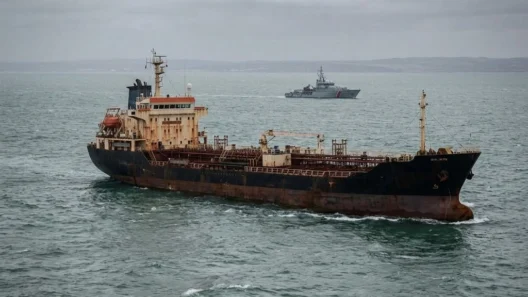
One of the most visual and impactful ways Russia has circumvented trade restrictions is through its energy sector. Oil is the lifeblood of the Russian treasury, and cutting off that revenue was a primary goal of the G7 price cap and various embargoes. In response, Russia has assembled what is now widely known as the "shadow fleet." This consists of over 500 oil tankers that operate outside the traditional insurance and shipping circles of the West. By using older vessels that are often owned by anonymous entities and registered in jurisdictions with less oversight, Russia continues to move its crude oil to markets across the globe.
This shadow fleet represents roughly a quarter of the world’s crude oil tankers. These ships often engage in "dark" activities, such as turning off their transponders to avoid tracking or performing ship-to-ship transfers in international waters to disguise the origin of the cargo. This allows Russia to sell oil above the G7 price cap, directly funding its national budget. The redirect has been massive; whereas Europe was once the primary destination for Russian energy, the flow has now moved heavily towards "friendly" nations.
India and China have become the primary beneficiaries of this pivot. By offering significant discounts, Russia has managed to replace lost European demand with hungry markets in Asia. In fact, trade between Russia and India more than doubled after 2022. This isn't just a temporary fix; it's a long-term strategic realignment. Russia has liberalised trade with these nations, reducing costs and streamlining customs processes. This energy pivot serves as a foundation for the rest of its sanctions-beating strategy, providing the hard currency needed to facilitate other imports through various trade loopholes.
Technological Resilience and Trade Loopholes
The second major pillar of Russia's strategy involves the procurement of high-tech components, particularly semiconductors. These are vital not just for consumer electronics but for the modern manufacturing and military sectors. Despite strict export controls, Western-branded technology is still finding its way into the country. The untold stories of these supply chains often involve a complex web of intermediaries in countries like Turkey, the UAE, Kyrgyzstan, and Armenia.
A significant portion of these "dual-use" goods are diverted through third countries. For example, a company in a neutral nation might buy thousands of Western microchips under the guise of a domestic infrastructure project, only for those chips to be re-exported to Russia shortly after. This process, often called "parallel imports," has been officially sanctioned by the Russian government, allowing businesses to import goods without the consent of the trademark owner. This ensures that Russian shelves remain stocked with everything from iPhones to high-end industrial machinery.
China’s role in this technological lifeline cannot be overstated. Bilateral trade between Russia and China hit a record $237 billion in 2023, and that figure has only grown. China now supplies over 90% of Russia’s semiconductor imports. Interestingly, more than half of these are actually Western-branded components that are simply routed through Chinese distributors. By moving away from the US dollar and conducting roughly 92% of their trade in rubles and yuan, the two nations have effectively immunised their commercial relationship against Western financial sanctions. This financial decoupling is perhaps the most significant long-term threat to the efficacy of sanctions as a tool of Western foreign policy.
Global Shifts and the New Economic Map
As we move further into 2026, it is clear that Russia’s strategy is not just about avoiding the "stick" of sanctions, but actively seeking the "carrot" of new partnerships. The Russian government reports that approximately 86% of its trade is now conducted with nations it deems "friendly." This isn't just rhetoric; it is backed by the development of free trade agreements through the Eurasian Economic Union (EAEU). These agreements provide access to markets spanning Indonesia, the UAE, and Mongolia, representing over 700 million people.
The financial resilience of the Russian state also played a crucial role. Before 2022, the central bank built up a massive war chest of over $640 billion in reserves. While about half of that was frozen by Western banks, the remaining portion, held in gold and non-Western currencies, provided a significant buffer. Domestically, the government managed to stabilise the ruble through aggressive interest rate hikes and capital controls, preventing the hyperinflation many predicted. This stability gave Russian businesses the confidence to seek out new suppliers and invest in domestic alternatives to Western products.
However, this resilience comes at a cost. Relying on a shadow fleet and circuitous trade routes is inherently more expensive and less efficient than direct trade. The quality of goods can be inconsistent, and the dependency on China creates a new set of strategic vulnerabilities for Moscow. Yet, for now, the data suggests that the strategy is working well enough to keep the economy from collapsing. The world is witnessing the birth of a fragmented global trade system where Western influence is no longer the sole arbiter of economic success.
The ongoing Russia sanctions saga serves as a case study for the limitations of economic warfare in a hyper-connected world. When a major economy is cut off, it doesn't simply disappear; it reshapes itself, finding the path of least resistance through the cracks in the global order. For anyone following the latest in independent news uk, the lesson is clear: the global economic map is being redrawn in real-time, and the old rules of trade are being rewritten by those who have the most to lose.
In conclusion, Russia has managed to mitigate the impact of global trade sanctions through a combination of strategic energy redirection, the exploitation of technological trade loopholes, and a decisive pivot toward non-Western economic partners. By leveraging a shadow fleet and developing sophisticated re-export networks, the country has maintained its essential supply chains. While the long-term sustainability of this model remains a subject of intense debate, the current reality demonstrates a significant degree of economic adaptability in the face of unprecedented international pressure.