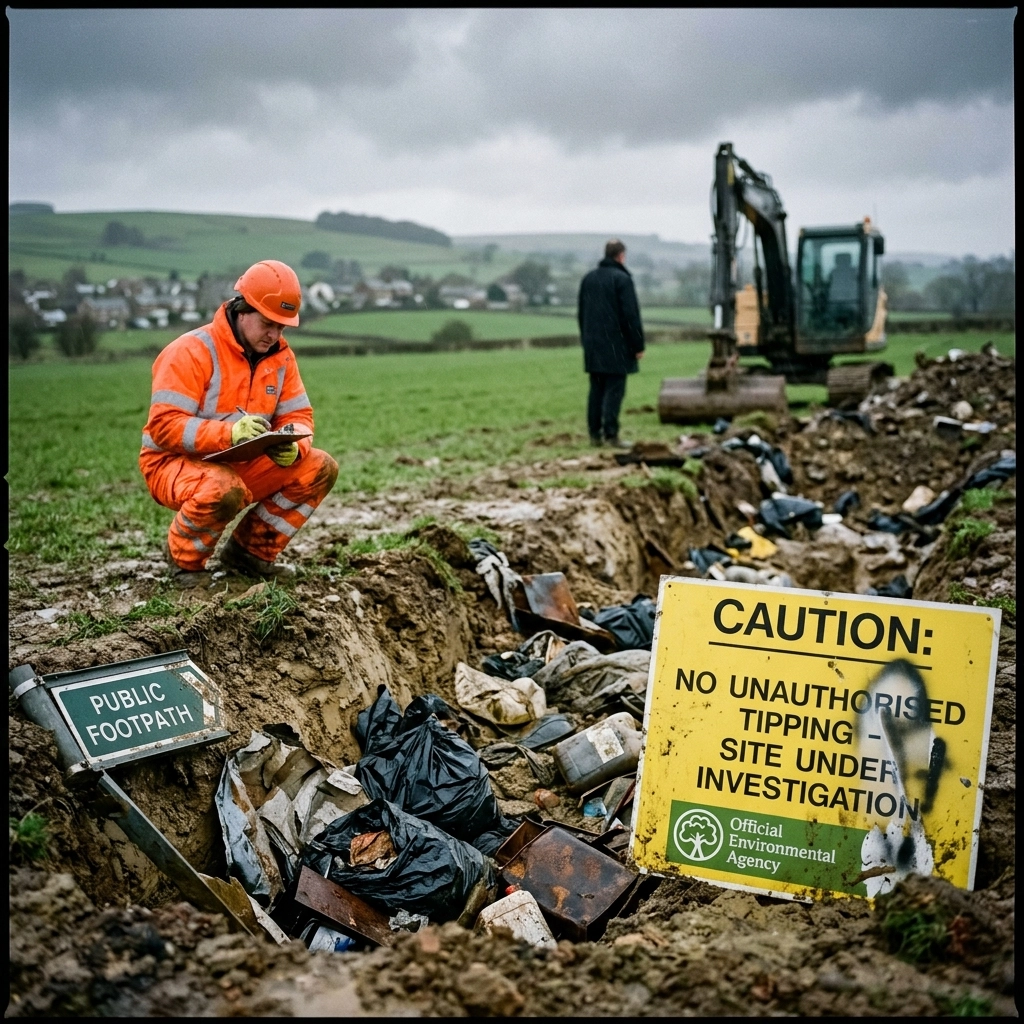
For many of us, getting rid of rubbish feels straightforward. We put the bins out, or maybe head to the local tip after finally clearing the garage. It all seems like a settled system, managed by authorities and backed by strict environmental laws. But beneath that surface, a much darker reality is playing out across the British countryside. The UK is facing a serious wave of illegal waste dumping, driven by organised crime groups who have realised that moving "muck" can be more profitable, and far less risky, than moving drugs.
The visible side of the problem, from fly-tipping on street corners to dumped rubbish in country lanes, is bad enough. But an even more troubling issue has come into focus. The very bodies meant to protect the environment may not have been fully open about the scale of the crisis. Recent investigations into the Environment Agency suggest a failure to disclose several large illegal waste sites. These are not just heaps of old furniture. They are major operations causing real harm to land and local communities. In the world of independent news uk, these untold stories are helping show just how hard the current system is finding it to keep pace with modern environmental crime.
The Growing Shadow of Organised Waste Crime
To understand why this is happening, it helps to look at the money behind it. For years, the usual picture of organised crime centred on drugs or high-value robberies. Now, many gangs are branching out. Waste crime is thought to bring in more profit for some groups than traditional drug trafficking. The logic is blunt: overheads are low, demand for cheap disposal is high, and the penalties often look more like a business expense than a real deterrent.
Satellite analysis has revealed a striking picture across the UK. There are likely thousands of illegal waste sites, many hidden in plain sight on industrial estates or remote farmland. These operations are often run by experienced criminals who know exactly how to exploit weak points in the system. A site can be made to look legitimate, filled with hazardous material, and then abandoned before enforcement catches up.
The scale is hard to ignore. Millions of tonnes of waste are moved every year, including industrial chemicals, building debris, and increasingly hazardous medical waste. Once organised crime takes hold, environmental safeguards stop mattering. Proper containment, safe processing, and groundwater protection all fall by the wayside. The goal is simple: dump as much material as possible for the lowest possible cost. That leaves local communities and the wider environment carrying the damage.
Regulatory Gaps and the Missing Disclosures
What makes this story especially troubling is that the issue is not just criminal activity, but whether regulators are keeping the public fully informed. The Environment Agency is the main body responsible for making sure waste is handled properly. Yet serious concerns have been raised about transparency. Reports suggest the agency failed to disclose three major illegal waste sites already known to be causing harm. When people are left in the dark about toxic dumping near their communities, trust starts to break down quickly.
There are a few possible reasons for that silence. It may point to stretched resources, internal pressure, or a wider reluctance to admit how serious the problem has become. Acknowledging that these sites exist in large numbers also means acknowledging that enforcement is struggling. By the time some investigations begin, the damage to land and water may already be done. Industry whistleblowers have provided images and testimony about illegal activity, but many feel their warnings have not led to action fast enough.
There is also the question of influence. The waste sector is worth billions, and major operators can carry political and financial weight. Even without clear evidence of direct favour-trading, the optics are uncomfortable when regulators appear slow to act or incomplete in what they disclose. For readers following independent news uk, these untold stories matter because they speak to a bigger issue: whether public safety and environmental protection are being treated with the urgency they deserve.
Long-term Impacts on Public Health and Safety
The long-term consequences of this toxic dumping are serious. One of the most alarming findings from recent investigations is the presence of hidden medical waste at illegal sites. This goes far beyond old bandages. Reports describe blood-contaminated material, used medication, sharps, and surgical clothing being mixed into general waste loads. Normally, that sort of material should be carefully tracked and destroyed at high temperatures. Instead, it is allegedly being buried or concealed under ordinary rubbish to avoid attention.
That creates a major public health risk. As rainwater passes through these dumps, it can produce toxic leachate that seeps into soil and eventually into rivers and groundwater. Some site testing has already pointed to significant water pollution. This is not just a problem for wildlife. It has potential consequences for farming, local water quality, and the health of nearby residents. People living close to these sites have reported foul odours, more pests, and growing anxiety about what long-term exposure could mean.
Weak enforcement only makes the situation harder to contain. With more than a million fly-tipping incidents reported in the UK, the odds of criminals being caught and successfully prosecuted remain low. Even when cases reach court, fines can look tiny compared with the profits involved. If this is going to change, waste crime has to be treated as a serious threat to land, health, and public safety, not as a minor nuisance that can be dealt with later.
Addressing Britain’s toxic waste crisis requires more than just better fences and more cameras. It requires a regulatory body that is properly funded, transparent, and empowered to take on organised crime. It also requires the public to be fully informed about the risks in their local areas. When information about dangerous sites is withheld, the community's ability to protect itself is compromised. By bringing these issues into the light, we can start the difficult work of cleaning up our countryside and ensuring that the UK’s waste is handled with the care and legality it deserves.
The situation remains critical as the volume of waste produced shows no signs of slowing down. Without a significant intervention at the national level, the country risks becoming a patchwork of hidden toxic zones. The involvement of organised crime has turned a logistical challenge into a national security and public health issue. Moving forward, the focus must remain on transparency and rigorous enforcement. Only by exposing the reality of what is happening beneath the surface can we hope to bring an end to the illegal waste cover-up and protect the British landscape for generations to come.