Glasgow is a city known for its resilience and its vibrant culture, but sometimes the most harrowing stories are the ones tucked away in the shadows of its historic tenements. For seven years, between 2012 and 2019, a level of depravity unfolded that has left a permanent mark on the city's conscience. Known locally and now nationally as the "Beastie House" case, this saga isn't just about the cruelty of individuals; it is a sobering look at how the systems meant to protect our most vulnerable can suffer from total, catastrophic failure. At NowPWR, we believe in bringing these untold stories to light, providing the kind of depth you expect from independent news uk.
The details of the case are difficult to digest. Seven people were eventually convicted in late 2023, with sentencing handed down in early 2025. They operated a drugs den where three children were subjected to systematic abuse, exposed to Class A drugs, and forced into environments of extreme violence. What makes this case particularly haunting is the duration. This wasn't a single weekend of horror or a month of tragedy; it was seven years of ongoing, institutional blindness.
While the court proceedings have concluded, the questions lingering in the Glasgow air remain. How did this happen in a modern city with supposedly robust social safety nets? Why were the warning signs ignored for so long? To understand the scale of this failure, we have to look closely at both the perpetrators and the cracks in the system that allowed them to operate with such impunity.
A Decade of Darkness and the Beastie House Gang
The individuals involved in the Beastie House gang represented a collective of the worst elements of society, preying on those who had no means of escape. In January 2025, the High Court in Glasgow saw the final chapter of the legal battle as the seven gang members received sentences totalling 93 years. However, the years on a calendar don't quite capture the gravity of their crimes. The court saw fit to issue Orders for Lifelong Restriction (OLR) for all seven defendants. This is a specific Scottish legal designation reserved for the most dangerous offenders: those whose risk to the public is considered so great that they may never be released from supervision, even if they finish their minimum jail time.
Iain Owens, who received a 20-year sentence, was at the centre of this ring. Alongside him were Elaine Lannery (17 years), Paul Brannan (15 years), and Lesley Williams (14 years). These four were not only convicted of the horrific abuse but also of the attempted murder of a child. The rest of the gang included John Clark (10 years), Barry Watson (9.5 years), and Scott Forbes (8 years). Together, they turned a residential property into a place of nightmares, hosting what were described in court as "rape nights" and ensuring the children under their "care" were kept in a cycle of drug dependency and fear.
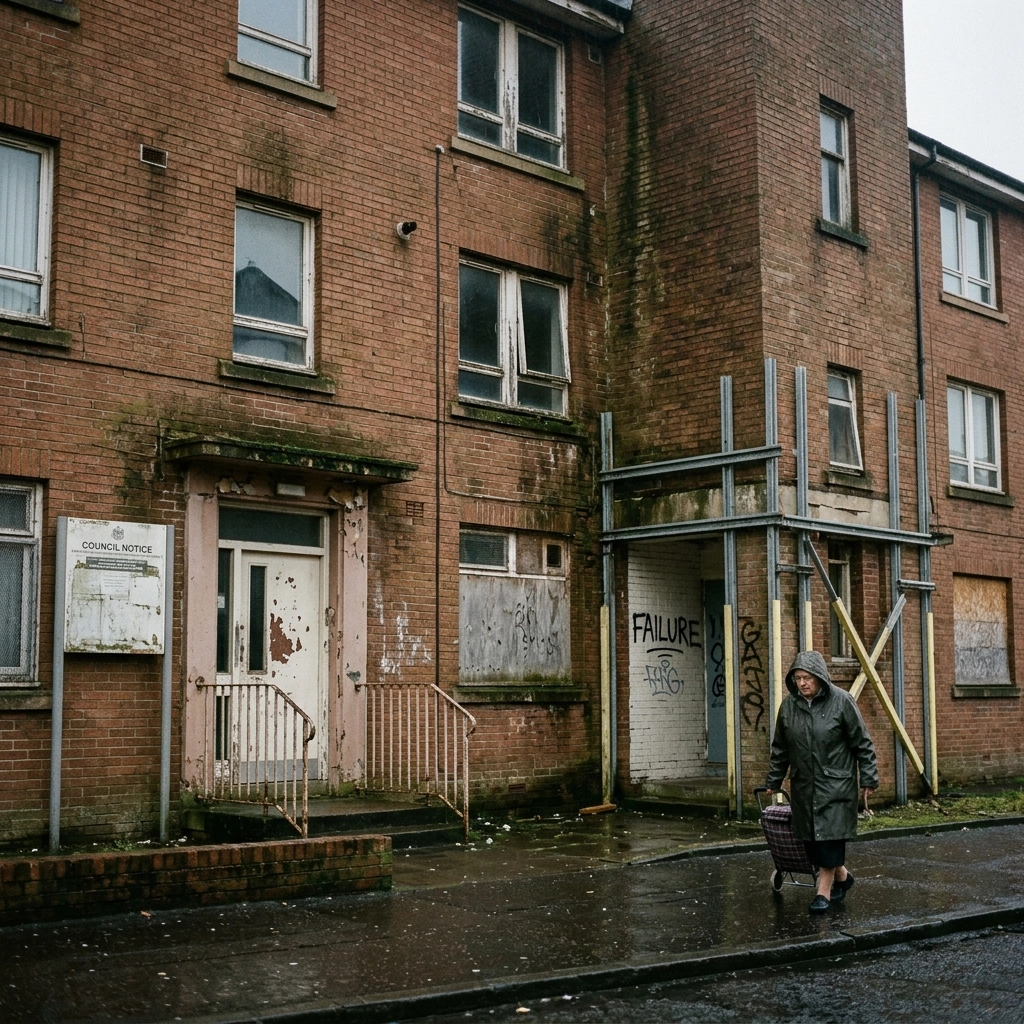
The children, who were introduced to alcohol and Class A drugs at incredibly young ages, were essentially prisoners in plain sight. They were living in a tenement building, a staple of Glasgow architecture where neighbours are often just a wall away. This proximity makes the seven-year silence even more baffling. It speaks to a culture where the most vulnerable can become invisible if they fall into the right: or rather, the wrong: pockets of the community. In our pursuit of untold stories, we often find that the most tragic elements aren't the crimes themselves, but the fact that they were allowed to continue for thousands of days without intervention.
The Systematic Failure of Child Protection Services
It is one thing for criminals to hide their tracks; it is quite another for the authorities to have the tracks laid out in front of them and still fail to follow them. This is the heart of the institutional failure in the Beastie House case. An SNP minister eventually acknowledged that these victims were failed by the very authorities entrusted with their safety. This admission, while necessary, provides little comfort to those whose childhoods were stolen.
The failures were not subtle. Reports following the trial revealed that children involved were actually on child protection registers during the period of abuse. Being on such a register is supposed to trigger a heightened level of scrutiny and frequent check-ins from social services. Yet, the abuse continued. Furthermore, the victims suffered from chronic school absences: a red flag that is traditionally one of the first indicators of trouble at home. In this case, those absences went unaddressed for years.
There were also visible signs of neglect that were documented but never effectively acted upon. When we talk about independent news uk, we often discuss the need for accountability in public office. The Glasgow Child Protection Committee has since been tasked with an independent review to establish exactly where the communication broke down. Was it a lack of resources? Was it a "silo" mentality where different agencies failed to share vital information? Or was it a more profound failure of empathy and professional curiosity?
The fact that the offences were not reported to the police until June 2019, despite the abuse starting in 2012, suggests a massive disconnect between the community, the education system, and the police. For seven years, the "Beastie House" was a known entity to some, yet a ghost to the authorities. This gap in oversight allowed a group of seven people to systematically destroy young lives while the world outside continued as if nothing were wrong. Our commitment to high standards drives us to highlight these lapses in the hope of preventing their recurrence.
Seeking Accountability through Independent Reviews
As the dust settles on the sentencing, the focus in Glasgow has shifted toward the independent review. The goal is to ensure that the "lessons learned" cliché actually results in tangible policy changes. It is easy for a government to say they are sorry; it is much harder to restructure a social work department that is often overworked, underfunded, and struggling with high staff turnover.
However, the Beastie House case suggests that the problems go deeper than just funding. It points toward a need for a total overhaul in how child protection is managed in urban environments. The review needs to look at why the "duty of care" responsibilities were not met by agencies who were literally looking at the victims. If a child is on a protection register and stops attending school, the response should be immediate and forceful. In this instance, it was anything but.
The role of the community is also under the microscope. In many of the untold stories we cover, there is a recurring theme of people being afraid to speak up or assuming that "someone else" must be handling it. Strengthening the link between the public and protective services is vital. We also have to consider the impact of the drug crisis in Scotland, which provides the dark backdrop for many of these cases. The "Beastie House" was, first and foremost, a drugs den. By tackling the root causes of the drug epidemic, the city might begin to close the doors on these houses of horror before they can even open.
We believe that by keeping the pressure on through consistent reporting, we can help ensure that the victims of the Beastie House are the last to suffer such a prolonged period of neglect. The 93 years of jail time handed out to the perpetrators is a start, but true justice will only come when the system that failed those children is rebuilt into something that actually works.
The Glasgow Beastie House case remains a dark chapter in Scottish history, serving as a reminder that institutional vigilance is the only thing standing between vulnerable children and those who wish them harm. As the city moves forward, the focus must remain on the findings of the independent review and the implementation of its recommendations to ensure that "never again" is a promise kept, not just a slogan used in the aftermath of a tragedy.