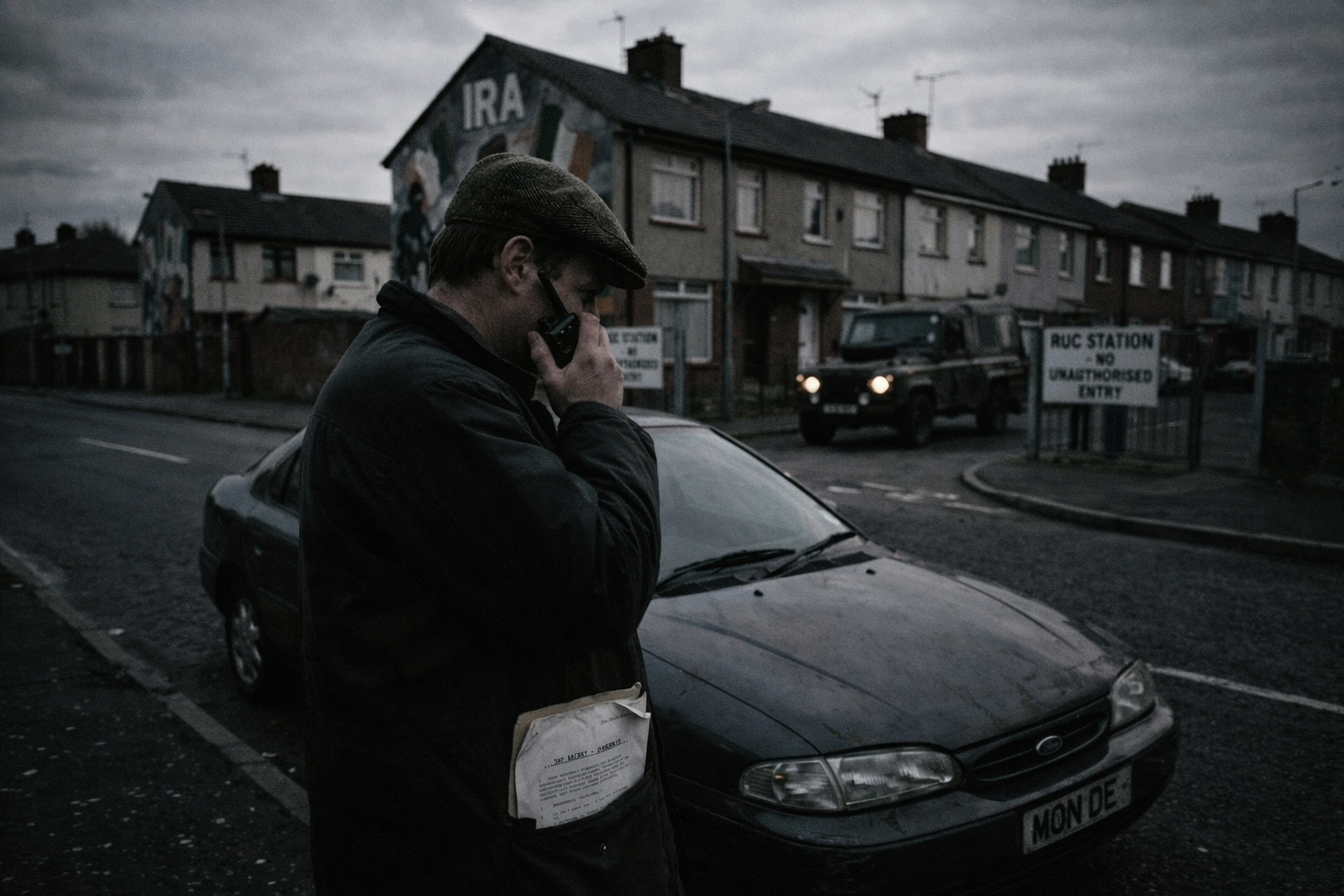
For decades, the name 'Stakeknife' existed as a dark myth in the history of the Troubles in Northern Ireland. He was described as the jewel in the crown of British military intelligence: an agent so highly placed within the Provisional IRA that he could dismantle the organisation from the inside. However, the reality behind the myth is far more harrowing. As recent investigations have come to light, the story of Freddie Scappaticci, the man identified as Stakeknife, has forced a painful reckoning with how the state conducts its most secretive operations.
The investigation into his activities, known as Operation Kenova, has finally begun to peel back the layers of a conflict that left deep scars on communities across the United Kingdom. This is not just a historical footnote; it is a story about the ethics of intelligence, the price of information, and the search for justice for the families of those who were lost in the shadows. For readers looking for independent news uk, the findings of this report stand out as one of the most significant disclosures in modern British history, dealing with real problems that have been buried for nearly half a century.
The scale of the betrayal and the subsequent cover-up is difficult to grasp. Scappaticci was not just an informant; he was a key figure in the IRA’s Internal Security Unit, colloquially known as the 'Nutting Squad'. His job was to find, interrogate and ultimately execute those suspected of being British spies. The paradox is as brutal as it is stark: the British state’s most valuable spy was responsible for murdering other people who were also suspected of working for the British state.
The Shadows of Operation Kenova
Operation Kenova was launched to investigate the activities of Stakeknife and the alleged failures of the security forces to prevent murders. Led by former Chief Constable Jon Boutcher, the inquiry spent years and millions of pounds meticulously sifting through thousands of documents and interviewing hundreds of witnesses. What they found shattered the long-standing narrative maintained by the military and intelligence services. For years, the official line was that Stakeknife was a hero who had saved "hundreds and hundreds of lives" by providing high-level intelligence that thwarted IRA operations.
The Kenova report, however, suggests a much darker truth. The investigation concluded that the number of lives saved by Scappaticci’s intelligence was likely in the low double digits, far from the hundreds claimed by his handlers. More distressingly, the report found that the intelligence he provided was often used to protect his own position, sometimes at the cost of others. In some instances, it appears that the security forces allowed murders to take place to ensure that Scappaticci’s cover was not blown. This revelation brings to light the untold stories of victims whose lives were treated as collateral damage in a high-stakes game of espionage.
The report highlights the "worst possible kind" of crimes committed by Scappaticci, including torture and murder. As a member of the Nutting Squad, he was at the centre of the IRA’s machinery of fear. The fact that he was doing this while on the payroll of the British Army’s Force Research Unit (FRU) raises profound questions about accountability. The FRU even had a dedicated operational unit to handle him, located in a secure, secret facility nicknamed the 'Rat Hole.' This level of support suggests that the state was not just aware of his actions but was actively facilitating them.
The impact of these findings on the families of the victims cannot be overstated. For decades, they were left in the dark, wondering why their loved ones were taken and why no one was ever brought to justice. The Kenova report provides some semblance of truth, but for many, it comes too late. Freddie Scappaticci died in March 2023 at the age of 77, living under an assumed name in England, protected and funded by the very state he served as a double agent. He was never charged or convicted of the many murders he was suspected of committing.
A System of Secrets and Failures
One of the most damning aspects of the Stakeknife files is the systemic failure of the intelligence services to share information with the police. The investigation revealed that MI5 and military intelligence routinely withheld vital data from the Royal Ulster Constabulary (RUC). This lack of cooperation meant that police officers were often working in the dark, unable to prevent killings or arrest suspects because doing so might have compromised the "golden egg" that was Stakeknife.
Of the 3,517 intelligence reports generated by Scappaticci, many contained information that could have saved lives if acted upon immediately. Instead, this information was frequently filed away or delayed. The report identifies MI5's initial failure to disclose what it knew as a "significant failure," noting that the agency had greater and earlier knowledge of Scappaticci’s activities than it originally admitted. This culture of secrecy prioritised the longevity of an intelligence source over the fundamental duty to protect life.
This lack of transparency has contributed to tensions in communities that still feel the tremors of the Troubles today. When the state is seen to be complicit in the very violence it claims to be fighting, the foundation of public trust is eroded. The legal outcome of Operation Kenova has also been a source of frustration. Despite the investigation submitting 28 files to the Public Prosecution Service, it was decided that there was insufficient evidence to prosecute anyone. The passage of time, the death of key witnesses and the destruction of documents made the threshold for criminal prosecution impossible to meet.
The legal and ethical questions raised here are part of the real problems that continue to plague the legacy of the Northern Ireland conflict. How do we hold state actors accountable for decisions made in the heat of a "dirty war"? Is there ever a justification for allowing a murder to take place to save a larger number of people? The Kenova findings suggest that in the case of Stakeknife, the moral compass was lost entirely. The focus became the preservation of the source at all costs, leading to a descent into state-sanctioned lawlessness.
The Call for Transparency and Truth
In the wake of the report, there has been a renewed call to officially name Freddie Scappaticci as the agent known as Stakeknife. While his identity has been an open secret in journalistic and political circles for years, the refusal of the government to officially confirm it has long been a point of contention. Naming him is seen as a necessary step toward acknowledging the truth and providing closure to the families. It is an admission that the state was involved in these untold stories of brutality.
The legacy of the Stakeknife files serves as a warning about the dangers of unchecked intelligence operations. While the need for informants in counter-terrorism is undeniable, the lack of oversight and the absence of a clear legal framework during the Troubles allowed for abuses that are only now being fully understood. Modern expectations around oversight reflect a wider public demand for greater accountability, but the ghosts of the past still demand answers.
For the survivors and the families of those executed by the Nutting Squad, the report is a bittersweet moment. It backs up long-held suspicions that something had gone badly wrong in the way the state handled Scappaticci. However, the lack of criminal convictions means the justice many families want remains out of reach. The story of Stakeknife is a reminder that in the world of intelligence, the line between opposing sides can become dangerously blurred, leaving a trail of broken lives in its wake.
Moving forward, the lessons from the 'Stakeknife' files must be built into how the UK addresses its past. The search for truth is often messy and uncomfortable, but it is the only way to confront the real problems of historical injustice. By bringing these secrets into the light, we acknowledge the suffering of the victims and ensure that such a period of state complicity in murder is never repeated. The files are now open, and while the man at the centre of them is gone, the impact of his actions will be felt for generations to come.
The conclusion of the Operation Kenova report does not mark the end of the story, but rather a new chapter in the ongoing effort to understand the complexities of the Northern Ireland conflict. It also underlines why independent news uk matters when it comes to examining untold stories that have shaped public life for decades. As the public continues to take in these revelations, the focus remains on the families who have long sought the truth about what happened to their loved ones in the dark corners of a secret war.