In the fast-moving world of international diplomacy, clarity is often the first casualty. Recent ripples across the geopolitical landscape suggested a major shift in strategy regarding Iran, with rumours swirling about a potential ground incursion involving regional allies. However, recent communications between Donald Trump and Kurdish leadership point to a very different picture. Rather than backing escalation, the message from the United States was one of restraint.
Understanding these movements means looking past the noise. In global news, the details matter just as much as the headlines. The claim that Kurdish forces were being prepared for a direct strike into Iranian territory has been challenged by direct accounts of the conversations held between Trump and Kurdish officials. For readers following independent news uk, this is exactly why careful reporting matters. At NowPWR, we focus on the untold stories that bring context to complicated events and help readers make sense of fast-moving developments.
The Middle East is often framed as being on the brink, but military decisions are frequently shaped by efforts to avoid unnecessary loss of life. Looking more closely at these reports, the main theme is not expansion of the conflict but limiting its reach. That makes this a significant story for anyone trying to understand where this moment may lead next.
Setting the Record Straight on Invasion Rumours
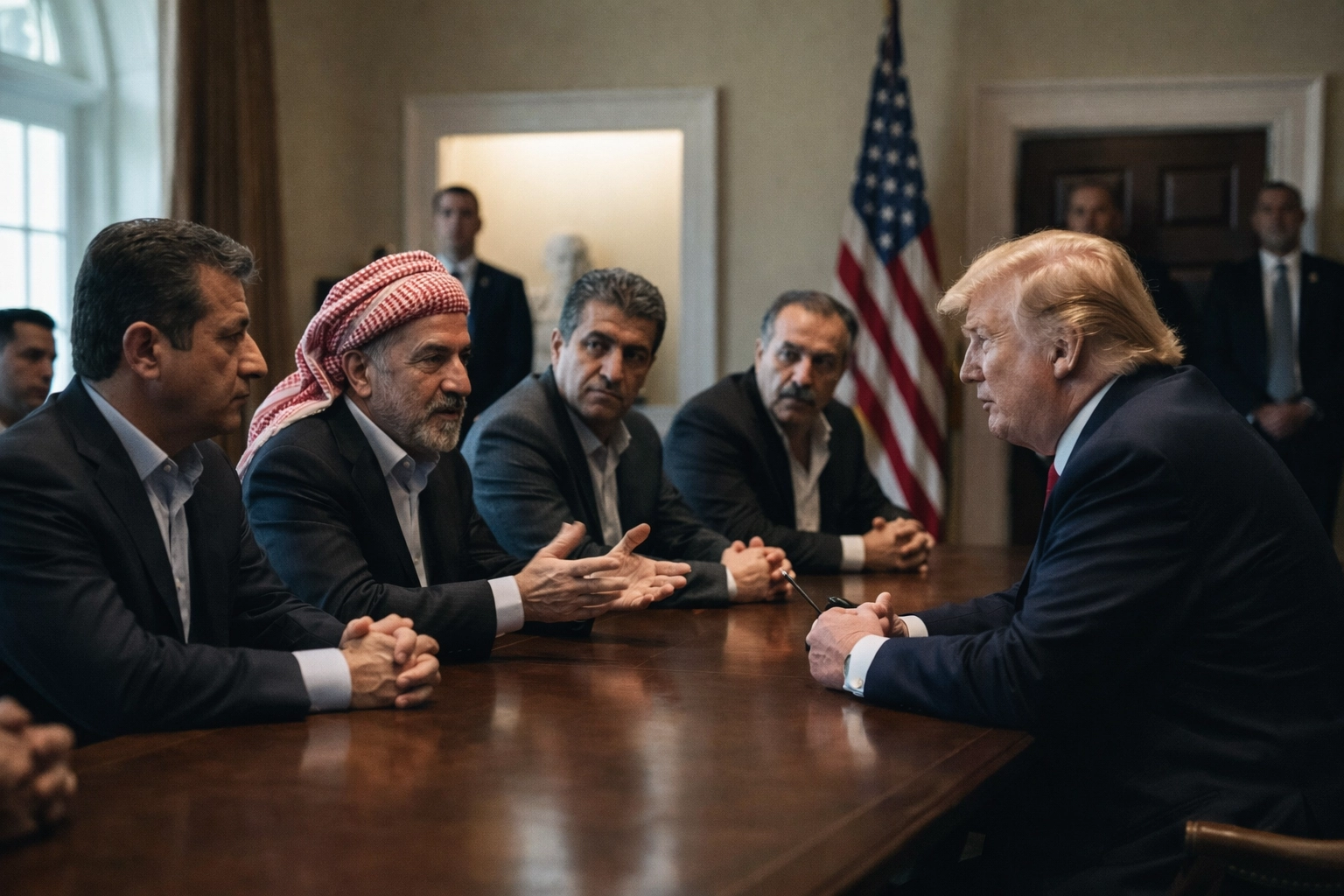
The core of the recent confusion stems from reports regarding phone calls between Donald Trump and Iraqi Kurdish leaders. Speculation was rife that the US was looking for boots on the ground to cross the border into Iran. However, the reality of these conversations was far more grounded. Trump explicitly stated that he did not want Kurdish forces to participate in a war against Iran. In his own words, he ruled out Kurdish involvement because the situation in the region is already "complicated enough" without adding more layers of direct military engagement from regional partners.
This clarification is essential for debunking the idea that a ground incursion was imminent. Trump’s stance was remarkably clear: while Kurdish forces expressed a willingness to engage if called upon, the US leadership proactively moved to prevent that outcome. The concern voiced during these calls wasn't about a lack of capability, but rather the potential for excessive casualties. The sentiment was simple: "I don't want to see the Kurds get hurt and killed." This protective stance highlights a layer of the US-Kurdish relationship that often gets overshadowed by broader military strategy.
By ruling out Kurdish participation in any potential ground operations, the administration aimed to simplify a volatile theatre of war. The logic presented was that Kurdish involvement would make the conflict "more complex" and lead to a significant rise in regional tensions that might be impossible to roll back. This focus on preventing a humanitarian disaster among allies shows a side of the strategy that rarely makes it into the standard news cycle. For those looking for untold stories that challenge the status quo of war reporting, this shift from aggression to protection is a significant development.
Why the Message Matters
In an era of rapid information exchange, the risk of misinformation is at an all-time high. The rumours of an ordered invasion served as a reminder of why independent news uk is so vital. When headlines jump to conclusions about impending wars, it is the responsibility of dedicated reporting to look at the transcripts and the direct quotes to find the truth. The fact that the US president explicitly told Kurdish leaders not to go in is a massive detail that changes the entire context of the geopolitical standoff.
These untold stories are what help us make sense of a world that often feels like it is spinning out of control. By focusing on the actual dialogue between leaders, we can see the difference between public-facing bravado and the private reality of military planning. The focus on Kurdish safety and the de-escalation of ground forces suggests that, despite the headlines, there is still a significant effort being made to prevent a total breakdown of order in the Middle East.
As we look forward, the relationship between the US and Kurdish leaders will likely remain a cornerstone of regional security. However, as these recent calls have shown, that security is currently being maintained through restraint. The US military campaign’s progress, as described by the leadership, has achieved its primary goals without the need for a chaotic ground war. This approach prioritises technical superiority over human cost, a strategy that will undoubtedly continue to be a major talking point in global news for months to come.
The clarity provided by these communications helps to stabilise the narrative. While the threat of conflict in the region remains a serious concern, the specific rumour of a Kurdish-led invasion of Iran has been put to rest. The US has made it clear: the Kurds are valued allies whose safety is a priority, and the "complicated" nature of the Middle East is a puzzle that nobody is looking to make more difficult with unnecessary ground incursions.
Keeping a close eye on these developments allows us to understand the broader trends in international relations. The move away from large-scale ground invasions towards more targeted, technological warfare is a trend that NowPWR continues to monitor. By staying informed through reliable sources, we can better navigate the complexities of our world and ensure that the stories that truly matter are the ones that get told.
The current state of affairs suggests a period of close watching and waiting. While the Iranian military has reportedly been significantly weakened, the political fallout is still unfolding. Keeping Kurdish allies out of direct combat appears to reflect a longer-term view of regional stability. In diplomacy, the decisions that are avoided can matter just as much as the actions that are taken. For readers tracking global news, this remains an important example of how restraint can shape the wider picture.
Safety, Strategy and Regional Risk
A major part of the discussion around these calls centred on the condition of the Iranian military. Trump described its capabilities as heavily degraded after a series of strikes, arguing that this reduced any case for a larger ground operation. From that point of view, there was little sense in exposing Kurdish forces to extra danger in an already fragile environment.
The choice to keep Kurdish forces out of the conflict also says something about the relationship itself. It suggests an effort to protect an ally rather than pull it deeper into a conflict with unpredictable consequences. In a region where alliances can shift quickly, that message carries weight and helps explain why this story has drawn so much attention.
A Kurdish incursion into Iran would likely have triggered wider consequences beyond any immediate military objective. It could have sharpened tensions with Tehran, unsettled neighbouring states and added pressure inside Iraq. That is why this apparent refusal matters so much. It points to a strategy focused on limiting escalation, and it offers one of those untold stories that sits behind the louder headlines.
Why Careful Reporting Still Counts
In a fast-moving news cycle, rumours can travel much faster than verified information. That makes careful reporting essential. The claim that Kurdish leaders were being directed to invade Iran creates one impression; the reported conversations suggesting the opposite create another entirely. For anyone reading independent news uk, the distinction is not minor. It changes the meaning of the story.
Looking at direct statements and credible accounts helps cut through the heat of online speculation. It also gives a clearer view of the difference between public rhetoric and practical military planning. In this case, the emphasis appears to be on limiting casualties, avoiding a wider war and maintaining a degree of control in an already tense region.
That does not remove the seriousness of the wider crisis. The risk of further confrontation remains real, and the politics around Iran, Iraq and Kurdish leadership are still highly sensitive. But the specific idea of a US-backed Kurdish invasion has been pushed back by the reporting now available. The clearer picture is one of caution, strategic restraint and an effort to avoid making an already complicated situation worse.
This remains a developing story, and the available details suggest that avoiding a broader ground conflict is still central to the approach being described.