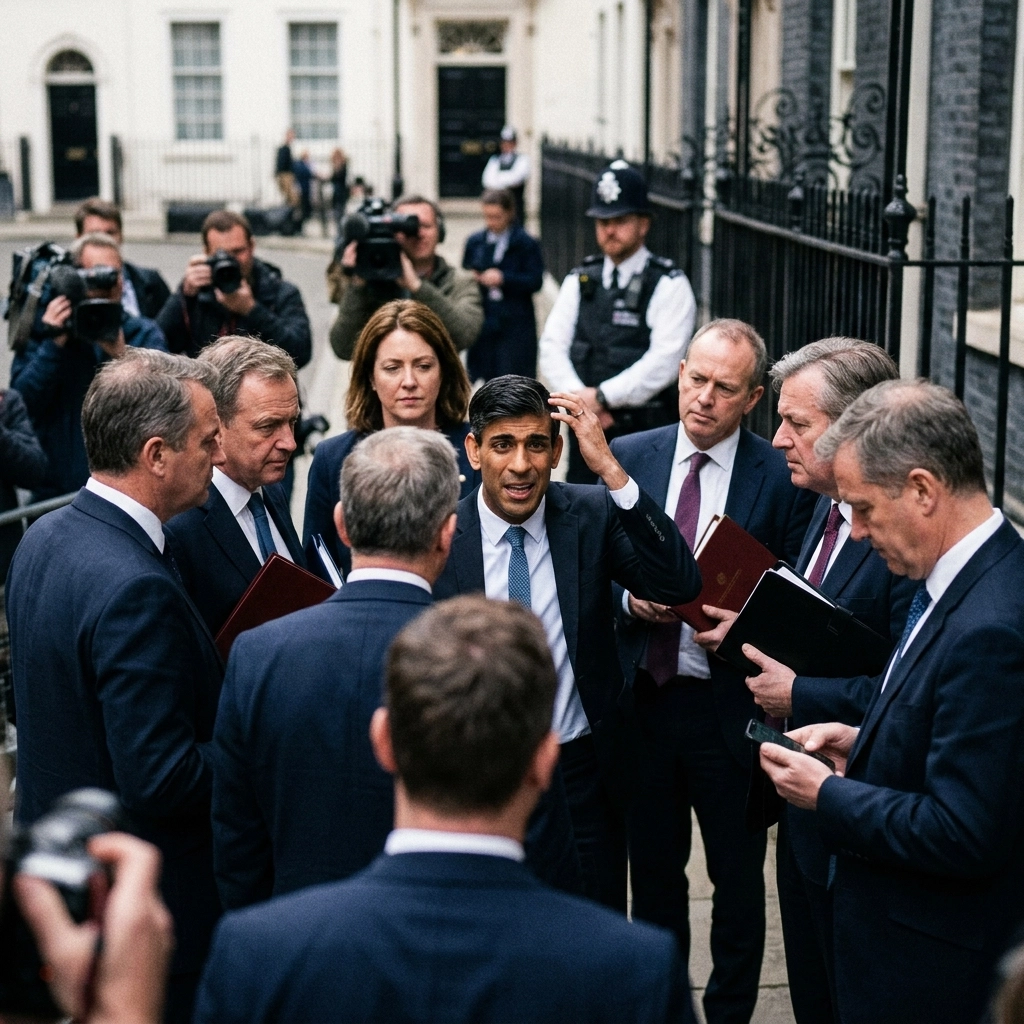
When we look back at the defining moments of British politics in the mid-2020s, the smoking ban often stands out as one of the most contentious battles fought within the halls of Westminster. It wasn't just a matter of public health; it was a fundamental clash of ideologies that threatened to split the Conservative Party down the middle. For those who follow independent news uk, the drama surrounding Rishi Sunak’s Tobacco and Vapes Bill provided a front-row seat to a rare kind of political theatre where personal conviction outweighed party lines.
The legislation was ambitious, to say the least. The goal was to create the UK’s first "smoke-free generation" by making it illegal for anyone born after 2009 to ever purchase cigarettes. It was a rolling ban, meaning the legal age for buying tobacco would increase by one year every single year, effectively phasing out the habit for good. While the health benefits were backed by a mountain of evidence, the move sparked a fierce rebellion that highlighted the untold stories of internal party strife and the struggle for the soul of modern conservatism.
Despite the heavy opposition from his own benches, Sunak pushed forward, relying on a coalition of supporters to get the bill through its initial stages. The headlines were dominated by the sheer scale of the rebellion, but the real story lay in the nuance of who voted, who didn't, and why they felt compelled to defy their leader.
The Parliamentary Showdown and the Power of Abstention
The numerical outcome of the vote was a clear victory for the government on paper, but a deeper look at the tally reveals a fractured party. The bill passed with 383 votes in favour and 67 against. At first glance, a majority of 316 looks like a landslide. However, when you realize that 57 of those "no" votes came from the Prime Minister’s own Conservative MPs, the narrative shifts significantly. This wasn't just a few disgruntled backbenchers making noise; it was a significant portion of the party explicitly rejecting a flagship policy.
Perhaps even more telling were the abstentions. In the world of high-stakes politics, choosing not to vote can be just as loud as casting a "no." High-profile figures like Penny Mordaunt, the Leader of the House of Commons, chose to abstain, a move that sent shockwaves through the cabinet. When senior members of the government refuse to publicly back the Prime Minister’s vision, it signals a deep-seated discomfort with the direction of travel. These abstentions represented a middle ground for those who didn't want to actively sabotage the government but couldn't, in good conscience, support what they saw as an overreach of state power.
The rebellion wasn't limited to the backbenches. Kemi Badenoch, a rising star and then-Business Secretary, was among those who voted against the bill. Her rationale was rooted in the practicalities of enforcement and the precedent it set for legal adulthood. The debate forced many to ask: if someone is old enough to vote, join the military, and pay taxes, should the state really be telling them they aren't "adult" enough to decide whether or not to buy a pack of cigarettes? These are the kinds of untold stories that often get lost in the noise of daily news cycles but remain vital for anyone seeking a deeper understanding of British governance.
A Clash of Conservative Values: Health or Freedom?
At the heart of the rebellion was a philosophical divide that has long simmered within the Conservative Party. On one side, you have the public health advocates, led by figures like Health Secretary Victoria Atkins. Their argument was simple and, for many, quite compelling: smoking is the single greatest cause of preventable death in the UK. It puts an enormous strain on the NHS, costs the economy billions in lost productivity, and leads to untold suffering for families across the country. From this perspective, the "nanny state" label is a price worth paying to save thousands of lives.
On the other side of the aisle sat the libertarians, who viewed the ban as a dangerous departure from traditional Conservative values. Former Prime Minister Liz Truss was vocal in her criticism, famously describing the plan as an example of an intrusive "nanny state" that sought to "protect adults from themselves." Boris Johnson joined the fray as well, calling the policy "absolutely nuts." For these critics, the bill represented a slippery slope. If the government could ban smoking for a specific age group forever, what would be next? Alcohol? High-sugar foods? Red meat?
This ideological tug-of-war is a staple of independent news uk coverage because it touches on the very nature of our relationship with the state. The rebels argued that the government's role is to inform and educate, not to prohibit. They pointed out that smoking rates were already falling naturally and that a draconian ban could inadvertently fuel a massive black market. The tension between individual liberty and collective wellbeing is a story as old as democracy itself, but Sunak’s bill brought it into sharp, modern focus, forcing every MP to decide where they stood on the spectrum of freedom.
Beyond the Smoke: What This Means for Future Policy
While the smoke has largely cleared from that initial parliamentary battle, the ripples of the rebellion are still being felt today. The 2009 age limit created a unique legal situation where, eventually, two people born just days apart would have different legal rights for the rest of their lives. This legal quirk was a major point of contention during the debates, with critics arguing it would be impossible to police and fundamentally unfair. However, supporters maintained that the long-term goal of a smoke-free society outweighed these transitional difficulties.
The bill also took aim at the rising popularity of vaping among young people. It introduced new powers to restrict the flavours and packaging of vapes, which many argued were being specifically marketed to children with bright colours and sweet-shop branding. This aspect of the legislation generally enjoyed broader support, but it still faced pushback from those who see vaping as a vital tool for adults trying to quit traditional cigarettes. Balancing the need to protect children with the need to provide harm-reduction options for adults is a tightrope the government is still trying to walk.
The legacy of the Cabinet rebellion over Sunak’s bill serves as a reminder that even the most well-intentioned policies can face stiff resistance if they clash with core beliefs. For the Prime Minister, it was a moment of showing "leadership" by doing what he believed was right, even if it meant alienating his own party. For the rebels, it was a stand for the principle that the state should stay out of the private lives of its citizens. As we continue to navigate the complexities of modern legislation, these debates remain essential. You can find more in-depth analysis of these shifting political landscapes by exploring our editorial standards and ethics policy to see how we approach these sensitive topics.
Ultimately, the smoking ban hurdle was about more than just tobacco. It was a litmus test for the Conservative Party and a fascinating case study in how public policy is shaped by the friction between health, economics, and philosophy. Whether the ban achieves its goal of a smoke-free generation remains to be seen, but the rebellion it sparked has already secured its place in the history of British politics. To stay up to date with the latest developments in UK policy and the stories that don't always make the front page, keep following NowPWR.