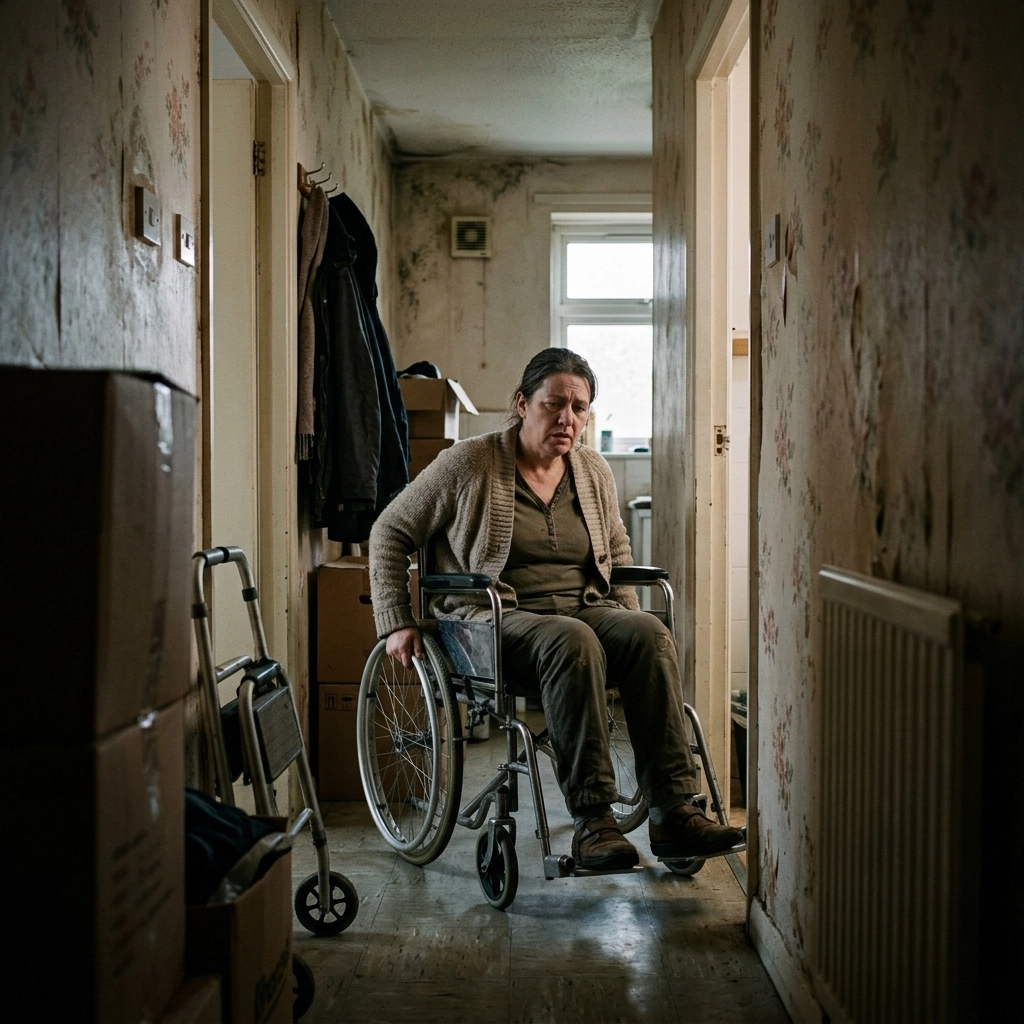
For many people in the UK, the concept of "home" represents safety, comfort, and independence. But for millions of disabled citizens, the reality of the British housing market is far less welcoming. We are currently facing what experts describe as a chronic "Care Gap", a massive disconnect between the housing people need to live with dignity and the physical bricks and mortar actually available. At NowPWR, we believe in bringing you independent news uk that looks beyond the surface, focusing on the untold stories of those often left behind by policy shifts and economic trends.
The current situation is more than just a shortage of buildings; it is a systemic failure that traps people in unsuitable environments. Recent investigations into the lives of individuals like Chloe Leighton have pulled back the curtain on a crisis that is often invisible to the able-bodied public. Chloe, a young woman with complex health needs including Ehlers-Danlos syndrome, found herself effectively "imprisoned" in a hospital bed for months. This wasn't because she required acute medical care, but simply because there was no accessible housing available for her to move into. Her story is a stark reminder that without a suitable roof over one’s head, the entire social care system begins to crumble.
The Human Cost of Unsuitable Accommodation
When we talk about the housing crisis, we often focus on house prices or the rental market for young professionals. However, the crisis for disabled people is far more acute. Data suggests that only about 7% of homes in England offer even the most basic accessibility features, such as level access to the entrance or a toilet at entrance level. This leaves approximately 1.8 million disabled people living in homes that are not fit for purpose.
The impact of this is not just physical; it is deeply psychological. Imagine being unable to use your own bathroom, or being confined to a single room because your wheelchair cannot navigate the hallway. This leads to a significant rise in anxiety and a total loss of autonomy. For people like Chloe Leighton, the wait for a home that meets basic safety requirements can stretch into years. During this time, many are forced to remain in hospitals or residential care settings, which is not only detrimental to their mental health but also places an enormous, unnecessary financial burden on the NHS.
This "bed blocking" is a direct result of the housing failure. When a person is medically fit for discharge but has nowhere safe to go, the system stalls. It highlights a desperate need for action-needed policies that integrate health, social care, and housing into a single, cohesive strategy. Without this, the Care Gap will only continue to widen, leaving thousands in a state of permanent limbo.
Barriers to Adaptation and the Rental Trap
For those lucky enough to have a roof over their heads, the battle often shifts to adaptations. Modifying a home to make it accessible, installing ramps, widening doors, or putting in wet rooms, can be an administrative nightmare. The Disabled Facilities Grant (DFG) is available to help, but the process is notoriously slow and varies wildly depending on where you live in the country. Some local authorities are efficient, while others have waiting lists that can last years.
The private rental sector is particularly hostile to disabled tenants. Landlords are often reluctant to allow permanent modifications to their properties, fearing it might decrease the "resale value" or make it harder to rent to able-bodied tenants in the future. Even when a tenant has the funding for adaptations, they can be met with an outright "no" from a property owner. This leaves disabled people with very little choice but to rely on social housing, which is already under immense pressure.
Furthermore, there is a significant lack of representation in the planning stages of new developments. Historically, housebuilders have prioritised profit margins over accessibility standards. While there have been promises to raise the "baseline" for new builds to ensure they are at least adaptable, these changes have been subject to repeated delays. It is estimated that nearly 900,000 people have been deprived of the chance to live in an accessible home simply because of government foot-dragging on these standards. This is a classic example of the untold stories we aim to highlight: the quiet, bureaucratic failures that have devastating real-world consequences.
Building a Future for Truly Independent Living
Solving the care gap requires more than just a few more ramps and handrails; it requires a fundamental shift in how we view housing in Britain. Accessibility should not be an "add-on" or a luxury; it should be a basic requirement of all new infrastructure. We need a planning system that mandates a higher percentage of "Category 3" homes: those specifically designed for wheelchair users: rather than just "Category 2" homes that are merely adaptable.
Investment in social care cannot be separated from investment in housing. If the government wants to reduce the pressure on the NHS, the most cost-effective way to do so is to ensure people can live safely in their own communities. Providing a person with an accessible home costs significantly less in the long run than keeping them in a hospital ward or a high-dependency care unit. It also allows individuals to contribute to society, pursue education, and maintain social connections, all of which are vital for a healthy population.
As we look toward the future, the voices of disabled people must be at the heart of the conversation. The lived experience of people who navigate these barriers every day is the most valuable resource for policy-makers. Currently, there is a disconnect between the "top-down" approach of local councils and the "bottom-up" needs of residents. Bridging this gap is essential if we are to move away from a crisis-management model and toward a system that genuinely supports independent living.
The housing crisis for the disabled is a barometer for the health of our society. It shows us where our priorities lie and who we are willing to leave behind. Through independent news uk, we will continue to monitor these developments, ensuring that the stories of those fighting for their right to a suitable home are heard. Whether it is through highlighting legislative failures or celebrating local successes, the goal remains the same: a UK where everyone has a place to call home that truly meets their needs.
The current state of affairs is a reminder that housing is a human right, but for many disabled Britons, it remains a distant dream. The Care Gap is not an unsolvable problem; it is a choice made through years of underinvestment and policy neglect. Closing that gap will require political will, significant funding, and a commitment to seeing disabled people not as "burdens" on the system, but as equal citizens deserving of a home that supports their independence and dignity.
Britain’s housing crisis for the disabled is a multifaceted issue involving planning regulations, social care funding, and the rights of tenants in the private sector. By addressing the shortage of accessible homes and streamlining the process for adaptations, the government can improve the lives of millions and alleviate pressure on the national health service. The stories of those currently trapped in unsuitable housing serve as a powerful call for systemic change. Achieving a more inclusive housing market is not just a matter of policy, but a reflection of the country's commitment to equality and social justice.