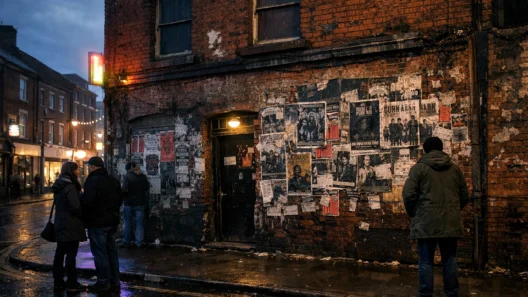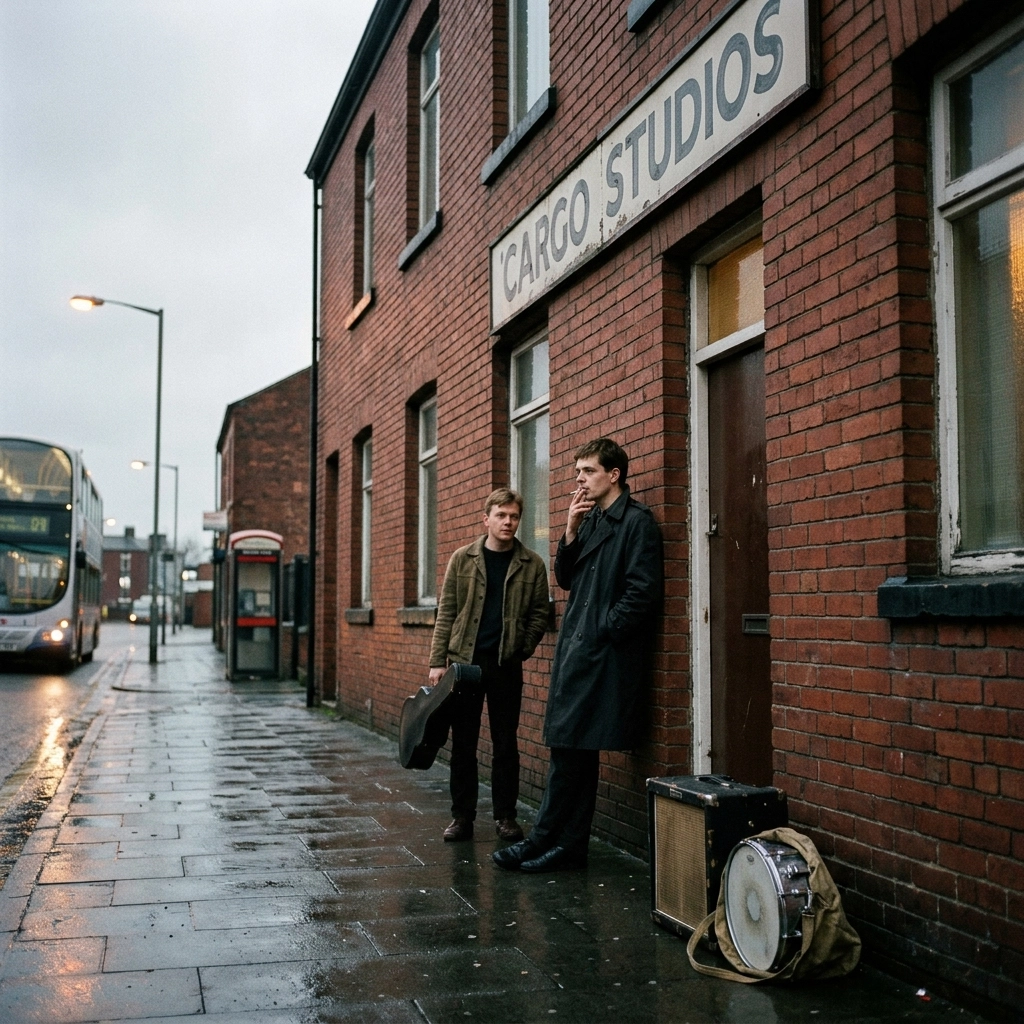
Rochdale is often remembered for its industrial heritage, its pioneering co-operative movement, and perhaps its rugged Pennine backdrop. But for a specific generation of music obsessives, this town holds a different kind of magic. Tucked away on Kenion Street sat a unassuming building that, for a few feverish years between the late 1970s and the early 1980s, became the beating heart of the post-punk movement. This was Cargo Studios, a place where the air was thick with cigarette smoke, the smell of damp wool, and the sound of a revolution.
While Manchester often takes the lion's share of the credit for the sound of the North, the untold stories of Cargo Studios prove that Rochdale was the secret laboratory where the formula was perfected. It wasn't just a recording space; it was a sanctuary for the weird, the wired, and the wonderful. From the haunting echoes of Joy Division to the jagged rhythms of Gang of Four, the walls of Kenion Street witnessed the birth of a genre that would define British alternative music for decades.
The recent concert in Rochdale celebrating this legacy served as a poignant reminder of what was achieved in this corner of Lancashire. It wasn’t just a nostalgia trip; it was a recognition of a DIY spirit that felt both dangerous and essential. In an era where music production is often sanitised and digital, looking back at the grit and tape-hiss of Cargo Studios feels like rediscovering a lost map of the soul.
The Sound of the North: Inside Kenion Street
Cargo Studios didn’t start as a world-beating hit factory. It was founded in 1977 by John Brierley, a man with a vision for a professional-grade recording facility outside the high-priced hubs of London. Brierley’s background with Tractor, a local band with a cult following, gave him the technical chops and the grassroots connections to build something special. He moved his operation to the Kenion Street premises, a building that already had a musical pedigree thanks to Tractor Music, a shop and rehearsal space downstairs run by Chris Hewitt.
The atmosphere was quintessentially "Northern Gothic." The studio was located in an old mill building, and the physical environment bled into the recordings. It was cold, it was cramped, and it was perfect. The equipment was a mix of high-end ambition and DIY ingenuity. When Anthony Wilson, the flamboyant head of Factory Records, brought a young Joy Division to Rochdale in 1978, the chemistry was instantaneous.
Working with the legendary producer Martin Hannett, Joy Division recorded "Digital" and "Glass" for the A Factory Sample EP at Cargo. Hannett was a man obsessed with space and silence. He found in Cargo the perfect environment to manipulate sound, often pushing the band to their limits. There are countless untold stories of Hannett’s eccentricities: demanding the heating be turned off to make the band play "colder" or recording the sound of the studio lift to use as a percussive element. It was here that the transition from the raw punk of Warsaw to the atmospheric, desolate beauty of Joy Division truly took place. The track "Atmosphere," arguably one of the greatest songs ever recorded, found its ethereal shape within these walls.
Beyond Joy Division: A Revolution in Sound
While Joy Division might be the most famous alumni, the roster of artists who passed through Cargo is a "who’s who" of alternative history. The studio became a magnet for bands who didn't fit the London-centric mould. Gang of Four brought their jagged, Marxist-funk sensibilities to Rochdale, recording their seminal "Damaged Goods" EP there. The sound they captured was dry, aggressive, and startlingly modern, a far cry from the overproduced rock of the era.
The Fall, led by the inimitable Mark E. Smith, were also regular visitors. Smith appreciated the lack of pretension in Rochdale. To him, the town was a reflection of the music: honest, slightly grim, and entirely uncompromising. The Fall’s recordings at Cargo captured the band at their most visceral. It wasn't about polished perfection; it was about capturing a moment of psychic friction.
As the 1980s progressed, the studio evolved. After Cargo closed its doors in 1984, the site didn't stay quiet for long. Peter Hook, the bassist for Joy Division and New Order, eventually bought the studio, rebranding it as Suite 16. This transition ensured that the Kenion Street legacy continued into the "Madchester" era. Bands like James, The Chameleons, and even early incarnations of The Stone Roses and Happy Mondays found their way to Rochdale.
The untold stories of this era are filled with the chaotic energy of the North. It was a time when the Haçienda was the centre of the universe, and the equipment used to power that legendary club was often built or repaired in the very same building as the studio. There was a sense of a self-contained ecosystem: a musical northern powerhouse that didn’t need permission from the south to exist.
The Untold Stories of the Rochdale Revival
The recent celebratory concert in Rochdale wasn't just about looking at old photographs. It was about reconnecting with the energy that made Cargo Studios possible. When local musicians and members of the original bands took to the stage, the air in the room changed. There was a collective realisation that Rochdale had contributed something monumental to the global cultural landscape.
One of the most compelling untold stories is the role of the Deeply Vale Festivals, which were closely linked to the Cargo scene. These free festivals, held in the nearby hills, were a melting pot of hippies, punks, and local kids. They provided a platform for the bands recording at Cargo to test their sounds in the wild. It was this cross-pollination of subcultures that gave the Rochdale sound its unique edge: a mix of psychedelic exploration and punk-rock urgency.
Today, the spirit of Cargo lives on through Voltalab Sound Studios, which currently occupies the space. The fact that the studio is still active, still recording, and still fostering talent is a testament to the foundations laid by John Brierley and the Factory Records crew. The building has survived periods of neglect and even a stint as a furniture warehouse, but the music never truly left the floorboards.
Walking down Kenion Street today, you might not immediately see the history. But if you stop and listen, you can almost hear the ghost of a bassline or the sharp crack of a snare drum echoing off the brickwork. The "Rochdale Rocks" movement is about making sure these stories aren't lost to time. It’s about celebrating the grit, the damp, and the incredible creativity that turned a small town into a global landmark for sound.
The legacy of Cargo Studios is a reminder that culture doesn't always happen in the bright lights of the capital. Sometimes, it happens in the rain, in a converted mill, with a few rolls of tape and a group of people who have something to say. Rochdale didn't just build a studio; it built a world. And as we look forward to the next generation of creators, the untold stories of Kenion Street serve as a blueprint for what is possible when you have the courage to be different.
The history of British music is often told through a very narrow lens. We hear about the London clubs and the Liverpool docks, but the industrial towns of the North have a rhythm all their own. Cargo Studios was the conduit for that rhythm. It allowed the voices of the North to be heard with a clarity and a haunting beauty that changed everything. As the lights dimmed on the Rochdale celebration, there was a sense that the story isn't over. The studio that built Joy Division is still standing, and the music it inspired is still resonating in the hearts of those who seek the truth in the noise.
In the end, the story of Cargo Studios is a story of resilience. It is a story of how a specific place and a specific time can create something timeless. Rochdale may have been the backdrop, but the music was the escape. The untold stories of this studio continue to inspire, proving that as long as there is a room, a microphone, and a vision, the sound of the North will never truly fade away.