The atmosphere across the London music scene this spring has felt different. There is a sense of weight being lifted, of a narrative finally finding its rightful conclusion: or perhaps, its most glorious beginning. On 27 March 2026, the global pop landscape didn't just shift; it underwent a seismic recalibration. When Raye released her second studio album, This Music May Contain Hope, she wasn't just dropping a collection of songs. She was delivering a manifesto of independence that has become one of the most vital untold stories in the history of British music.
For years, the industry watched a talent simmer under the constraints of traditional structures. We saw the tweets, the tears, and the eventual, triumphant break for freedom. Now, standing as a titan of independent news UK coverage, we look at the result of that liberation. This isn't the standard twelve-track, three-minute-radio-edit machine. It is a 71-minute orchestral odyssey that defies every rule the "old guard" tried to impose on her. It is bold, it is long, and it is unapologetically hers.
Breaking the Shackles of the Industry Standard
The journey to This Music May Contain Hope is a narrative of resilience that sounds more like a cinematic plot than a standard career trajectory. To understand the magnitude of this 71-minute record, one must remember where Raye started. Locked in a contract that felt more like a cage, she was a hitmaker for everyone but herself. The transition from a songwriter-for-hire to the architect of her own label, Human Re Sources, is the heartbeat of this project.
By stepping away from the major label machine, Raye did something few artists at her level dare to do: she bet on the intelligence and patience of her audience. In an era of TikTok-length attention spans, releasing a 71-minute album is a radical act of defiance. It suggests that music is still something to be lived in, not just scrolled past. This independence allowed her to bypass the focus groups and the demands for "another dance anthem," giving her the space to breathe life into a project that sounds like a fever dream of jazz, blues, and classical grandeur.
The success of this album has sparked a wider conversation within the industry about artist autonomy. We are seeing a shift where the "untold stories" of behind-the-scenes struggles are coming to the forefront, forcing a reckoning with how talent is nurtured and, too often, stifled. Raye’s resurrection isn’t just about her own chart-topping success; it’s about proving that the most sustainable way to build a legacy is through the raw, unfiltered truth of the artist’s vision.
A Seventy-One Minute Cinematic Masterpiece
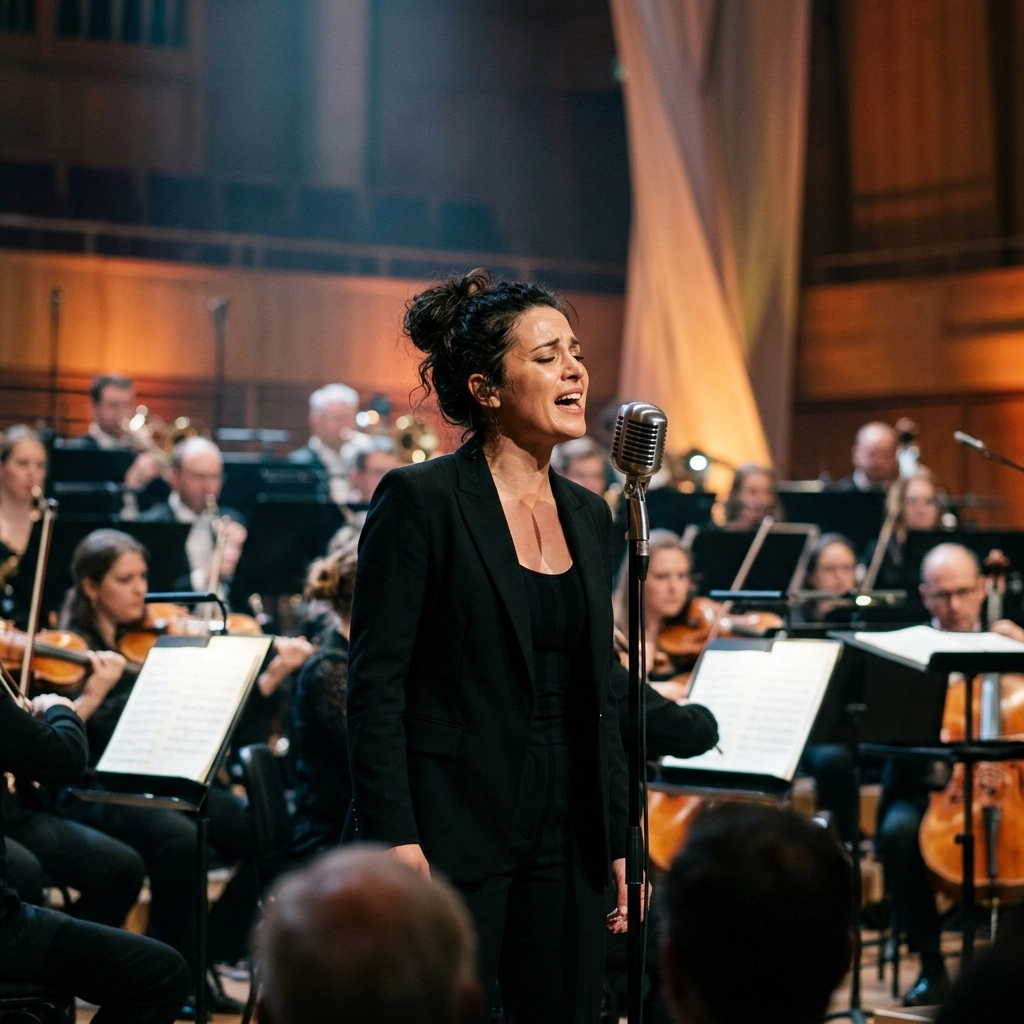
Musically, This Music May Contain Hope is a sprawling, ambitious landscape that feels more like a film score than a pop record. At the centre of this sound is the 71-minute orchestral backbone, a feat achieved through a monumental collaboration with the London Symphony Orchestra. To bring this vision to life, Raye gathered over 80 musicians, creating a wall of sound that feels both ancient and incredibly modern.
The inclusion of legendary composer Hans Zimmer on tracks like "Click Clack Symphony" brings a level of gravitas rarely seen in contemporary pop. It is a collision of worlds: the precision of a cinematic master meets the soul-baring vulnerability of a South London girl who has seen it all. The arrangements move with a seasonal fluidity, starting in the cold, sharp staccatos of a personal autumn and slowly blooming into the warm, brassy crescendos of a summer of self-discovery.
Within these 71 minutes, we find songs that play with structure. There are the "WhatsApp Shakespeares" of modern romance and the "South London Lover Boys," all narrated with a vocal performance that has matured into something truly world-class. She isn't just singing; she is storytelling. The presence of soul icon Al Green on the record further cements its place in the lineage of great music. This isn't a project chasing trends; it’s a project chasing timelessness. By choosing an orchestral foundation, Raye has ensured that these songs won't age with the changing synthesiser patches of the week. They are carved in stone, or rather, written for the strings that will play them for decades to come.
Redefining the Future of British Independent Music
The cultural impact of this release extends far beyond the headphones of her fans. It has become a lighthouse for other artists who feel lost in the sea of corporate expectations. When we look at independent news uk reports on the economy of the arts, Raye’s model is being studied as a blueprint for the future. She has demonstrated that you can have the "big" sound: the Zimmer collaborations, the symphony orchestras, the 17-track epics: without sacrificing your soul to a board of directors.
This album handles themes that are often simplified in pop music. Hope, in Raye's world, isn't a cheap sentiment. it is something fought for. She references her predecessors, the likes of Amy Winehouse and Edith Piaf, artists who were often consumed by the very industries that profited from their pain. But Raye’s narrative offers a different ending. It’s a story where the artist survives, thrives, and takes the keys to the kingdom.
The "untold stories" found in the lyrics of This Music May Contain Hope deal with the grit of the music industry, the exhaustion of the hustle, and the eventual euphoria of finding one’s voice. It is a project that encourages the listener to sit still. You cannot fully grasp the weight of this record by shuffling it on a commute. It demands a dedicated hour and eleven minutes of your life, and in return, it offers a catharsis that is rare in modern art.
As we move further into 2026, the ripples of this "orchestral hope" continue to be felt. It has challenged other artists to think bigger and deeper. It has reminded the public that pop music can be sophisticated, high-art, and deeply personal all at once. Raye has moved from being a victim of the industry to being its most formidable leader, proving that when you give a true artist the freedom to fail, they will almost certainly fly.
The sheer scale of the production: the 80 musicians, the hour-plus runtime, the independent distribution: serves as a reminder that the most powerful thing an artist can possess is their own story. In a world that often tries to edit those stories down for the sake of palatability, Raye has opted to tell hers in full, with every violin swell and every bluesy note intact. It is a resurrection that was not given, but earned, note by painstaking note.
The legacy of This Music May Contain Hope will likely be measured not just in awards or chart positions, though it has those in abundance, but in the shift in how we value artistic independence. It is a testament to the fact that when the music is this good, the traditional rules of length and "radio friendliness" simply cease to apply. Raye has built a cathedral of sound, and she has invited everyone in to find their own version of hope within its walls.
As the industry continues to evolve, the story of this album will remain a pivotal chapter in the history of British music. It stands as a peak of what can be achieved when talent is met with the courage to stand alone. For those following the untold stories of the creative world, Raye’s journey provides the ultimate inspiration: a reminder that your voice is your power, and it is always worth the wait to hear it in its most authentic form.
In the end, This Music May Contain Hope is more than just an album title; it is a promise kept. It is the sound of an artist finally catching her breath and using it to sing a truth that was nearly silenced. As the final notes of the 71-minute journey fade out, the silence that follows isn't empty: it's full of the possibilities of what comes next for an artist who finally has nothing left to prove and everything left to create.