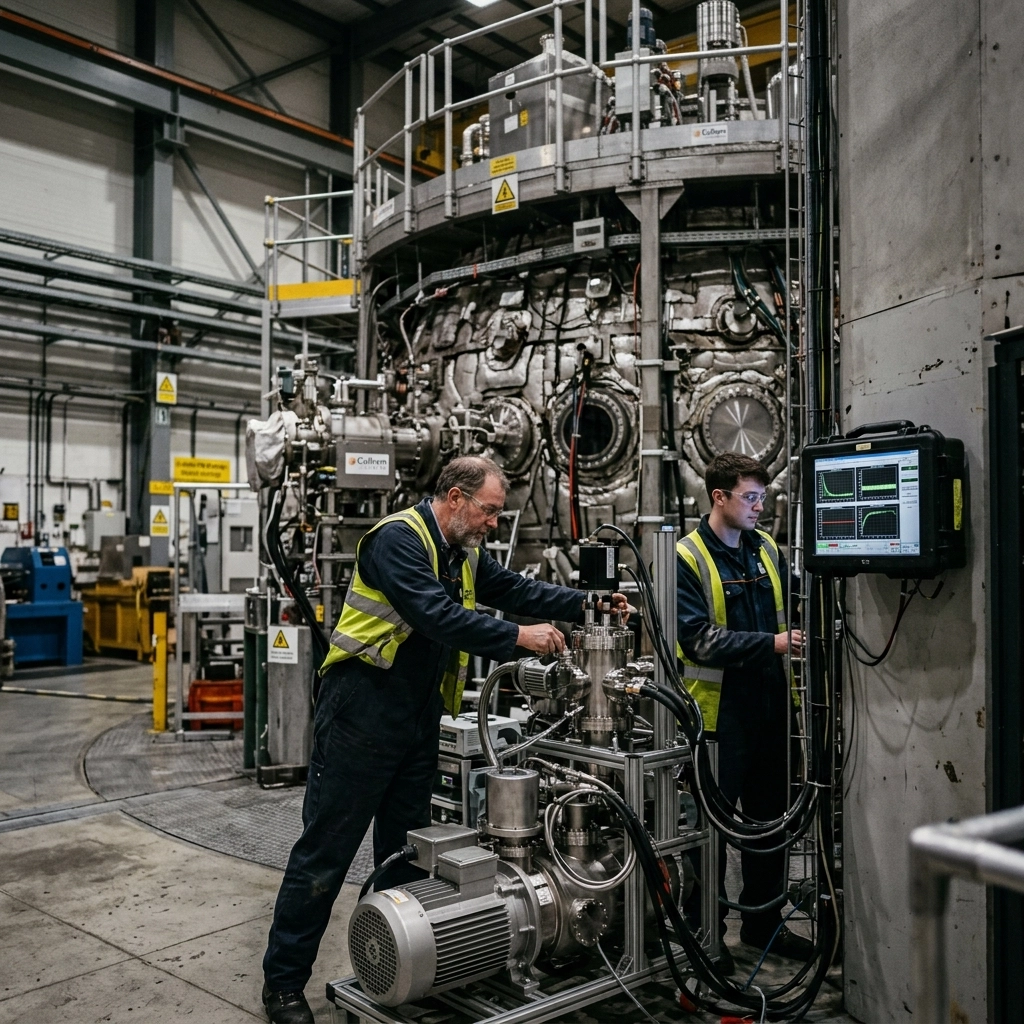
Oxfordshire has always been known for its dreaming spires, ancient textbooks, and perhaps a few too many bicycles for the average motorist’s liking. But if you head south-east of the city to Culham, the scenery changes from medieval masonry to high-grade industrial steel. This isn't just another business park; it is the frontline of a global race to recreate the power of the sun on Earth. With the official launch of the Fusion DICE (Design and Infrastructure Collaboration Environment) facility, Oxfordshire has firmly placed its crown as the undisputed king of energy innovation.
While much of the media focuses on the political squabbles in Westminster, the untold stories of British engineering are being written in the laboratories of the UK Atomic Energy Authority (UKAEA). We are talking about nuclear fusion: the "holy grail" of clean energy. Unlike fission (what we currently use in nuclear plants), fusion doesn't produce long-lived radioactive waste and carries zero risk of a meltdown. It is clean, safe, and practically limitless. And thanks to DICE, the roadmap to making this a commercial reality just got a whole lot shorter.
As an independent news uk source, we’ve looked past the press releases to understand why this matters for your wallet, your career, and the planet. Here are five reasons why the new DICE facility and the wider Culham ecosystem make Oxfordshire the most important energy hub in the world.
The Digital Frontier: How DICE is Rewriting the Rulebook
The DICE facility isn't your grandfather’s engineering workshop. You won't find draughtsmen hunched over paper blueprints with HB pencils. Instead, DICE is a £7 million state-of-the-art environment designed to host the brightest minds in virtual reality, digital twinning, and advanced robotics. The "Design and Infrastructure Collaboration Environment" is exactly what it says on the tin: a space where engineers can build, test, and break things in a virtual world before a single piece of concrete is poured for the real thing.
The primary mission of DICE is to support the STEP (Spherical Tokamak for Energy Production) programme. STEP is the UK’s ambitious plan to build a prototype fusion power plant by 2040. To do that, we need a design that actually works, and that’s where the "digital twin" technology comes in. By creating a 1:1 digital replica of the reactor, engineers can simulate how extreme heat: we’re talking 150 million degrees Celsius: will affect the components.
In the past, engineering projects of this scale were plagued by delays and astronomical costs because mistakes were only discovered during construction. DICE changes the game. It allows for "untold stories" of failure to happen safely in a simulation, ensuring that when the physical plant is built, it is efficient, cost-effective, and ready to go. This digital-first approach is why Oxfordshire is outstripping international rivals; we are using 21st-century software to solve a mid-century physics problem.
Building the Future: Jobs, Skills, and the STEP Ambition
Let’s talk about the economy. For years, the UK has been told that its manufacturing days are over and that we are a "services-only" nation. The growth of the fusion cluster in Oxfordshire proves that narrative is nonsense. The DICE facility is just the tip of the iceberg in a massive wave of high-tech job creation. We aren't just talking about PhD-level physicists: though there are plenty of those: we are talking about a whole new tier of apprenticeships, technicians, and project managers.
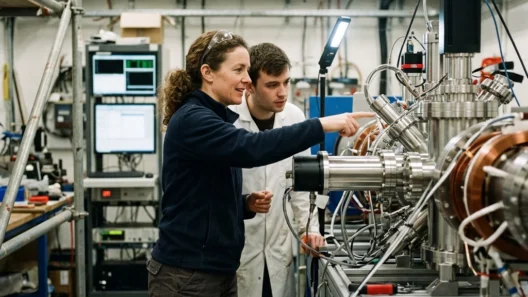
The "fusion cluster" in Culham now supports thousands of jobs, and with the expansion brought by DICE, that number is set to rocket. It’s creating a "Silicon Valley" effect. When you have a massive anchor like the UKAEA, smaller high-tech startups begin to orbit it. Companies specialising in cryogenics, magnets, and remote handling are setting up shop in Abingdon, Didcot, and Wallingford.
This isn't just good for the local pub trade; it’s vital for the UK's industrial strategy. These are the kind of "untold stories" of economic resilience that don't always make the front pages. Young people in the region are now looking at careers in fusion as a viable, long-term path. The DICE facility provides the collaborative space for these different disciplines to merge. It’s a melting pot of talent where a robotics expert from a startup can sit down with a thermal dynamics specialist from the government and solve a problem over a coffee. This concentration of talent is what makes Oxfordshire the "Energy King": it’s not just the machines; it’s the minds behind them.
A Global Magnet: Oxfordshire’s New Era of Energy Diplomacy
Finally, we have to look at the global stage. Fusion is an international pursuit, and for a long time, the JET (Joint European Torus) project at Culham was the crown jewel of European cooperation. While JET has finished its experimental lifespan with record-breaking results, Oxfordshire hasn't slowed down. In fact, it has pivoted to become a global leader in its own right.
The DICE facility acts as a magnet for international investment. Because the UK is one of the few nations with a concrete plan for a prototype plant (STEP), private fusion companies from the US, Canada, and Japan are flocking to Oxfordshire to use the facilities and collaborate. They want to be where the action is. By hosting DICE, Culham is no longer just a research site; it is a commercial incubator.
This leadership position gives the UK massive leverage in "energy diplomacy." As the world desperately seeks a way to meet Net Zero targets without crashing their economies, everyone is looking for the solution that fusion provides. Oxfordshire is effectively the showroom for this technology. When international delegations visit, they aren't just seeing a lab; they are seeing a functioning ecosystem that can design, simulate, and eventually build the future of power.
The DICE facility ensures that the UK remains the primary "independent news uk" story in the tech world. We aren't just participating in the fusion race; we are setting the pace. The transition from the massive, slow-moving experiments of the 20th century to the agile, digital-led engineering of the 2026 era is happening right now in a building in Culham.
The fusion revolution is often described as being "30 years away" (and has been for the last 50 years). But with DICE, that joke is finally losing its punchline. The integration of digital twins, the influx of private capital, and the sheer density of expertise in Oxfordshire mean the timeline is shrinking. We are no longer asking if fusion will work, but rather how quickly we can plug it into the National Grid.
Oxfordshire’s reign as the Energy King isn't just about local pride. It’s about a small corner of England providing the blueprint for a world powered by clean, safe, and abundant energy. From the digital halls of DICE to the construction sites of STEP, the future isn't just being imagined: it’s being engineered.
The development of the DICE facility represents a significant milestone in the UK’s journey towards sustainable energy independence. By combining cutting-edge digital technology with a robust industrial strategy, Oxfordshire has established itself as a global epicentre for fusion research and development. The facility not only accelerates the technical roadmap for the STEP programme but also serves as a catalyst for high-tech employment and international investment. As the global community continues to seek viable solutions for the climate crisis, the innovations emerging from Culham will likely play a central role in the future of the international energy landscape.