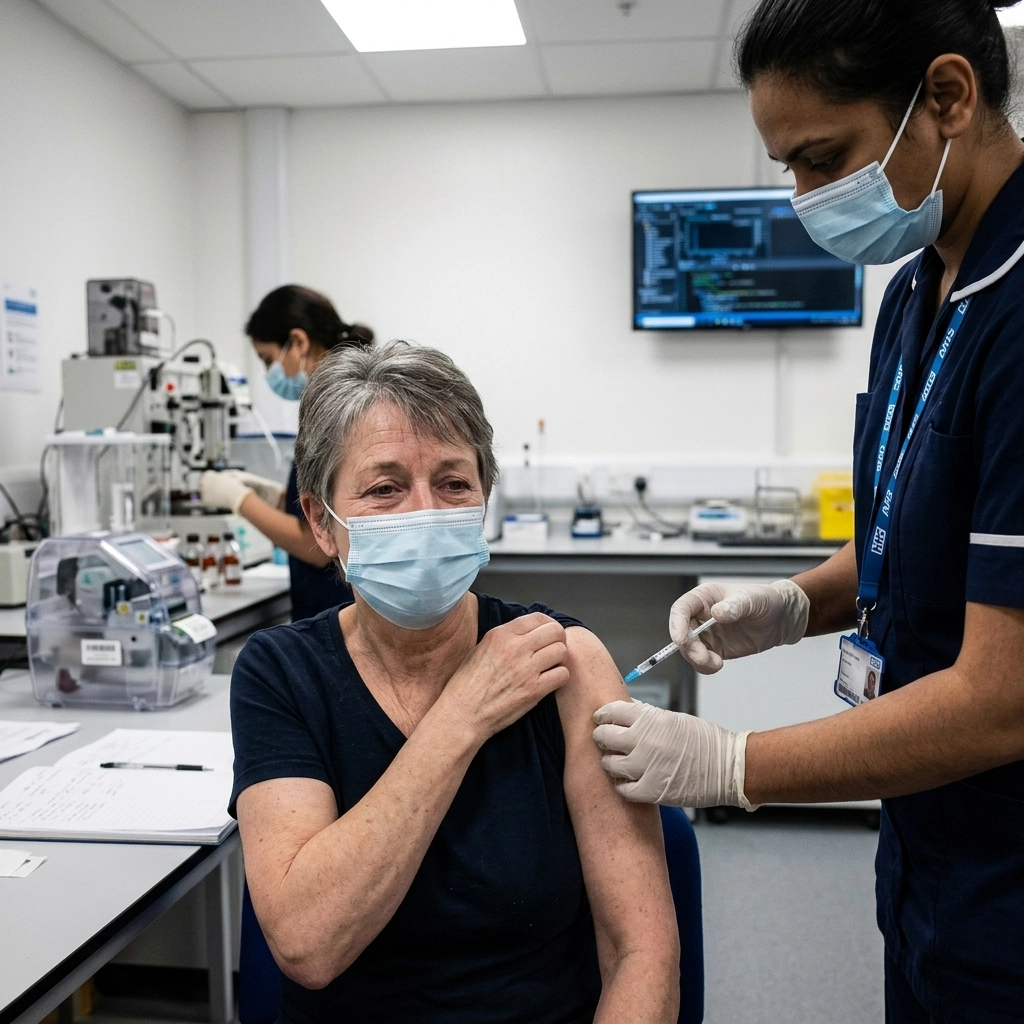
The landscape of modern medicine is shifting beneath our feet, and today, the United Kingdom finds itself at the very epicentre of a biological revolution. At University College London Hospitals (UCLH), a quiet but profound transformation is taking place within the oncology wards. It is here that the world’s first personalised mRNA melanoma vaccine is being put to the ultimate test, marking a pivotal moment in the fight against one of the most aggressive forms of skin cancer. This isn’t just another incremental step in pharmaceutical development; it is a fundamental reimagining of how we treat disease. By leveraging the same AI technology that has transformed our digital lives, scientists are now able to create a treatment as unique as a fingerprint, tailored specifically to the genetic makeup of an individual’s tumour.
For decades, cancer treatment has largely relied on a "one-size-fits-all" approach. Chemotherapy and radiotherapy, while effective in many cases, act like a blunt instrument, attacking both cancerous and healthy cells in a desperate bid to eradicate the disease. The results are often devastating for the patient’s quality of life. However, the advent of messenger RNA (mRNA) technology: brought to global prominence during the COVID-19 pandemic: has opened a new door. This is a story of independent news uk reporting on the untold stories of patients who are no longer just statistics, but pioneers in a new era of genomic medicine.
The Science Behind the Custom-Made Jab
To understand why this jab is a game-changer, one must first understand the complexity of a tumour. No two cancers are identical. Even two people with stage IV melanoma will have tumours with vastly different genetic mutations. This has always been the primary hurdle in oncology: how do you target a moving target? The personalised mRNA vaccine, known technically as mRNA-4157 (V940), solves this by turning the patient’s own body into a highly sophisticated manufacturing plant for its own cure.
The process begins in the operating theatre. When a patient has their primary melanoma removed, a sample of the tumour tissue is sent immediately to a specialised laboratory. Alongside this, a sample of the patient's healthy blood is also sequenced. This allows scientists to compare the healthy DNA with the mutated DNA of the cancer. They are looking for "neoantigens": abnormal proteins that are present only on the surface of the cancer cells. These neoantigens are the "flags" that tell the immune system that a cell is an intruder.
Once these flags are identified, the mRNA vaccine is engineered to carry the genetic instructions for up to 34 of these neoantigens. When the jab is administered, it doesn't contain the cancer itself, nor does it contain a weakened virus. Instead, it delivers a set of instructions to the patient’s immune cells. These cells read the mRNA code and begin producing the neoantigen proteins. The immune system, specifically the T-cells, sees these proteins, recognises them as foreign, and goes on high alert. It is a form of intensive training for the body’s natural defences, teaching them exactly what the enemy looks like so they can hunt down any remaining cancer cells circulating in the bloodstream or hiding in distant organs.
This level of precision is unprecedented. Because the vaccine targets only the neoantigens found on the tumour, the risk of damage to healthy tissue is significantly reduced. This results in a treatment that is not only potentially more effective but also far more tolerable for the patient. We are moving away from the era of collateral damage and into an era of surgical immunological strikes.
The AI Revolution in Cancer Treatment
The speed and accuracy required to design these bespoke vaccines would be impossible without the integration of advanced AI technology. Identifying 34 unique mutations out of the billions of base pairs in the human genome is a task that would take human researchers years to complete. However, machine learning algorithms can process this data in a matter of days. This is the heart of the UCLH trials: the marriage of biological science and digital intelligence.
The AI doesn't just identify mutations; it predicts which ones are most likely to trigger a robust immune response. Not every mutation on a cancer cell is a good candidate for a vaccine. Some might be too similar to healthy proteins, while others might be hidden from the immune system. The AI models are trained on vast datasets of immunological interactions, allowing them to rank the neoantigens by their "immunogenicity." This ensures that the mRNA instructions delivered to the patient are the most potent possible.
This digital blueprint is then sent to a manufacturing facility where the synthetic mRNA is produced. The entire turnaround time, from the initial biopsy to the first injection, is being whittled down to just a few weeks. In the context of aggressive melanoma, where every day counts, this speed is a literal lifesaver. The UK government’s partnership with biotechnology firms has streamlined this pipeline, ensuring that British patients are among the first in the world to benefit from this rapid-response medical infrastructure.
What makes this particularly exciting is the scalability of the technology. While the current trials focus on melanoma, the underlying AI-driven platform is "plug-and-play." The same logic can be applied to lung cancer, pancreatic cancer, and colorectal cancer. By simply changing the genetic code within the mRNA strand, the vaccine can be recalibrated for an entirely different disease. This is why many in the scientific community are calling this the "beginning of the end" for the traditional oncology model.
A Glimpse Into the Future of Oncology
As the clinical trials progress at UCLH and other sites across the UK, the initial data is cause for significant optimism. Early-phase results have suggested that combining these personalised mRNA vaccines with existing immunotherapy drugs can reduce the risk of recurrence or death by nearly half in high-risk melanoma patients. This is a staggering statistic in a field where improvements are usually measured in single digits.
The untold stories of the trial participants are beginning to emerge. Many of these individuals had exhausted traditional treatment options and were facing a grim prognosis. Now, they are walking examples of a future where cancer is managed not as a death sentence, but as a chronic, treatable condition. The UK’s decision to invest heavily in this research reflects a broader commitment to becoming a global superpower in life sciences. By fostering an environment where independent news uk sources can highlight these breakthroughs, we ensure that the public remains informed about the cutting edge of human ingenuity.
However, challenges remain. The cost of producing a unique vaccine for every single patient is currently high, and the logistics of national distribution are complex. Yet, as with all technology, costs are expected to fall as the process becomes more automated and widespread. The goal is to move these treatments from experimental trials into the standard of care offered by the NHS. If successful, this could represent the most significant leap in cancer survival rates since the introduction of chemotherapy in the mid-20th century.
The implications of this work extend far beyond the laboratory. It represents a shift in our relationship with our own biology. We are no longer passive recipients of disease; we are becoming active architects of our own recovery. The personalised mRNA jab is more than just a medicine; it is a testament to what is possible when we combine the depths of human compassion with the heights of technological advancement. As we look toward the 2030s, the hope is that the word "personalised" will no longer be a luxury in medicine, but a fundamental right for every patient facing a life-threatening diagnosis.
The UK's leadership in this field is a beacon of hope for millions. By embracing the complexity of the human genome and the power of AI, we are finally bringing the fight to cancer on its own terms. The trials at UCLH are just the beginning of a journey that promises to rewrite the medical textbooks and offer a second chance at life to those who thought their time was running out.
In the grand narrative of medical history, there are moments that define a generation. The development of antibiotics was one; the eradication of smallpox was another. We may well be living through the next great chapter. The personalised mRNA jab stands as a formidable new foe for cancer, and for the first time, the odds are beginning to shift in our favour. The dedication of the researchers, the bravery of the trial participants, and the precision of the technology are converging to create a future that is as bright as it is scientifically grounded. This is the promise of modern medicine, delivered one bespoke injection at a time.