London has always been a city that knows how to keep a secret, especially in the gilded postcodes of Kensington and Chelsea. Behind the white stucco facades and the manicured garden squares, the world’s elite have long played by a different set of rules. However, new revelations have peeled back the wallpaper of Jeffrey Epstein’s London operations, exposing a reality that is far grimmer than the usual high-society scandals. It turns out the disgraced financier wasn’t just visiting the capital for tea with royals; he was running a sophisticated operation right under the nose of the Metropolitan Police.
The narrative of Epstein’s crimes has largely been anchored in New York, Florida, and his private island in the Caribbean. But the London chapter is proving to be just as dark. For years, the UK capital served as a secondary hub for his activities, a place where the oversight was seemingly non-existent and the authorities were surprisingly incurious. Recent investigations have highlighted how Epstein used luxury flats in some of London’s most expensive neighbourhoods to house victims, many of whom were brought over from Russia and Eastern Europe. These were not just temporary stays; these were calculated logistical hubs for a global web of abuse.
The sheer scale of the missed opportunities by the Metropolitan Police is staggering. We are not talking about a lack of evidence or a trail gone cold. We are talking about bank records and detailed files that were effectively sitting in drawers, waiting for someone to connect the dots. In the world of independent news uk, these are the untold stories that demand a closer look, especially when the official version of events seems to have more holes than a block of Swiss cheese.
The Kensington Connection and the Stucco Shield
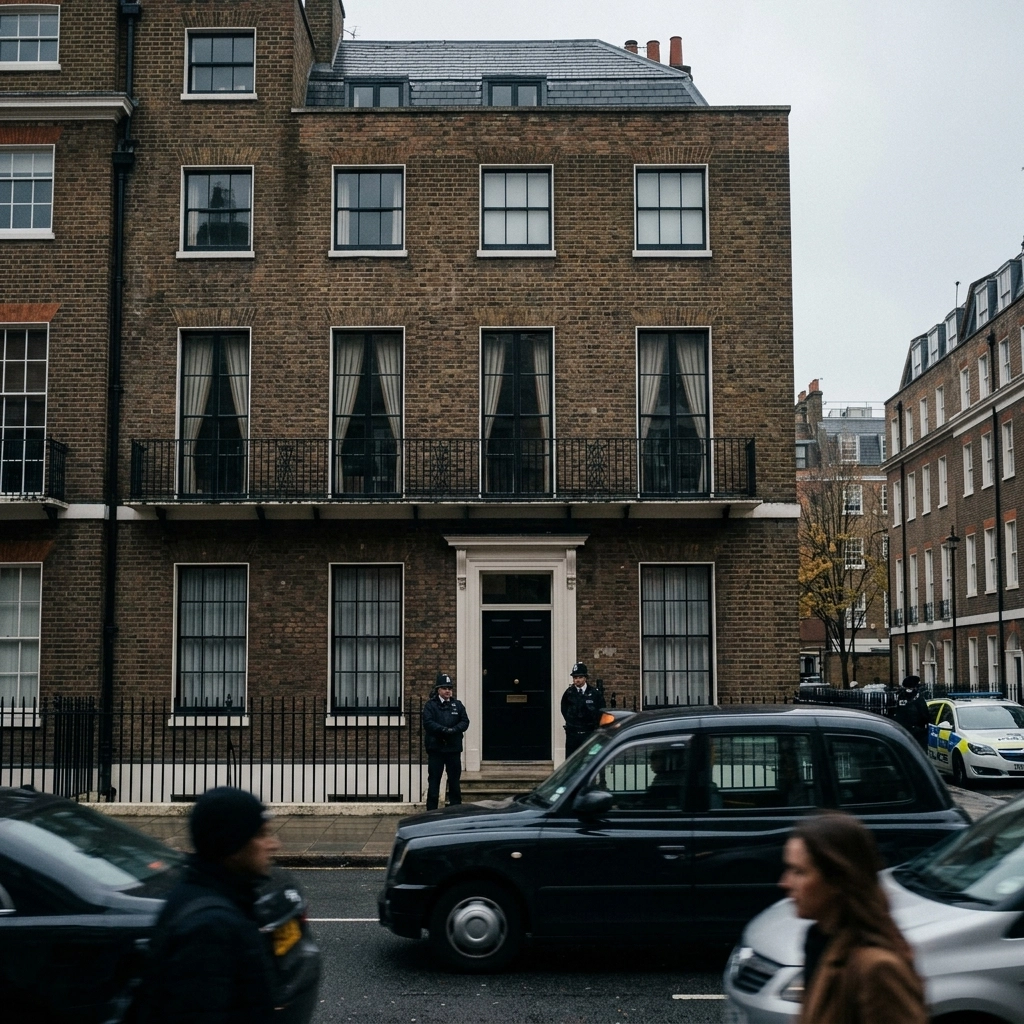
The geography of Epstein’s London lair is telling. Kensington and Chelsea are synonymous with wealth, influence, and a certain kind of invisibility that only immense money can buy. It is the kind of place where a blacked-out SUV idling outside a multi-million-pound townhouse doesn't garner a second glance. This environment provided the perfect cover for Epstein to house young women, often recruited with the promise of modelling work or academic opportunities, only to find themselves trapped in a nightmare.
Many of these victims originated from Russia and various parts of Eastern Europe. They were vulnerable, often speaking limited English, and completely dependent on Epstein’s network for their housing and legal status in the UK. By placing them in the heart of London’s most affluent district, Epstein ensured they were surrounded by the very establishment that should have been protecting them, yet remained entirely isolated. It is a haunting irony that the streets paved with the most expensive paving stones in Britain were the same ones where these women were being held.
The logistics of this operation were not exactly subtle. Bringing numerous young women into the country and housing them in high-end real estate requires a significant paper trail. There are leases, utility bills, travel arrangements, and, most importantly, financial transactions. Yet, for years, this activity went completely unnoticed: or at least, unaddressed: by the local authorities. The posh facade of the Royal Borough acted as a shield, creating a sense of normalcy that masked the allegations that are only now being fully understood by the public.
The Evidence File the Met Managed to Miss
When we look back at the timeline of the Epstein investigation, the role of the Metropolitan Police comes under intense scrutiny. It is now coming to light that there were specific opportunities to intervene that were simply ignored. This wasn't a case of a shadow ghosting through the city; there were physical files and digital footprints. Perhaps most damning is the revelation that bank records detailing payments and financial links were contained within files that the Met had access to, yet no significant action was taken at the time.
The question that keeps surfacing is: how? How does a police force with the resources of the Met fail to see what was right in front of them? Some suggest it was a lack of jurisdiction or a focus on other priorities, but that feels like a convenient excuse when the safety of vulnerable individuals is at stake. The bank records alone should have been a massive red flag. Large sums of money moving through accounts linked to a man already known to America as a sex offender should have triggered every alarm bell in Scotland Yard.
Instead, those records sat dormant. The victims, many of whom were terrified of the police or their own immigration status, were left to fend for themselves while the system that was supposed to catch these discrepancies failed. It highlights a systemic issue within high-level policing where certain individuals seem to be "too big to bust" or perhaps just too well-connected to warrant a deep dive. For those seeking the truth through independent news uk, this failure isn't just a mistake; it’s a symptom of a broader culture of looking the other way when the suspect has a high enough net worth.
Why Independent News UK Must Tell These Stories
The mainstream narrative often moves on once the primary villain is off the stage. With Epstein dead, there is a tendency for institutions to want to close the book and move forward. But for the victims, the story isn't over, and the accountability of the institutions that failed them remains a live issue. This is why the pursuit of untold stories is so vital. We need to understand not just what Epstein did, but how the environment in London allowed him to do it with such brazen confidence.
The revelation that the Met missed these massive red flags serves as a reminder that oversight is only as good as the people exercising it. If the police aren't going to look at the bank records, and if the neighbours aren't going to report the suspicious activity in Kensington, then the responsibility falls on the press and the public to demand better. We are seeing a shift in how these cases are handled, but it is often too little, too late for those who suffered in those London flats.
As we move further into 2026, the demand for transparency is only growing. The public is no longer satisfied with the "nothing to see here" approach to institutional failure. The London lair of Jeffrey Epstein wasn't just a physical location; it was a testament to a period of history where wealth could buy a vacuum of accountability. By continuing to investigate these missed opportunities and highlighting the failures of the Metropolitan Police, we ensure that the "massive miss" doesn't happen again. The stucco facades of Kensington might still look the same, but the secrets behind them are finally being dragged into the light.
The Metropolitan Police's failure to act on the available evidence regarding Jeffrey Epstein's activities in London represents a significant lapse in institutional responsibility. The presence of bank records and victim testimony within accessible files suggests that the opportunities to disrupt his network were present but ignored. As more details emerge about the specific properties used in Kensington and Chelsea and the origins of the victims involved, the need for a comprehensive review of past oversights becomes increasingly clear. Ensuring accountability for these missed opportunities is essential for the integrity of the justice system and the protection of vulnerable individuals in the future.