We’ve been taught for decades that DNA is the rigid, ultra-precise architectural blueprint of life. In our collective imagination, the enzymes responsible for copying this code: the DNA polymerases: are the ultimate corporate drones. They show up to work, they see a template, and they copy it letter-for-letter with a level of accuracy that would make a Victorian clerk blush. But according to a groundbreaking study from the University of Bristol, these molecular machines have a secret life. It turns out that when they think nobody is watching, they like to freestyle.
This isn't just a quirky biological footnote; it’s a revelation that could fundamentally rewrite how we approach biotechnology and ai-technology. Here at NowPWR, we pride ourselves on bringing you the 'untold stories' that shift the paradigm. This is 'independent news uk' at its most frontier-pushing, looking past the headlines to see how a bunch of "doodling" enzymes might just be the key to the next industrial revolution.
For a long time, the scientific community treated "de novo" synthesis: the ability of polymerases to build DNA without a template: as a bit of a glitch. It was like finding out your office printer occasionally decides to ignore your PDF and prints out a series of geometric patterns instead. Scientists nicknamed it "doodling" back in the 1960s, but because it didn't fit the narrative of DNA as a perfect copying system, it was largely shoved into the "inconvenient curiosities" drawer. Until now.
The End of the Genetic Photocopier Myth
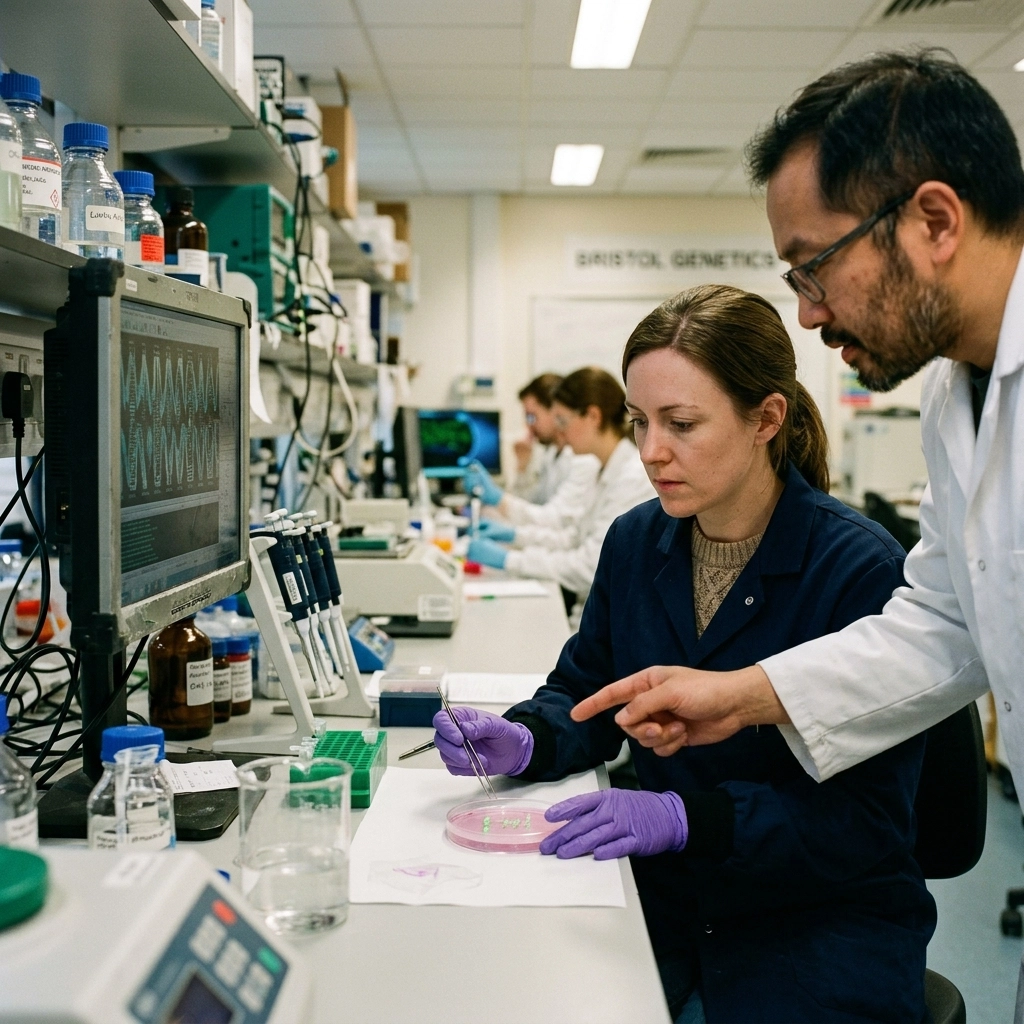
The Bristol team, led by researchers who clearly aren't afraid of a bit of molecular jazz, has shown that this doodling isn't some random error. It is a structured, predictable, and: most importantly: controllable process. By using advanced nanopore sequencing to watch these enzymes in real-time, they discovered that polymerases are actually capable of writing remarkably complex and long sequences of DNA from absolutely nothing.
In the standard model of biology, a polymerase needs a "cheat sheet" (a template strand) to know whether to add an A, T, C, or G to the chain. Without that sheet, they were supposed to just sit there twiddling their proverbial thumbs. But the Bristol research proves they have their own internal preferences. Depending on the specific polymerase used and the environment it’s in, these enzymes will start churning out repetitive but highly ordered sequences. We’re talking about motifs ranging from simple two-base repeats to intricate eight-base patterns.
This discovery shatters the myth of the "mindless photocopier." It suggests that these enzymes have an inherent "voice" or a default setting that we never knew existed. From the perspective of art and design, it’s as if the paintbrush itself had a preferred stroke that it would perform even if the artist wasn't holding it. For the biotech world, this "freestyle" capability is the equivalent of finding a hidden turbo button on a machine we’ve been using for half a century.
The implications for how we understand the origins of life are also massive. If enzymes can generate complex sequences without a pre-existing template, it provides a much more plausible bridge for how the first complex genetic "sentences" were written in the primordial soup. It turns out life didn’t just need a blueprint to start; it just needed some bored enzymes with a penchant for doodling.
Steering the Molecular Pen
Knowing that DNA can doodle is one thing; being able to hand the enzyme a specific set of instructions and tell it what to doodle is where the real "game-changer" label comes in. The University of Bristol study didn’t just observe the phenomenon; they figured out how to steer it. By tweaking the reaction conditions: changing the temperature or restricting the "ink" (the four nucleotide building blocks) available to the enzyme: they could dictate the final product.
For instance, when the researchers limited the supply to just two types of nucleotides, the polymerases didn't just stop. They adapted, producing incredibly long, highly regular strings of DNA that reached over 1,000 bases in length. In some extreme cases, these molecular "doodles" stretched to a staggering 85,000 bases. To put that in perspective, trying to write a 85,000-base string of DNA using current chemical methods is like trying to build a skyscraper out of toothpicks using only a pair of tweezers. It’s slow, expensive, and prone to catastrophic collapse.
This is where the intersection with AI-assisted protein design becomes crucial. As we get better at using artificial intelligence to design new proteins and enzymes, we can begin to engineer "designer doodlers." We could create bespoke polymerases specifically designed to write long, repetitive, or highly structured DNA sequences that are currently impossible to manufacture.
Imagine an AI model that predicts the exact environmental conditions and enzyme modifications needed to "auto-generate" a specific DNA sequence. Instead of the laborious, step-by-step chemical synthesis we use today: which is both toxic and limited in scale: we could simply "grow" the DNA we need in a test tube. This isn't just an improvement on existing tech; it’s a total shift in how we think about biological manufacturing. We are moving from "printing" DNA to "coding the printer" itself to do the work for us.
Why This Flips the Biotech Script
The current bottleneck in synthetic biology is the "writing" phase. While we’ve become world-class at "reading" DNA (sequencing is faster and cheaper than ever), "writing" it remains the expensive, slow cousin. The traditional phosphoramidite method of DNA synthesis hasn't fundamentally changed in decades. It struggles with long sequences and creates a significant amount of chemical waste.
Bristol's discovery offers a biological "shortcut." By leveraging the natural doodling tendencies of enzymes, we can produce long-form DNA strings that are essential for everything from advanced cancer therapies to carbon-capturing plants. Because this process is enzymatic rather than chemical, it’s inherently "greener" and has the potential to be significantly more cost-effective.
Furthermore, this breakthrough puts the UK's biotech sector in a unique position. While global headlines are often dominated by the latest Silicon Valley software updates, these "untold stories" from labs in Bristol are the ones that will actually define the physical reality of the 21st century. Being able to "freestyle" DNA opens doors to DNA data storage: using genetic material to store the world’s digital information: and the creation of entirely synthetic genomes.
The potential for personalised medicine is also staggering. If we can rapidly and cheaply synthesise long stretches of DNA, we can create hyper-specific genetic treatments tailored to an individual’s unique biology. We are talking about the ability to "patch" genetic code with the same ease that a software engineer patches a bug in a line of Python.
Ultimately, the Bristol discovery reminds us that nature is rarely as simple as our textbooks suggest. The "doodling" that was once dismissed as a cellular quirk is actually a powerful biological engine that we are only just beginning to harness. By learning to collaborate with these enzymes rather than just forcing them to copy what’s already there, we are unlocking a level of creative control over the building blocks of life that was previously the stuff of science fiction.
The road ahead will involve refining these techniques and integrating them with our rapidly advancing AI tools. But the message from the University of Bristol is clear: the future of genetic engineering isn't just about better copying; it's about learning to let the DNA doodle. And in those doodles, we might just find the solutions to some of our most pressing global challenges.
In a world full of recycled news, this is the kind of discovery that reminds us why we look for the stories others miss. The molecular machines inside you are more creative than you ever imagined. Now, we just have to see what they’re going to draw next.