For decades, the joke in the scientific community has been that nuclear fusion is always thirty years away. It’s the ultimate "just around the corner" technology, a promise of clean, limitless energy that has remained tantalisingly out of reach. But if you take a trip down to Culham in Oxfordshire, the joke isn't funny anymore. It’s becoming reality. Oxfordshire has officially cemented its status as the world’s fusion capital, and it’s not just because of the legacy of the Joint European Torus (JET).
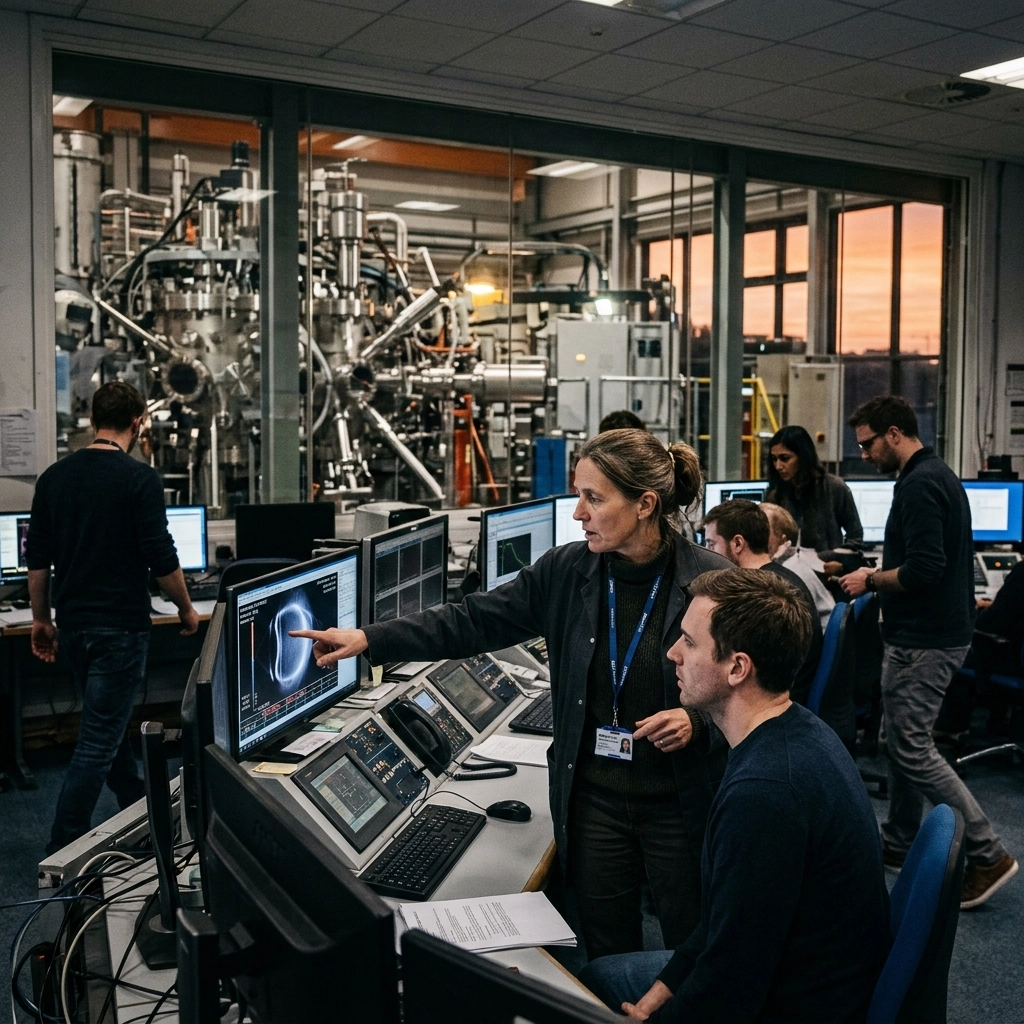
The arrival of the Digital Infrastructure for Fusion Energy (DICE) centre has changed the game. This isn't just another lab with people in white coats staring at beakers. This is a high-tech nerve centre that feels more like NASA’s Mission Control than a traditional research facility. We’re talking about a world-first nuclear fusion centre designed specifically to monitor live plasma and manage the sheer mountain of data that comes with trying to bottle the sun. At NowPWR, we’re obsessed with these untold stories, the ones that prove the UK is still a heavyweight in global innovation. In the world of independent news uk, this is the kind of progress that deserves more than a footnote.
The Silicon Valley of Star Power
Walking through the Culham Science Centre, you get the sense that something momentous is happening. It’s quiet, unassuming, and very British, but behind those walls, scientists are managing temperatures that make the centre of the sun look like a chilly day in Blackpool. The DICE facility is the heartbeat of this operation. With £10 million in contracts already flowing through the system, this isn't just a passion project for physics nerds; it’s a massive economic engine for the region.
DICE serves a very specific and very modern purpose. In the old days of fusion research, you’d run an experiment, collect the data, and then spend weeks or months crunching the numbers to see what happened. DICE changes that. It allows for the real-time monitoring of live plasma. Imagine trying to hold a writhing, screaming ball of 150 million-degree gas in place using nothing but magnetic fields. Now imagine trying to track every single millisecond of that process as it happens. That is what DICE does. It provides the digital backbone for the next generation of fusion reactors, ensuring that when we finally flip the switch on commercial fusion, we actually know how to keep the lights on.
The investment isn't just staying inside the lab, either. Those £10 million in contracts are supporting a massive web of local engineering firms, software developers, and high-tech manufacturers. Oxfordshire has effectively created a "Fusion Cluster," a concentrated ecosystem of talent and money that is drawing in the brightest minds from across the globe. While other countries are still debating the merits of different energy sources, Oxfordshire is busy building the infrastructure to host the most powerful energy source in the known universe. It’s bold, it’s expensive, and it’s working.
Everything You Need to Know About the Fusion Revolution
To understand why this is such a massive win for the UK, you have to understand the sheer scale of what these people are trying to achieve. Fusion is the process that powers the stars. It’s the literal opposite of nuclear fission (what we use in current power plants). Instead of splitting atoms apart, fusion forces them together. It’s cleaner, safer, and infinitely more powerful. Here are the cold, hard facts about why Oxfordshire is the place where the future is being written:
- Heat Beyond Comprehension: To achieve fusion on Earth, we have to heat plasma to roughly 150 million degrees Celsius. That is ten times hotter than the core of the sun. The DICE facility is essential for monitoring how materials react to this extreme environment.
- Zero Risk of Meltdown: Unlike traditional nuclear power, fusion cannot have a "meltdown." If something goes wrong, the plasma simply cools down and the reaction stops within seconds. It’s the ultimate "fail-safe" energy.
- Fuel from the Kitchen Sink: The primary fuels for fusion are deuterium (which can be extracted from seawater) and tritium (which can be bred from lithium). There’s enough fuel on Earth to power humanity for millions of years.
- Minimal Waste: Fusion doesn't produce long-lived radioactive waste. The components of the reactor become radioactive over time, but they only stay that way for about a century, rather than the thousands of years associated with fission.
- A Global Magnet: The Culham site doesn't just house DICE; it’s also the home of MAST Upgrade (Mega Ampere Spherical Tokamak) and has been a key site for the JET project for decades.
- The STEP Connection: All the data gathered at DICE is being funnelled into the STEP (Spherical Tokamak for Energy Production) programme, which aims to deliver a prototype fusion power plant by 2040.
These facts highlight why the work in Culham is one of the most important untold stories in modern science. We are watching the birth of an industry that could effectively end the climate crisis and provide cheap, clean energy for every person on the planet. And it’s all happening just outside of Oxford.
Breeding the Next Generation of Plasma Pioneers
While the technology is incredible, the real secret sauce in Oxfordshire’s success is the people. DICE isn't just a room full of computers; it’s a training ground. One of the primary missions of the centre is to train the next generation of scientists, engineers, and data analysts who will run the fusion plants of the future. We aren't just building a reactor; we’re building a workforce.
This is a crucial part of the UK’s broader industrial strategy. By positioning Oxfordshire as the global hub for fusion, the UK is ensuring that it owns the intellectual property and the expertise for an industry that could be worth trillions in the coming decades. The students and researchers currently walking the halls at Culham are the ones who will be leading the global transition away from fossil fuels. They are learning how to handle big data, how to manage complex robotic systems in radioactive environments, and how to control the most volatile substance on Earth.
This educational aspect is often overlooked in mainstream reporting, but in the realm of independent news uk, we recognise it as the most sustainable part of the project. You can build a machine, but without the hands to operate it and the minds to improve it, it’s just a very expensive paperweight. The £10 million in contracts and the state-of-the-art DICE facility are magnets for global talent. People aren't moving to Oxfordshire for the weather; they’re moving there because it’s the only place on Earth where you can get your hands on this kind of technology.
The "untold stories" here are about the PhD students who spend eighteen hours a day looking at plasma densities, the engineers who figured out how to keep a magnet from melting, and the local businesses that have pivoted from traditional manufacturing to high-spec fusion components. This is a collective effort that has transformed a quiet corner of the English countryside into a world-leading tech hub. Oxfordshire is no longer just a place for dreaming spires and rowing boats; it is the vanguard of the human race’s attempt to master the stars.
In conclusion, the establishment of the DICE facility at Culham marks a significant milestone in the journey toward commercial fusion energy. By combining real-time plasma monitoring with a robust training programme and significant financial investment, Oxfordshire has secured its position as the undisputed world capital of fusion research. As the global energy landscape continues to shift, the work being done in this region will likely serve as the blueprint for clean energy production worldwide. The transition from experimental science to industrial reality is well underway, and Culham is leading the charge.