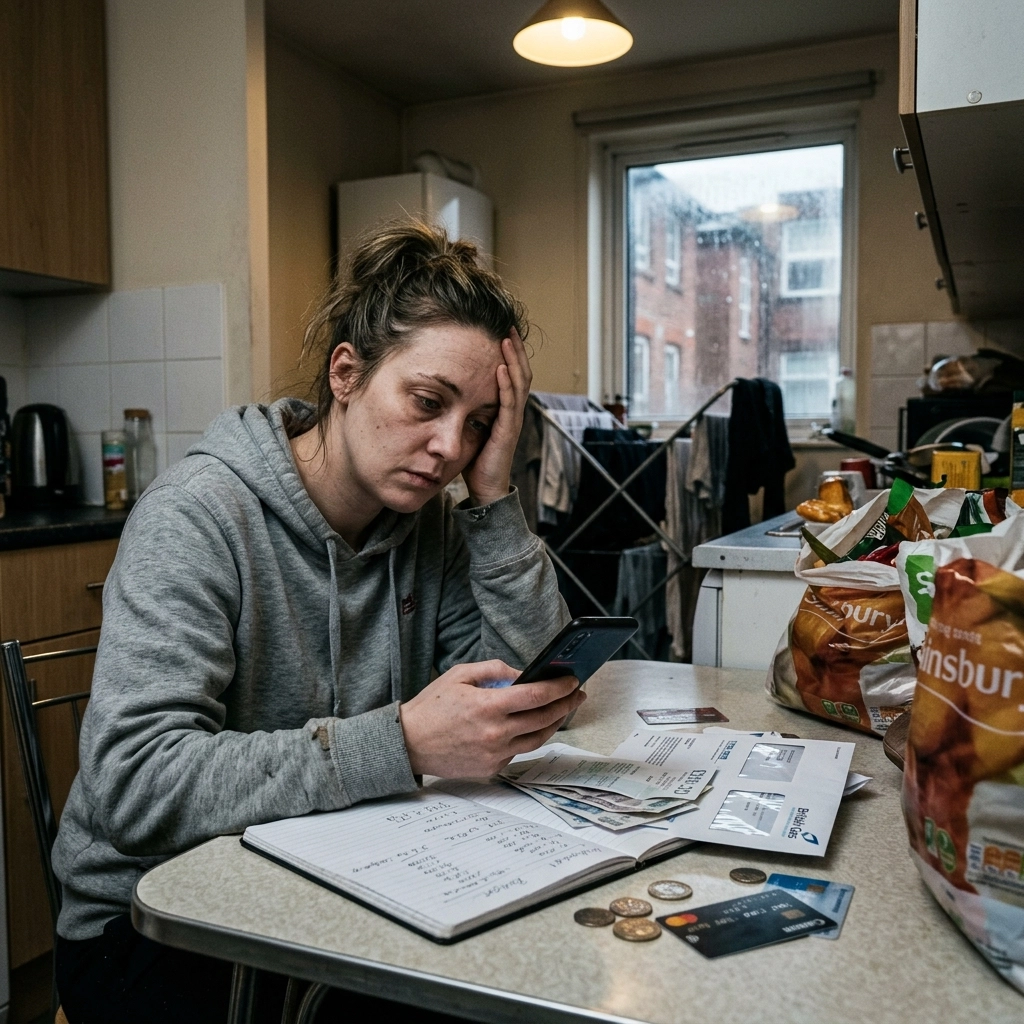
It is a ritual performed by millions every month across the United Kingdom. You wake up on payday, check your banking app with a flicker of hope, and then watch in real-time as the numbers plummet. Before you have even managed to grab a celebratory "I’m rich for five minutes" coffee, the standing order for your rent has cleared. What remains is often a figure so modest it feels like a clerical error. This is not just a personal struggle; it is a systemic shift in how we live, work, and survive in 21st-century Britain.
The gap between what we earn and what we pay to keep a roof over our heads has widened into a chasm. Independent news UK sources have been tracking this trend for years, but 2026 has brought us to a breaking point. For many, the concept of "disposable income" has become a nostalgic relic of the past, replaced by a desperate monthly juggle between utility bills, groceries, and the ever-looming threat of the eviction notice. We are living through untold stories of families downsizing into rooms that barely fit a bed, and young professionals spending half their decade’s earnings on "studio apartments" that are essentially hallways with a microwave.
The reality of the situation is bold and, frankly, quite grim. Rent is no longer just a housing cost; it is a tax on existing. As the share of earnings swallowed by landlords hits record highs, the "reality" part of "Rent vs Reality" is becoming increasingly difficult to stomach.
The Great British Rent Squeeze
To understand why your paycheck is vanishing, we have to look at the sheer scale of the imbalance. In major urban hubs, it is now commonplace for renters to spend upwards of 40% of their take-home pay on housing. In London and the Southeast, that figure frequently spirals toward 50% or even 60%. When you factor in the rising cost of energy and the general inflation of the weekly shop, the math simply stops "mathing."
This squeeze is not happening in a vacuum. The lack of social housing, combined with a private rental sector that feels more like the Wild West than a regulated market, has created a perfect storm. We are seeing a generation of "permanent renters": people who, in any other decade, would have been halfway through a mortgage by now but are instead stuck in a cycle of annual rent hikes. The psychological toll of this cannot be overstated. When your home: the one place you should feel secure: is also the primary source of your financial instability, it changes how you engage with the world.
Furthermore, the velocity of the market has become frantic. Properties are listed and let within hours, often to those willing to pay six months in advance or participate in "bidding wars" that push prices even further beyond the advertised rate. It is a seller’s market where the buyer doesn't even get to keep the product. This environment doesn't just drain bank accounts; it drains hope. The dream of saving for a deposit becomes a mathematical impossibility when the rent you pay is higher than a mortgage would be.
4 Brutal Truths About Your Rent Bill
If you feel like you are running a race on a treadmill that keeps getting faster, you aren't imagining it. Here are four brutal truths about why your rent bill is currently the antagonist in your life story.
1. You are subsidising a retirement that isn’t yours.
One of the most bitter pills to swallow is the realisation that a significant portion of the UK rental market is owned by individuals using your monthly struggle to fund their own golden years. While there are professional, institutional landlords, a huge swathe of the market is held by "accidental" or "buy-to-let" landlords. Your paycheck isn't just vanishing; it’s being converted into equity for someone else. You are paying for the roof, the maintenance, and the profit margin, while gaining zero long-term financial security in return.
2. The "Location Premium" is now a "Survival Tax."
It used to be that you paid more to live near the action: theatres, nightlife, the office. Now, you pay a premium just to live within a commutable distance of a job that pays enough to cover the rent. We are seeing a mass exodus from city centres, but as people move further out, the prices in the suburbs and commuter towns spike to match. The "untold stories" of people commuting two hours each way just to find a flat they can afford are becoming the standard narrative of the British workforce.
3. Quality is an optional extra.
In a balanced market, high prices usually correlate with high quality. In the current UK rental landscape, that logic has been tossed out of a single-paned, draughty window. Renters are frequently paying record-high prices for properties plagued by damp, mould, and ancient heating systems. Because demand so vastly outstrips supply, landlords have little incentive to invest in improvements. If you complain, there are fifty other people behind you in the queue willing to ignore the black mould just to have a place to sleep.
4. The safety net has holes the size of a double bedroom.
The speed of displacement for renters is terrifying. Research shows that when a paycheck disappears: due to illness, redundancy, or personal crisis: renters face a much faster timeline toward losing their homes than homeowners. While mortgage holders might have access to payment holidays or lengthier foreclosure processes, a renter is often just two missed payments away from legal proceedings. This precarity adds a layer of "survival stress" to every working day, making the vanishing paycheck feel even more like a ticking time bomb.
The Untenable Future of Urban Living
Where does this end? If the current trajectory continues, our cities risk becoming hollowed-out shells, populated only by the extremely wealthy and the extremely precarious. The "missing middle": the teachers, nurses, hospitality workers, and creative professionals: are being priced out of the very places that rely on their labour. When a barista can no longer afford to live within an hour of the cafe they work in, the urban economy begins to fracture.
We are already seeing the early signs of this shift. Businesses in major cities are struggling to recruit because potential employees look at the local rent prices and realize the salary offered wouldn't even cover a room in a shared house. This isn't just a "young person problem" anymore; it is affecting families who cannot find three-bedroom homes for less than a king’s ransom, and older renters who face an uncertain retirement without the security of a paid-off home.
The conversation around housing in the UK needs to move beyond simple supply and demand. It needs to address the reality of housing as a fundamental human need rather than just a speculative asset class. Until there is a radical shift in how we view the relationship between earnings and housing costs, the monthly vanishing act of the British paycheck will continue. We are at a crossroads where the "reality" of the rental market is no longer compatible with the "reality" of a functioning society.
The current state of the rental market represents a significant challenge to the economic stability of the United Kingdom. As rents continue to consume a disproportionate share of national earnings, the broader economy suffers from reduced consumer spending and increased social pressure. Addressing these systemic issues requires a multifaceted approach involving policy reform, increased housing supply, and a re-evaluation of tenant protections to ensure that housing remains accessible and sustainable for all sections of society.