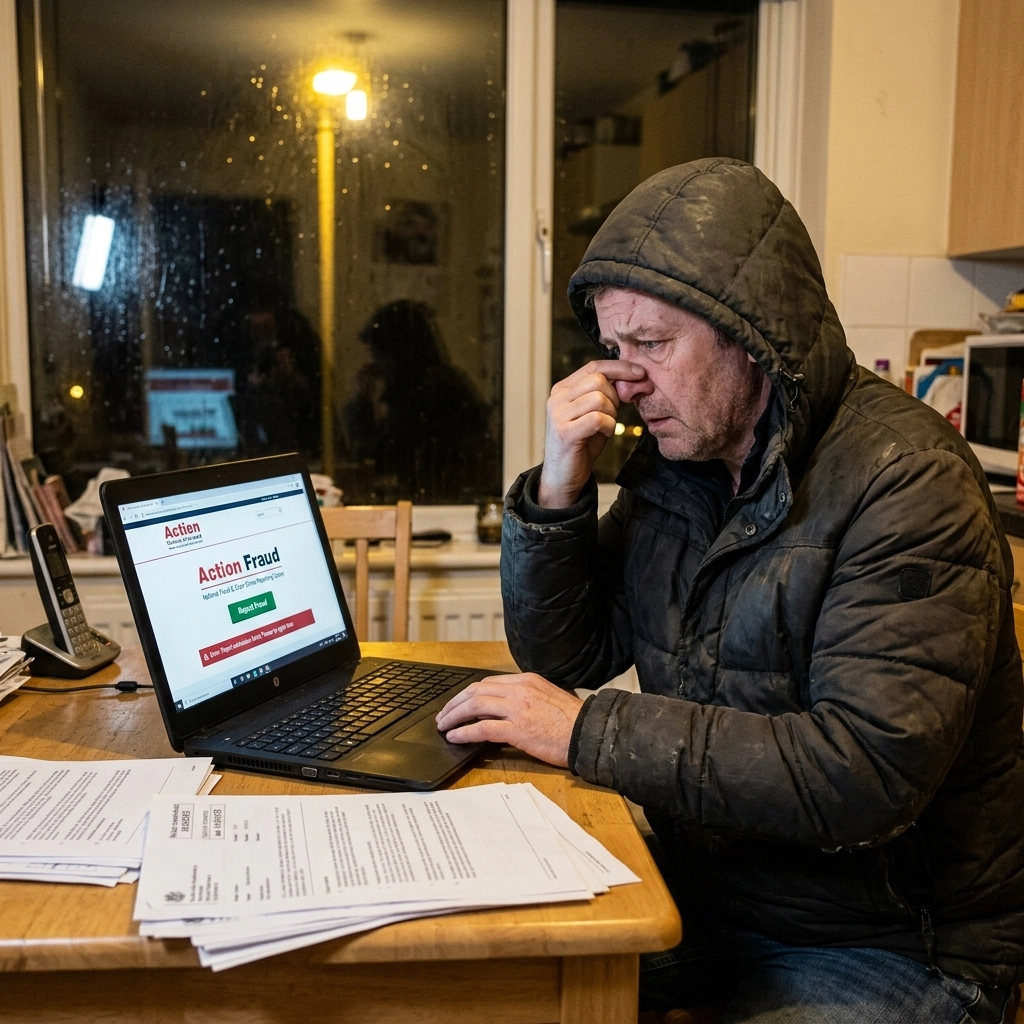
For anyone who has ever fallen victim to a scam in the United Kingdom, the name Action Fraud likely brings a mixture of frustration and resignation. It is the national reporting centre for fraud and cybercrime, intended to be the primary gateway for victims to seek justice. Yet, for years, the system has been criticised as a "black hole" where reports go to die. As we look at the landscape of independent news UK, the untold stories of victims left in the lurch by this system reveal a deep-seated crisis in how our country handles its most common crime.
Fraud now accounts for a massive proportion of all crime experienced by adults in England and Wales, but the response from the authorities has often felt like an afterthought. When you are robbed in the street, you expect a police officer to show up. When your life savings are vanished by a sophisticated WhatsApp scam or a spoofed banking call, you are told to fill out an online form. This disconnect between the trauma of the victim and the bureaucratic coldness of the reporting system is at the heart of why Action Fraud is widely considered broken.
The scale of the problem is staggering. Despite the prevalence of digital scams, public awareness of where to turn remains dangerously low. Research suggests that only a tiny fraction of victims actually engage with the official channels. This isn't just a minor administrative hurdle; it is a fundamental breakdown in the social contract between the state and the citizen. If a system is designed to protect people but nobody knows it exists: or worse, nobody trusts it: then the system has already failed.
A Crisis of Public Confidence and Visibility
One of the most damning indictments of the Action Fraud era is the sheer lack of public recognition. Studies have indicated that as few as 5% of people would think to report a scam to Action Fraud. Instead, nearly half of victims would try to contact the police directly. This creates a confusing loop: the police often redirect victims back to Action Fraud, while Action Fraud acts primarily as a data-collecting entity rather than an investigative body. For a victim already reeling from financial loss, being bounced between departments feels like being told their problem isn't worth a real person’s time.
This lack of visibility is one of the great untold stories of the UK's justice system. While high-profile violent crimes dominate the headlines, hundreds of thousands of people are being quietly defrauded every year, with many never even entering the official statistics. It is estimated that over 80% of frauds go entirely unreported. Victims often feel a sense of shame or believe that nothing will be done anyway, so why bother? When the "national" service only captures a fraction of the reality, the government is essentially flying blind.
Furthermore, the reputational damage to the service has been severe. In recent years, undercover investigations and media exposes have painted a grim picture of what happens behind the scenes. Victims have reportedly been mocked by staff, and cases with clear evidence have been ignored because they didn't meet certain "scoring" criteria for investigation. This isn't just about a lack of funding; it's about a culture that has, at times, seemed more focused on managing expectations than on catching criminals.
The Structural Failures of the Reporting Model
The issues with Action Fraud aren't just cultural; they are deeply structural. At its core, the system was never designed to be a proactive investigative tool. It was built as a reporting portal: a place to gather data in the hope that patterns might eventually emerge. However, while the volume of fraud incidents grew by over 30% in a single year, the resources allocated to handle them remained stagnant. You cannot fight 21st-century cybercrime with a 20th-century administrative mindset.
The technical limitations of the platform have been a major sticking point. Unlike more modern systems, the original Action Fraud infrastructure struggled to automatically analyse patterns across multiple reports to identify organised crime networks. In many cases, if ten people were scammed by the same person but reported it slightly differently, the system might not link the cases. This allowed organised gangs to operate with relative impunity, knowing that the chances of their various "hits" being connected and investigated were slim.
The human element of the service has also faced immense pressure. Reports have surfaced of young, inadequately trained staff being tasked with handling calls from deeply distressed individuals, some of whom have lost their entire life savings or even their homes. Without the proper training in victim support and the technical knowledge to provide immediate advice, these workers were set up to fail. When the system treats fraud as a data entry task rather than a crime investigation, the victims are the ones who pay the price. This reality is often omitted from official government briefings, making it a vital part of the independent news UK landscape.
Moving Beyond the Broken Status Quo
Recognising that the brand of Action Fraud had become synonymous with failure, the UK government eventually admitted that radical reform was the only way forward. A new replacement service has been in development, with parts of its back-end intelligence system beginning to roll out in late 2025. The hope is that this new iteration will bridge the gap between reporting and actual police response. However, a name change and a fresh coat of digital paint won't fix the underlying issues if the police still lack the capacity to investigate the leads generated.
For a new system to work, it must do more than just collect data. It needs to provide victims with immediate, actionable advice and a clear roadmap of what happens next. It must also integrate more closely with the banking sector and telecommunications companies to stop scams in their tracks. We need a system that treats fraud with the same urgency as any other serious crime. The current wait times and the "black hole" experience must become a thing of the past.
Moreover, there needs to be a massive public awareness campaign. People need to know who to call, and they need to believe that calling will actually make a difference. If the new service can't prove its worth in the first few months of operation, it risks falling into the same trap of public apathy that swallowed Action Fraud.
The story of Action Fraud is a cautionary tale of what happens when a public service fails to keep pace with the world it is meant to police. Fraud is not a victimless crime, and it is not a "low-level" offence. It destroys lives, funds organised crime, and erodes the trust we have in our digital society. Fixing the reporting system is the first step, but it is only the beginning of a much longer journey toward justice for the millions of people targeted by scammers every year.
The UK deserves a reporting system that actually works: one that listens to victims, connects the dots, and empowers the police to take action. Until that happens, the stories of those left behind will remain among the most important untold stories in the country. We must hold those in power accountable to ensure that "reporting" a crime actually leads to "solving" a crime. Only then can we hope to turn the tide against the fraud epidemic that has been allowed to flourish for far too long.