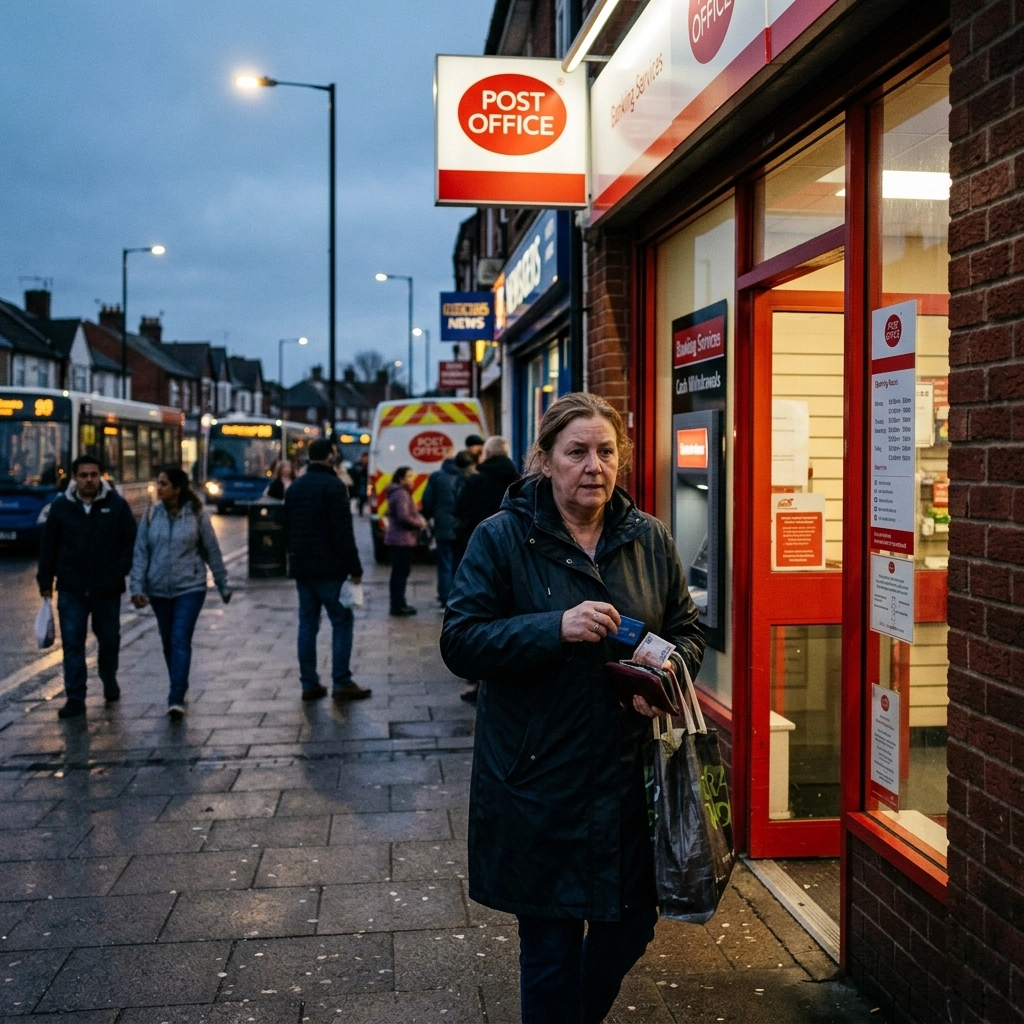
The British high street has spent the last decade looking a bit like a game of Jenga where someone keeps pulling out the foundational blocks. First, it was the department stores, then the mid-market fashion chains, and lately, the banks. As the "Big Four" and their contemporaries beat a hasty retreat from physical locations, the Post Office has found itself standing as the last man at the counter. But the latest news, a massive £1.75 billion deal with 30 major lenders, has set tongues wagging. Is this the moment the Post Office finally secures its future, or is it a very expensive sticking plaster applied to a brand currently undergoing a public relations autopsy?
To understand the weight of this £1.75 billion figure, one has to look at the landscape of British retail banking. We are living through an era of "bank deserts," where entire towns find themselves without a single branch to deposit cash or speak to a human being. The Post Office, with its sprawling network of 11,500 branches, is the only entity with the footprint to fill that void. This deal, known as Banking Framework 4, is the latest iteration of an agreement that allows customers of major banks to perform basic transactions at a Post Office counter.
Yet, as we dive into the untold stories of this agreement, the glitter of the billion-pound price tag starts to show some tarnish. We need to ask the hard questions about where that money is actually going and whether this "lifeline" is a genuine strategy for growth or a convenient way to change the subject while the Horizon IT scandal inquiry continues to dominate the headlines.
What exactly is the £1.75bn banking deal and why does it matter?
At its core, the £1.75 billion deal is a commercial agreement between Post Office Ltd and nearly 30 UK banks and building societies. This three-year contract ensures that millions of customers and small businesses can continue to withdraw cash, deposit notes and coins, and check their balances at any Post Office branch across the country. In a world increasingly obsessed with digital-first banking, this might seem like a relic of the past, but for the millions who rely on the cash economy, it is an essential service.
The significance of this deal lies in its scale and its timing. It represents a significant increase in the fees banks pay to the Post Office for these services. For years, sub-postmasters, the independent business owners who actually run the branches, have complained that the remuneration they receive for handling bank transactions is pitiful. They argue that counting out thousands of pounds in small change for a local pub or a charity shop takes time and carries significant risk, yet they were often being paid pennies for the privilege.
This new deal is supposed to address that. A portion of this £1.75 billion is earmarked for increased remuneration for sub-postmasters. It is a recognition that the Post Office is no longer just a place to buy stamps or send a birthday parcel to your aunt in Australia; it is now the backbone of the UK’s cash infrastructure. Without it, the government’s promise to protect access to cash would be little more than a slogan.
However, the "independent news uk" perspective suggests we should look closer at the mechanics. While the headline figure is eye-watering, it is spread over several years and across a massive network. When you divide £1.75 billion by 11,500 branches over three years, and then factor in the massive central overheads of the Post Office’s head office, the "lifeline" starts to look a bit more like a modest subsidy. For many sub-postmasters struggling with rising energy bills and the national living wage, the question isn't whether this deal is a win, but whether it’s enough to keep the lights on.
Is this a financial lifeline or a strategic distraction from the Horizon Inquiry?
It is impossible to discuss the Post Office in 2026 without the shadow of the Horizon IT scandal loitering in the corner. For those who need a refresher, the scandal involved the wrongful prosecution of hundreds of sub-postmasters for theft and fraud due to faults in the Horizon accounting software. It has been described as the greatest miscarriage of justice in British history. Even now, years after the initial exposures, the public inquiry is still unearthing harrowing evidence of corporate incompetence and a culture of secrecy.
The announcement of a £1.75 billion banking deal feels, to some observers, a little too convenient. It provides a narrative of "business as usual" and "future-proofing" at a time when the organisation's reputation is at an all-time low. By positioning itself as the indispensable guardian of the UK’s banking network, the Post Office is making itself "too big to fail." If the government or the public were to demand the total dismantling of the current Post Office structure as penance for the Horizon scandal, the banking deal serves as a shield. "You can't get rid of us," the subtext reads, "because we are the only ones keeping the economy’s cash flowing."
This creates a complex moral dilemma. On one hand, the sub-postmasters who were the victims of the scandal deserve a Post Office that is commercially viable so they can continue to earn a living and receive the compensation they are owed. On the other hand, the leadership that oversaw the "Horizon years" is being gifted a massive commercial win that helps rehabilitate the brand without necessarily fixing the deep-seated cultural issues within the organisation.
The analytical view is that while the money is necessary, it does not buy forgiveness. The public is increasingly savvy about corporate "reputation washing." We see this often in independent news uk reports where large institutions use financial milestones to overshadow ethical failings. The £1.75 billion deal is a commercial necessity, yes, but it shouldn't be used as a get-out-of-jail-free card for the historic and systemic failures that ruined lives.
Can the Post Office truly survive as the UK’s primary banking hub?
Looking ahead, the question is whether this banking-centric model is sustainable. The Post Office is essentially acting as a subcontractor for the big banks. The banks get to close their expensive branches and save on staff, rent, and rates, while paying a relatively small fee to the Post Office to handle their "difficult" customers: the ones who still want to use cash. It is a fantastic deal for the lenders, but is it a good deal for the Post Office in the long run?
Being a "banking hub" brings with it a host of new challenges. Security is a primary concern. A village post office that once mainly dealt with letters is now a target for more sophisticated crime if it’s known to be holding and processing large volumes of cash for local businesses. Then there is the issue of expertise. Sub-postmasters are incredibly hardworking, but they are not trained bank clerks. Expecting them to navigate the increasingly complex world of anti-money laundering (AML) checks and financial regulations adds a layer of stress and liability that their current remuneration might still not fully cover.
Furthermore, there is the risk of "mission creep." As the Post Office becomes more dependent on banking fees, its traditional services might suffer. We’ve already seen the closure of many "Crown" post offices: the large, directly managed ones: in favour of counters inside stationery stores or supermarkets. While this saves money, it often results in longer queues and a diminished customer experience. If the Post Office becomes a bank in all but name, it risks losing the very "community" feel that makes it a trusted institution in the first place.
The future of the Post Office as a financial lifeline depends on whether it can balance these commercial pressures with its social purpose. It needs to be more than just a cheap alternative for the big banks. It needs to be a modern, tech-savvy, and ethically sound institution. This requires a level of transparency that has been sorely lacking in the past. If the Post Office wants to move forward, it must ensure that every penny of that £1.75 billion is accounted for and that the sub-postmasters: the real heroes of the network: are the ones who see the benefit.
The £1.75 billion banking deal is a significant milestone, but it is not a silver bullet. It provides the financial oxygen the Post Office needs to survive the next few years, but it doesn't cure the underlying illness. As we continue to follow the untold stories of the high street, we must remain critical of how these massive sums are spent. The Post Office has been given a second chance to prove its worth to the British public. Whether it uses this lifeline to build a better future or simply to hide from its past remains to be seen.
The relationship between the state, the lenders, and the Post Office is a delicate one. For the independent news uk consumer, the takeaway is clear: the convenience of being able to deposit a cheque at your local counter comes with a complex backstory of corporate maneuvering and a desperate need for institutional reform. The "Post Office Bank" might be the only option left for many, but we must ensure it is an option built on a foundation of integrity rather than just a massive pile of cash.