When we think about modern intelligence operations, our minds often drift to the high-octane sequences of Hollywood blockbusters. We imagine gadgets, explosions, and daring escapes that seem almost too choreographed to be true. However, the reality of global stories often carries a weight and complexity that no film could truly capture. This was never more evident than during the recent rescue of a downed weapons officer who found himself stranded in the rugged terrain of Iran for 36 hours. Following the crash of an F-15E fighter jet, a window of life and death opened, and the tactics employed to close it were nothing short of extraordinary.
The mission wasn't just a display of military might; it was a masterclass in how intelligence agencies navigate the delicate balance between visibility and total shadows. While the world watched and waited for updates, a multi-layered operation was unfolding behind the scenes, combining psychological warfare with technology that sounds like it came from science fiction. At NowPWR, we focus on untold stories with context that readers expect from independent news uk.
The situation was dire. A highly trained airman was on the ground in a hostile environment, pursued by the Iranian Revolutionary Guard Corps (IRGC) and Basij militia units. The clock was ticking, and the usual methods of search and rescue carried the risk of triggering a much larger international crisis. This is the real story of how the CIA used every tool in its arsenal to help bring him home.
Mastering the Art of Digital Deception
In the age of instant communication and satellite surveillance, staying hidden is harder than ever. To combat this, the CIA didn't just try to hide the airman; they created a whole new reality for the pursuers to chase. This strategy centered on a sophisticated misinformation campaign designed to redirect Iranian search efforts. By spreading credible-sounding intelligence through local channels and digital signals, the agency suggested that U.S. forces had already successfully recovered the missing airman and were moving him through a specific overland corridor toward the border.
This wasn't just a casual rumour. It was a carefully constructed narrative that forced the IRGC to reposition their tactical units. Every minute the Iranian patrols spent investigating this "phantom lead" was a minute the actual rescue team could use to coordinate its approach. This kind of deception is a cornerstone of clandestine operations, but the scale and precision of this campaign stood out. It turned the enemy's own surveillance network against itself, using the pursuit of information as a blindfold.
The deception extended all the way back to the Pentagon. Orders were given to withhold public statements that might confirm the airman’s status. By maintaining a shroud of ambiguity, the US prevented Iranian intelligence from knowing for certain if they were looking for one person, two people, or if anyone was left on the ground at all. This pressure created hesitation in the Iranian response, a gap the CIA was ready to exploit. These are the kinds of global stories that show how information, and the lack of it, can be as powerful as any physical weapon.
The Science Behind Exquisite Capabilities
While the deception campaign kept the pursuers at bay, the agency still faced the monumental task of finding one man hidden in a vast, mountainous landscape. Standard GPS and radio signals are often unreliable or easily intercepted in such environments. To solve this, the CIA utilised what insiders refer to as "exquisite capabilities": a term for technology so advanced and specialised that it is rarely acknowledged in public discourse.
Reports suggest that the breakthrough came from technology developed by Lockheed Martin’s Skunk Works division. The system is believed to involve quantum magnetometry. In simple terms, that would allow operators to detect the faint electromagnetic signature of a human heartbeat from a significant distance, even through solid rock or dense cover. When the airman tucked himself into a narrow mountain crevice to avoid detection, he may have become easier for this advanced sensor to isolate.
Once the precise location was confirmed, the information moved through a secure chain of command at speed. From the CIA Director to military leadership, the data provided a "digital fingerprint" that allowed the rescue force to pinpoint the airman's exact coordinates without requiring him to break radio silence. This level of technological advantage is a key theme in untold stories of modern warfare, where the difference between a successful extraction and a tragedy can come down to tiny margins of sensor precision. It also reflects how intelligence-led rescue missions continue to evolve.
A High-Stakes Kinetic Extraction
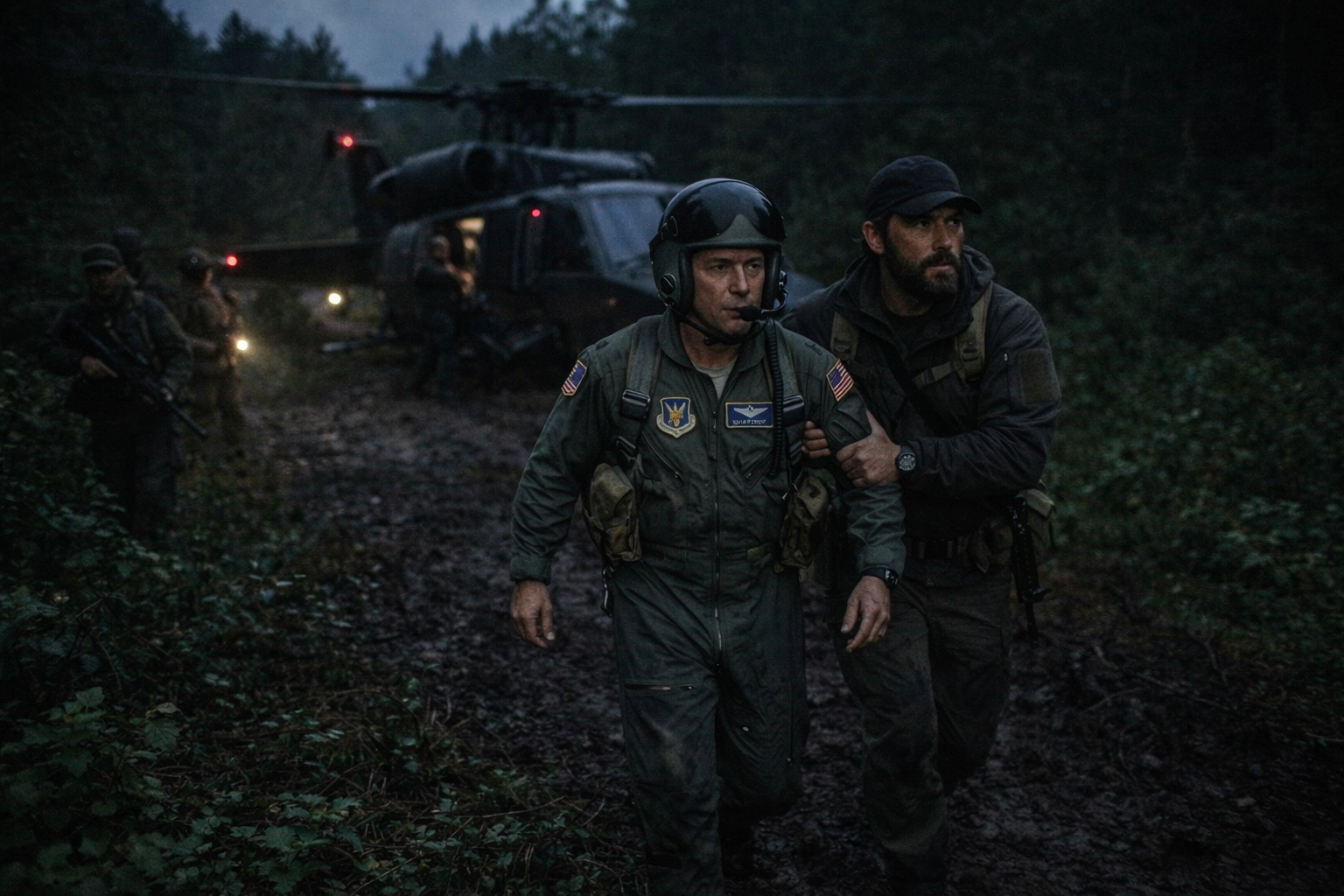
With the location fixed and the enemy successfully distracted, the mission moved into its final and most dangerous phase: the extraction. This was where the soft power of intelligence met direct military force. Special Operations helicopters were deployed, crossing the border under cover of darkness. To protect the rescue aircraft, supporting warplanes created a defensive umbrella, striking selected targets to clear the route, light landing zones and suppress possible anti-air threats.
The rescue itself moved quickly. Commandos hit the ground, secured the injured airman and lifted him out within minutes. The mission did not end there. To prevent any advanced technology or sensitive equipment from falling into hostile hands, US aircraft then carried out strikes on disabled equipment left at the crash site. That decision underlined how closely recovery operations are tied to protecting intelligence methods as well as personnel.
This operation is a reminder of how layered modern geopolitical crises can be. It was not only about saving a life. It was also about limiting escalation through silence, technical precision and force used at exactly the right moment. For readers interested in independent news uk, this is why context matters just as much as the headline.
The rescue of the F-15E officer will likely be studied by intelligence professionals for years to come. It shows how modern tactics have shifted away from sheer numbers and towards a more integrated, technology-heavy and psychologically driven approach. The airman made it home, but the methods used to get him there remain a revealing glimpse into how covert rescue missions now work.
In the end, the success of the mission relied on a paradox: the more the world knew, the more dangerous it became for the man on the ground. By controlling the flow of information and relying on advanced sensing, the agency turned a seemingly impossible situation into a tightly managed operation. Through the lens of untold stories and wider global stories, this rescue stands as a clear example of how intelligence, timing and restraint can shape events long before the public sees the full picture.