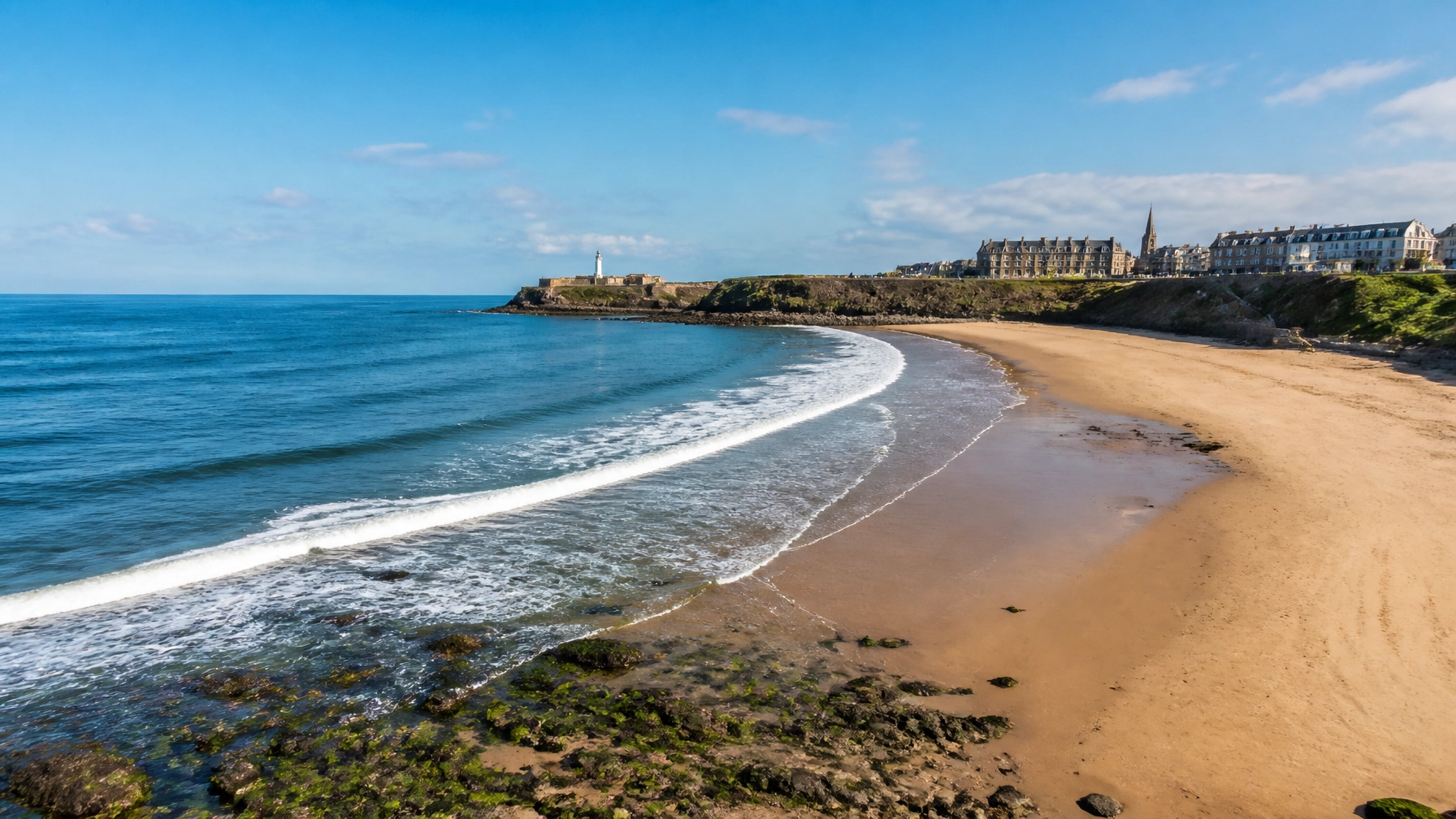
The North East coast of England is renowned for its rugged beauty, its cold, bracing waters, and a surfing community that is as resilient as the granite cliffs that line the shore. However, even for those who have spent their lives navigating the swells of the North Sea, the water remains an unpredictable force. For Euan Gray, a local surfer from Tynemouth, a routine day in the surf quickly transformed into a desperate battle for survival that has now become the centrepiece of a national safety campaign.
It began as many coastal outings do, with the simple intention of enjoying the waves. Euan was in the water at Tynemouth Longsands, a popular spot for locals and tourists alike, accompanied by his younger brother. The conditions seemed manageable, yet beneath the surface, the complex mechanics of the coastline were shifting. Within minutes, the pair found themselves caught in a powerful rip current: a fast-moving channel of water that carries everything in its path away from the shore and out into the open sea.
In the initial moments of the crisis, Euan’s primary concern was not his own safety but that of his brother. As the current took hold, the sheer speed of the water became apparent. For many, the instinctive reaction to being pulled away from the beach is to swim directly back against the current. It is a primal response driven by the fear of being lost at sea, but it is also the most dangerous mistake a person can make. Fighting a rip current is a battle against an unstoppable conveyor belt of water, and it leads rapidly to exhaustion and, ultimately, tragedy.
Euan managed to assist his brother, ensuring he stayed calm and stayed afloat, helping him to eventually reach safety. But in the process of securing his brother’s escape, Euan found himself further out than ever, separated from the shore by a distance that felt insurmountable. The physical toll of the effort was mounting, and as he was pulled further into the North Sea, the reality of the situation set in. He was in deep water, losing energy, and the shore was receding.
The Science of the Rip Current
Understanding what happened to Euan requires a look at the hidden architecture of the British coastline. Rip currents are not "undertows"; they do not pull people under the water. Instead, they are narrow channels of water that flow away from the beach, often through gaps in sandbars or near structures like piers. They can move at speeds of up to five miles per hour, which is faster than an Olympic swimmer. On a beach like Tynemouth, where the seafloor is constantly shifting, these currents can form and disappear with little warning.
The danger of a rip current is often compounded by the appearance of the water. To the untrained eye, a rip can look like the safest place to swim because the water appears calm and flat, without the breaking waves seen elsewhere. In reality, that calmness is the result of the water rushing back out to sea. When Euan and his brother entered the water, they were entering a natural system designed to move massive volumes of water offshore.
When a person is caught in this flow, the physiological response is immediate. The "fight or flight" mechanism kicks in, leading to increased heart rate and rapid, shallow breathing. In cold North Sea temperatures, this can lead to "cold water shock," where the body’s natural reaction to the sudden drop in temperature can cause a person to gasp and inhale water. Euan’s experience as a surfer provided him with a level of water literacy that many lack, yet even with that knowledge, the physical pressure of the current was nearly overwhelming. It was only through the swift intervention of the RNLI lifeboat crew from Tynemouth that a tragedy was averted.
Mastering the Art of Floating
Following his rescue, Euan has stepped forward to share his story, becoming a prominent voice for the "Float to Live" campaign. This initiative is built on a deceptively simple piece of advice that is designed to counteract the panic that often leads to drowning. The core of the message is that if you find yourself in trouble in the water, you should resist the urge to swim hard. Instead, you should lean back, extend your arms and legs like a starfish, and float.
Floating serves several purposes. Firstly, it allows the initial effects of cold water shock to pass. By focusing on breathing and maintaining a buoyant position, a person can regain their composure. Secondly, it conserves vital energy. In Euan’s case, the energy he spent helping his brother meant he had little left for himself. If he had attempted to swim back to shore against the rip, he might not have survived until the lifeboat arrived. By floating, a person buys themselves the most precious commodity in a rescue situation: time.
The campaign highlights five key steps: fight your instinct to thrash around, lean back and extend your arms and legs, gently move them to stay afloat if necessary, float until you can control your breathing, and only then call for help or attempt to swim to safety. For Euan, these steps are more than just a checklist; they are the reason he is able to continue surfing today. His story serves as a powerful reminder that even the most experienced water users are not immune to the power of the ocean, and that the simplest actions are often the most effective.
A Community Response to Coastal Risk
The impact of Euan’s story has resonated deeply within the Tynemouth community and across the UK. It has sparked a wider conversation about coastal safety and the importance of choosing lifeguarded beaches. The presence of professional lifesavers can be the difference between a close call and a fatality. At Tynemouth, the collaboration between local surfers, beachgoers, and the RNLI creates a network of vigilance that is essential during the busy summer months.
The North East coastline is a place of immense pride for those who live there, but it requires respect. The "Float to Live" campaign is not about discouraging people from enjoying the sea; rather, it is about empowering them with the knowledge to stay safe. As more people flock to the coast for staycations and outdoor activities, the risk of incidents naturally increases. Stories like Euan’s provide a human face to the statistics, making the safety advice more relatable and urgent.
The RNLI’s work goes beyond the dramatic rescues seen on television. It involves constant education and the maintenance of a fleet of lifeboats and stations that are ready to launch at a moment's notice. The volunteers who crew these vessels often leave their families and jobs in the middle of the night to head out into treacherous conditions. By sharing his experience, Euan is helping to ensure that the work of these volunteers is supported by a public that is better informed and better prepared for the unexpected.
As the sun sets over the Longsands, the waves continue to roll in, a reminder of the timeless and indifferent power of the sea. Euan Gray’s journey from a moment of near-tragedy to becoming a lifeline for others is a testament to the strength of the human spirit and the vital importance of coastal awareness. His message is clear: the sea is to be enjoyed, but never underestimated. By learning to float, we can all ensure that our trips to the beach remain memories of joy rather than stories of loss.