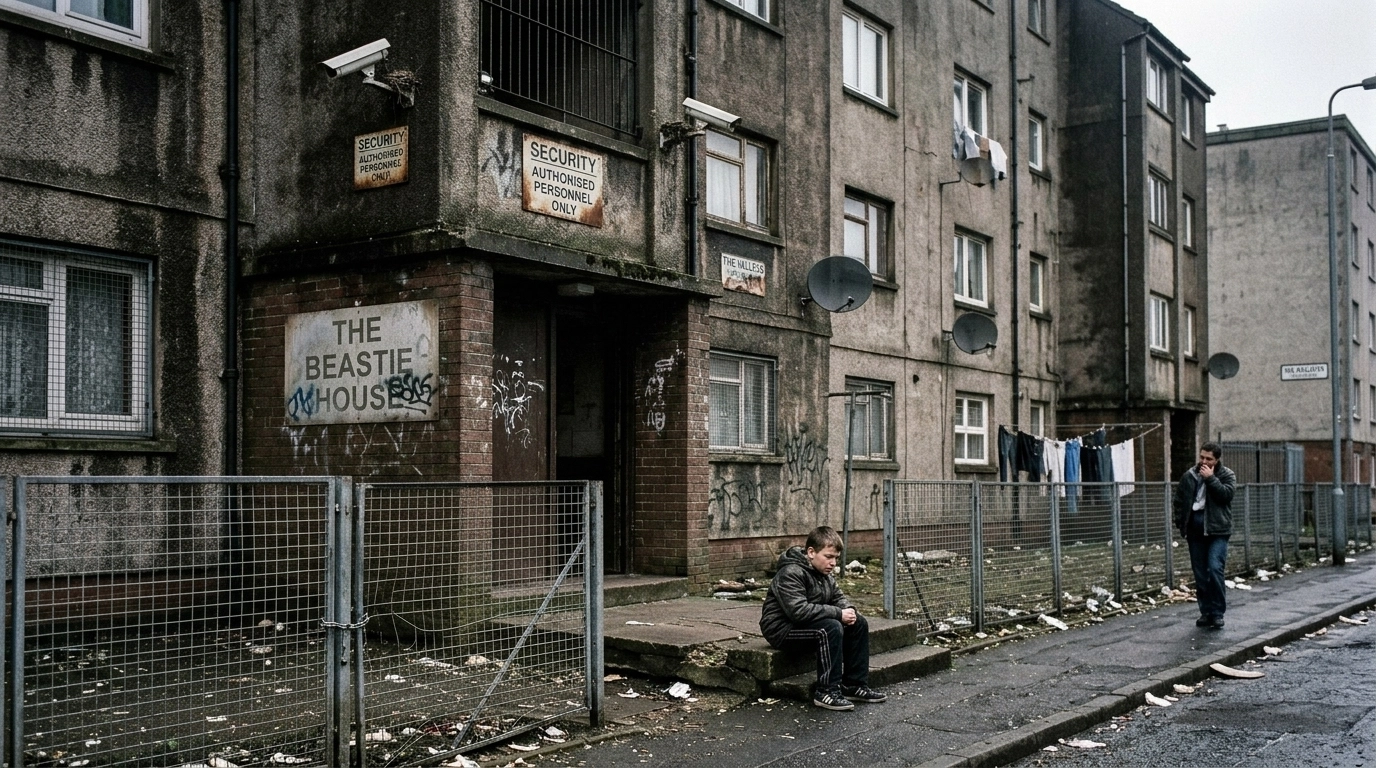
It is a name that sounds like something out of a dark fairytale, but for the children involved, the reality of Glasgow’s ‘Beastie House’ was far more terrifying than any fiction. This case has sent shockwaves through Scotland and the wider UK, not just because of the horrific nature of the abuse, but because of the staggering number of opportunities the system had to intervene. As we look closer at the details, it becomes painfully clear that these children were not hidden in the shadows; they were standing in plain sight of the very authorities meant to protect them.
At NowPWR, we believe in providing independent news uk that doesn't just skim the surface. We cover untold stories to open up real conversations about the issues that matter, in a way that feels clear, human and grounded. When a system as established as the Scottish safeguarding network fails this dramatically, we have to ask why. It isn't just about one or two mistakes; it is about a collective breakdown that allowed a nightmare to continue for years.
The 'Beastie House' case serves as a grim reminder that paperwork and registers mean nothing if they aren't backed by decisive action. The details emerging from the investigation paint a picture of a household that was well-known to various agencies. This wasn't a case of a family flying under the radar. Instead, it was a case of a radar that was beeping loudly, while the people monitoring it chose to look the other way or, perhaps worse, felt powerless to act within the bureaucracy.
The Warning Signs that Went Unnoticed
One of the most heart-breaking aspects of this story is the sheer volume of red flags that were raised over the years. We aren't talking about subtle hints or minor concerns; we are talking about blatant signs of neglect that should have triggered immediate and intensive intervention. For any child protection officer, certain indicators are supposed to act as an emergency siren. In the 'Beastie House' case, these sirens were blaring for a long time.
Chronic school absence is often the first sign that something is wrong at home. For the children in this case, missing school wasn't an occasional occurrence: it was a consistent pattern. Schools are supposed to be a primary line of defence in safeguarding, acting as the eyes and ears of the community. When a child stops showing up, or when their attendance becomes sporadic, it should trigger a series of checks. Yet, in this instance, the absences were allowed to continue without the necessary escalation that might have uncovered the horrors occurring behind closed doors.
Beyond the empty desks, the physical signs of neglect were reportedly visible to those who did come into contact with the family. Neglect is often a slow-motion disaster, but in this case, it was accelerated and severe. From hygiene issues to the general physical state of the children, there were enough indicators to suggest that the home environment was far from safe. Failures in local support networks can deepen public unease and weaken trust in the authorities that are supposed to act.
The children were even on the child protection register. This is perhaps the most damning piece of evidence against the system. Being on the register means that the authorities have already identified that a child is at risk. It is supposed to be a safety net that ensures extra eyes are on the family and that specific, measurable steps are being taken to guarantee the child’s welfare. To have children on that register and still have them subjected to such horrific conditions is a failure of the highest order. It suggests that the register, in this case, was merely a list rather than a tool for active protection.
A Catastrophic Failure of the Safeguarding System
When we look at the official response to the 'Beastie House', the word "catastrophic" is used frequently, and for good reason. A government minister acknowledged that these children were failed by the very people entrusted with their care. This wasn't just a slip-up by a single social worker or a lone teacher; it was a systemic collapse across multiple levels of the Scottish government and local safeguarding agencies.
The duty of care is a legal and moral obligation. In this case, that duty was ignored or mishandled at almost every turn. Agencies that are supposed to communicate with each other: social services, the police, health visitors, and education departments: seem to have operated in silos. This lack of inter-agency communication is a recurring theme in major safeguarding scandals across the UK. When information isn't shared, the full picture of a child's suffering remains hidden, and each agency only sees a small, seemingly manageable piece of the puzzle.
There is also the question of intervention thresholds. Often, social services are so stretched and under-resourced that they only intervene in the most extreme cases. However, the 'Beastie House' was an extreme case. The failure to intervene sooner, despite the children being in frequent contact with various services, suggests a culture of hesitation or a lack of empowerment among frontline workers. It is a terrifying thought that even when the evidence is there, the system can be too slow or too bogged down in procedure to move a child to safety.
This case fits into a broader pattern showing how institutions are struggling to keep up with the demands of modern society. Whether it is pressure on the NHS, strain on the police, or the crisis in social care, the common denominator is often a system that is reactive rather than proactive. For the children in the 'Beastie House', a reactive system was never going to be enough. They needed a system that was willing and able to step in before the damage became irreparable.
Seeking Accountability through Independent Reviews
In the wake of such a tragedy, the standard response is to launch an inquiry or a review. Glasgow has established an independent review to examine exactly what went wrong and what lessons can be learned. While this is a necessary step, for many, it feels like too little, too late. The goal of such a review must be more than just producing a report that sits on a shelf; it must lead to fundamental changes in how safeguarding is handled.
Accountability is key. For real conversations to happen, there must be an honest admission of where the faults lie. It isn't enough to say that "mistakes were made." We need to know why they were made and who is responsible for the policies that allowed those mistakes to happen. The independent review will need to look at the caseloads of social workers, the training provided to school staff, and the protocols for sharing information between the police and local authorities.
There is also a need to look at the legislative framework that governs child protection in Scotland. If the current laws and guidelines are not enough to protect children who are already known to be at risk, then the laws need to change. We cannot afford to have a system that prioritises parental rights or bureaucratic box-ticking over the immediate physical and emotional safety of a child. The 'Beastie House' must be a turning point, a moment where the system is rebuilt to actually serve the people it is meant to protect.
As we continue to cover these untold stories, the focus remains on the survivors. The trauma they have endured is unimaginable, and the road to recovery will be long. The system failed them when they were at their most vulnerable, and the least it can do now is ensure that no other child has to go through a similar ordeal. The community in Glasgow and the wider public deserve answers, and more importantly, they deserve a safeguarding system that actually works.
The 'Beastie House' case is a dark chapter in the history of UK child protection. It highlights the gaps that children can still fall through, even in a modern, developed society. By discussing these failures openly and pushing for genuine accountability, we hope to contribute to a future where every child is safe, and every warning sign is taken seriously. This is the essence of independent news uk: speaking truth to power and ensuring that the voices of the most vulnerable are finally heard.
The lessons from Glasgow must be applied nationally. This isn't just a Scottish issue; it's a UK-wide challenge to ensure that safeguarding systems are robust, agencies communicate properly, and frontline workers are supported. Only then can we move beyond the horrors of the 'Beastie House' and build a society that truly values and protects its children.