



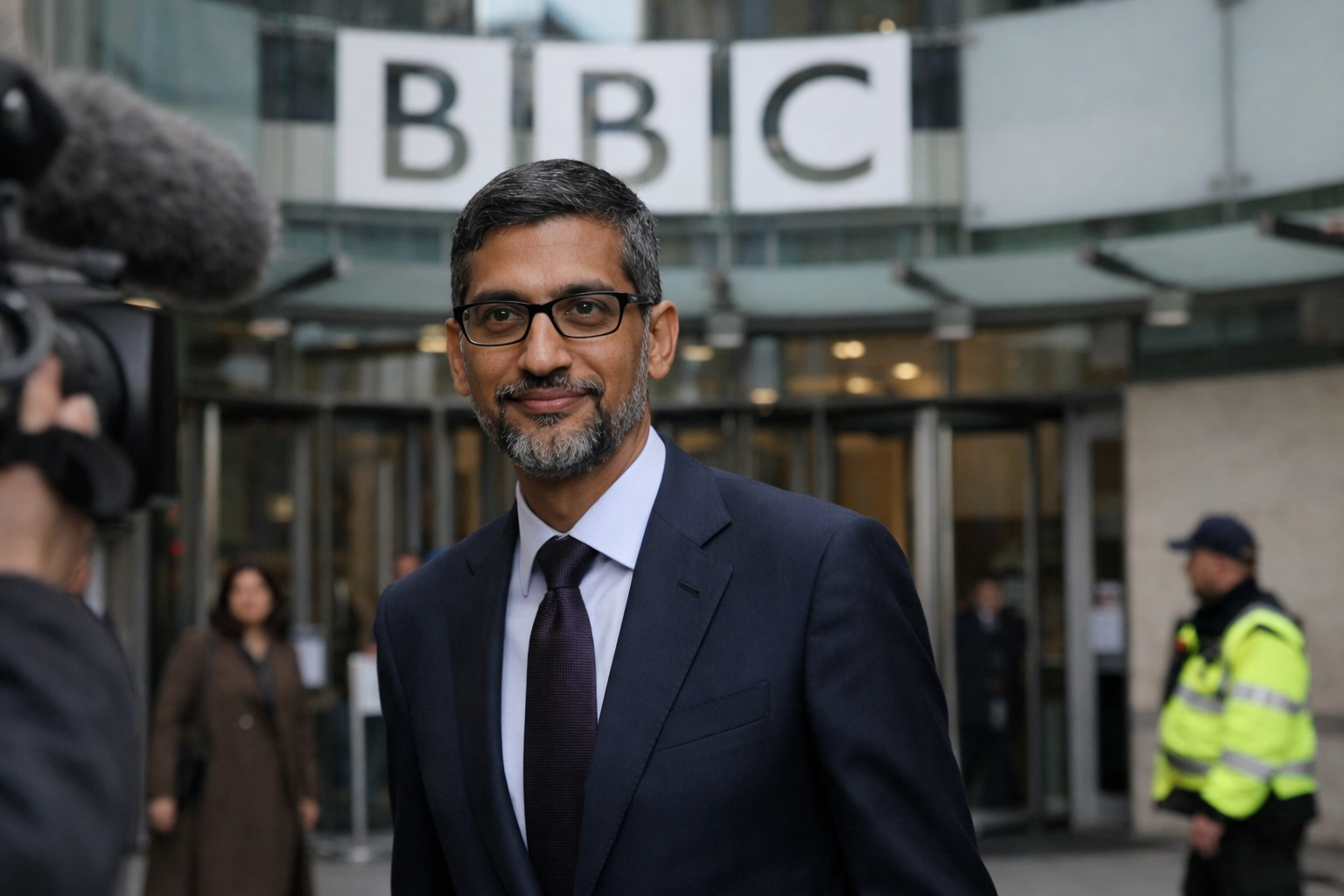
The British Broadcasting Corporation has finally made its move, and it is a pivot that has sent shockwaves through the corridors of Portland Place. In a decision that signals the end of an era for traditional "telly men," Matt Brittin, the former Google heavyweight, has been named the 18th Director General of the BBC. It is a massive hire, not just because of the name, but because of what it represents: a total surrender to the reality that the Beeb is no longer just competing with ITV or Channel 4. It is fighting for survival against the algorithms of Silicon Valley, and to beat them, the board has decided they need someone who knows how those algorithms are built.
Brittin, 57, isn't your typical BBC lifer. He didn’t work his way up through local radio or spend decades in the newsroom cutting his teeth on regional bulletins. He is the first Director General in the corporation’s century-long history to come into the job with absolutely zero experience in television journalism. To the purists, it is an affront to the craft. To the pragmatists, it is the only way the BBC stays relevant in 2026. After a "gap year" following his departure as Google’s President for Europe, the Middle East, and Africa, Brittin is returning to the front lines of the attention economy, tasked with modernising a British institution that many fear has become a relic of a pre-streaming age.
A Silicon Valley Strategy for a British Icon
The appointment of Matt Brittin is a clear admission that the BBC’s biggest threat isn’t a lack of quality content, but a lack of digital dominance. For years, the BBC has watched as YouTube and Netflix cannibalised its younger audience. Recent data suggests that YouTube has finally surpassed the BBC in several key engagement metrics across the UK, a tipping point that likely forced the board’s hand. By bringing in a man who spent nearly two decades at the top of Google, the BBC is looking to transform itself from a broadcaster into a data-driven platform. Brittin understands how to capture eyeballs in a world where the remote control is becoming obsolete and the smartphone is the primary screen.
Brittin joined Google back in 2007, serving as the Managing Director for the UK before scaling the heights of the company’s international operations. He knows the machinery of the internet better than perhaps anyone else in the British media landscape. The expectation is that he will bring a "platform-first" mentality to the corporation. This means a radical shift in how the BBC distributes its news, drama, and educational content. We are likely looking at a future where iPlayer isn’t just a catch-up service, but a sophisticated AI-driven hub that rivals the personalisation of TikTok or Netflix. For the average viewer, this might mean a better experience, but for the staff inside the BBC, it represents a daunting cultural shift from editorial gut-feeling to data-backed decision-making.
However, the road to this appointment was anything but smooth. Brittin only became the frontrunner after a series of high-profile withdrawals. Jay Hunt of Apple TV and Alex Mahon, the former Channel 4 boss, were both heavily tipped for the role before pulling their names from the hat. Their exit left the BBC board in a difficult position, but in Brittin, they found a candidate who wasn't just a consolation prize: he was a disruptor. His "gap year" gave him the space to step back from the corporate grind, but his return to the public eye in this specific role suggests he has a very clear vision for how to save the "Auntie" from digital irrelevance.
Cleaning up the Panorama Fallout
Brittin isn't just inheriting a digital crisis; he’s inheriting a massive reputational headache. He replaces Tim Davie, who resigned in a cloud of controversy last month following a scandal that hit the very heart of the BBC’s brand: its impartiality. The fallout stemmed from a Panorama special regarding President Trump’s speech during the US Capitol riots. A misleading edit of the speech was called out, leading to accusations of bias and a total breakdown in trust with a significant portion of the audience. For a broadcaster funded by a public licence fee, these types of editorial failures are terminal. Davie had no choice but to step down, leaving Rhodri Talfan Davies to keep the lights on as Interim Director General until Brittin takes the reins.
The Panorama scandal was the final straw in a tenure that had already been stretched thin by funding battles and political pressure. Brittin’s first job will be to restore the internal discipline of the newsroom while navigating the minefield of "culture war" politics that has besieged the BBC in recent years. Coming from Google, Brittin is no stranger to being in the crosshairs of regulators and politicians. During his time at the tech giant, he was frequently grilled over tax arrangements and data privacy. That thick skin will be essential as he faces a government that is increasingly sceptical of the BBC’s funding model. He needs to prove that the BBC is an essential public service, not just a taxpayer-funded competitor to the private sector.
The transition period will be a testing time for the organisation. While Rhodri Talfan Davies handles the day-to-day operations, the staff are bracing for the "Brittin Era." There is an underlying tension between the old guard of journalists, who value the tradition of the craft, and the new wave of tech-focused executives who see the BBC as a collection of assets to be optimised. Brittin will have to prove he values the storytelling as much as the delivery system. If he treats the BBC like just another tech stack, he risks alienating the creative talent that makes the corporation worth saving in the first place.
The Future of the Licence Fee and Global Competition
The most significant challenge facing the new Director General is the looming expiration of the BBC’s Royal Charter and the future of the licence fee. As the cost of living continues to bite and streaming options proliferate, the idea of a mandatory tax to fund a broadcaster is becoming a harder sell for any government. Brittin’s background suggests he might be more open to exploring alternative revenue streams: though he will have to move carefully. Any move toward a subscription model or increased commercialisation would fundamentally change the nature of the BBC, moving it away from its universal service obligation.
Global competition is no longer a distant threat; it is the daily reality. The BBC isn't just fighting for British viewers; it is fighting for its place on the global stage. Shows like Doctor Who and Happy Valley are global hits, but they are increasingly reliant on co-production deals with American giants like Disney. Brittin’s international experience at Google EMEA gives him a unique perspective on global markets. He understands the scale of the competition in a way a domestic broadcaster might not. He knows that to compete with the billions being poured into content by Amazon and Apple, the BBC has to be smarter, leaner, and more technologically advanced.
Ultimately, Matt Brittin’s success won't be measured by his ability to trim the budget or fix a technical glitch. It will be measured by whether he can maintain the BBC’s soul while upgrading its brain. The "gritty" reality of modern media is that being "good" isn't enough; you have to be accessible, discoverable, and indispensable. As he steps into the 18th Director General slot, the former Google boss is taking on the biggest job in British culture. He is moving from a company that organises the world's information to an organisation that is supposed to reflect the nation's identity. It is a gamble for the BBC, and a massive challenge for Brittin. The world is watching to see if the man who helped build the digital world can save the most famous broadcaster in it.