



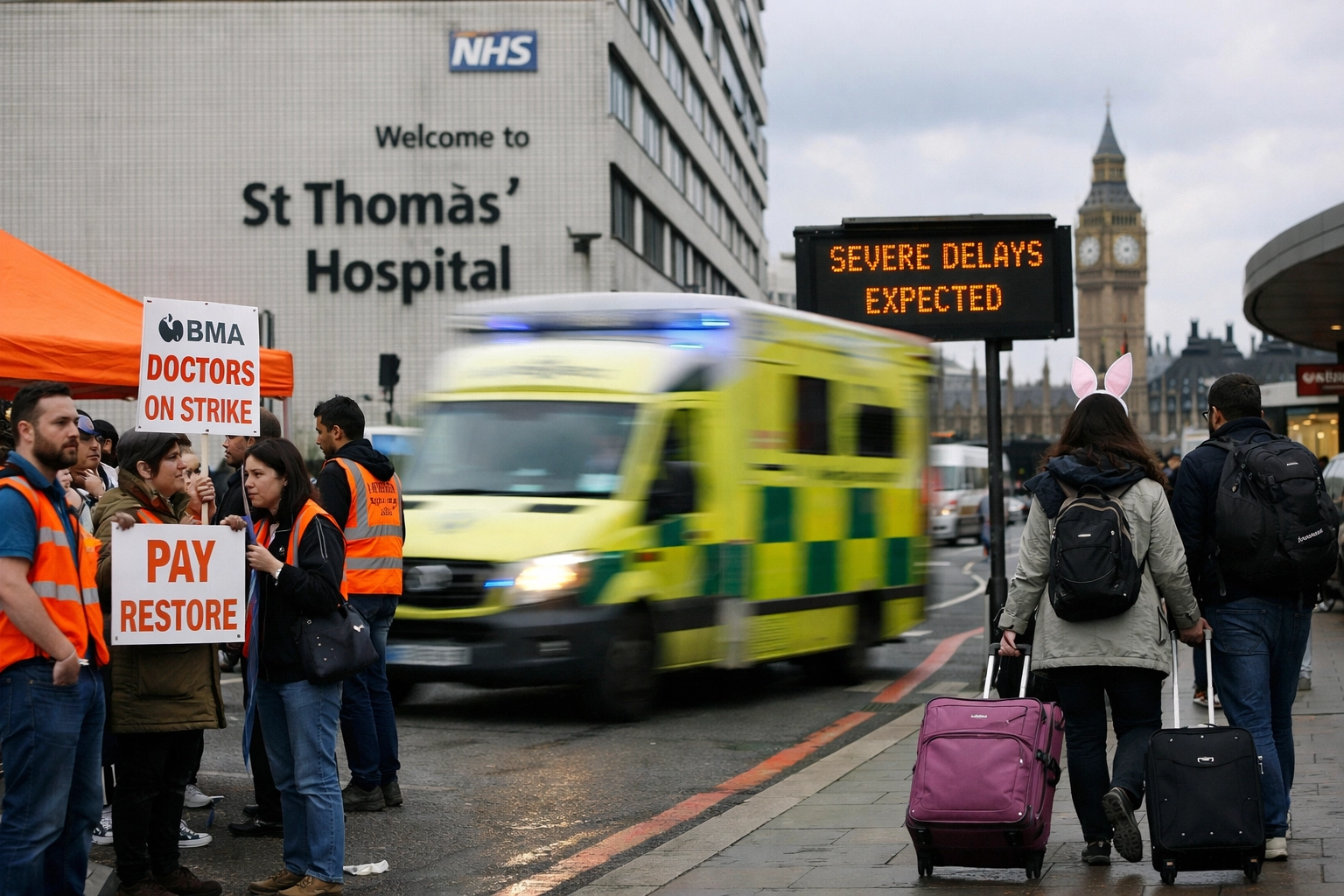
As the UK prepares for the 2026 Easter break, the usual scramble for travel deals and chocolate eggs is being overshadowed by a much grimmer reality. Resident doctors across England have confirmed a six-day walkout scheduled to begin immediately following the Easter Bank Holiday. For a healthcare system already stretched to its limits, the timing couldn't be worse. This isn’t just another headline about industrial action; it is the culmination of years of friction between the British Medical Association (BMA) and the government, reaching a boiling point just as the country tries to enjoy its first major spring holiday.
The decision to strike for six consecutive days: the longest period of industrial action in the history of the NHS for this time of year: is expected to result in the cancellation of hundreds of thousands of appointments and elective surgeries. While the public is used to the occasional disruption, the "Easter Chaos" tag isn't just hyperbole. With the bank holiday weekend typically seeing a spike in A&E admissions due to everything from DIY accidents to travel-related injuries, the subsequent withdrawal of junior doctor labour creates a massive bottleneck. The fallout won't just be felt during the strike days but will likely ripple through the health service for months to come.
Behind the scenes, the atmosphere in hospitals is one of weary resignation. Doctors argue that they have been forced into this corner, while the government maintains that the pay demands are simply unaffordable in the current economic climate. As we look at the specific details of this upcoming disruption, it is clear that the "real story" isn't just about the money: it’s about the very survival of the NHS workforce as we know it.
The breaking point for frontline staff
To understand why doctors are walking out during one of the busiest periods of the year, you have to look at the numbers that don't always make it into the quick news bites. Since 2008, resident doctors (formerly known as junior doctors) claim their real-terms pay has been eroded by more than 26%. While the government points to a 28.9% increase over the last three years as a sign of good faith, the BMA argues this barely scratches the surface of double-digit inflation and the rising cost of professional indemnity, exams, and basic living expenses.
The "real story" here is the feeling of being undervalued. Many of these doctors are working 12-hour shifts, often staying late without extra pay to ensure patient safety, only to find they can barely afford rent in the cities where they work. In 2026, the cost of living remains a primary driver of discontent. We are seeing a "brain drain" where highly trained UK medics are looking at the salaries and working conditions in Australia, New Zealand, and the Middle East and wondering why they are staying.
The strike isn't just a grab for cash; it's a desperate signal that the current model is unsustainable. When a registrar with a decade of training is earning less per hour than some hospitality roles, the incentive to stay in a high-stress, high-stakes environment begins to vanish. The BMA’s mandate for strike action, which now extends through August 1, 2026, shows that the membership is not backing down. They see this as a fight for the future of the profession. If the pay doesn't reflect the responsibility, they argue, the UK will simply stop producing and retaining the doctors it needs.
Navigating a system under pressure
For patients, the upcoming Easter strike is a source of genuine anxiety. The NHS has been playing a perpetual game of catch-up since the pandemic, and every day of industrial action adds thousands to the waiting lists. Hospital trusts are currently in "crisis mode," trying to reconfigure rotas to ensure that emergency care, maternity services, and intensive care remain staffed by consultants and specialists. However, this comes at a price. Consultants are being pulled away from their usual duties to cover the gaps left by resident doctors, meaning the work that keeps the NHS moving: the routine hip replacements, the diagnostic scans, the outpatient clinics: simply grinds to a halt.
The logistical challenge of a six-day strike starting right after a four-day bank holiday is unprecedented. Usually, the days following a bank holiday are used to clear the backlog of patients who waited until Tuesday to seek help. By striking during this window, the pressure on A&E departments will be immense. Patients are being advised to use 111 and pharmacies where possible, but the reality is that the "front door" of the hospital is likely to be jammed.
Beyond the immediate medical impact, there is a psychological toll on the public. Trust in the reliability of the health service is at an all-time low. Families who have spent months waiting for a life-changing surgery are receiving letters telling them their slot has been postponed indefinitely. The government has been quick to blame the BMA for putting patients at risk, while the BMA counters that it is the government’s refusal to negotiate "meaningfully" that is the true danger to patient safety in the long run. It’s a circular argument where the patient is the one caught in the middle.
Searching for a long-term resolution
As we look toward the summer of 2026, the question on everyone’s mind is: how does this end? The government and the BMA have been involved in "intensive and constructive" discussions since the start of the year, but the fundamental gap in expectations remains wide. The Department of Health and Social Care insists that any pay rise must be "fiscally responsible" and not fuel further inflation. On the other side, the BMA is steadfast in its demand for full pay restoration.
The reality is that a middle ground must be found, but neither side seems willing to be the first to blink. The strike mandate lasting until August 1 gives the doctors significant leverage throughout the spring and early summer. We could be looking at a "summer of discontent" that follows this "Easter of chaos." Some analysts suggest that a multi-year pay deal, similar to those seen in other public sectors, might be the only way out, but the trust between the two parties has been so thoroughly damaged that even a fair offer might be viewed with suspicion.
What is certain is that the status quo cannot hold. The NHS is running on the fumes of goodwill, and that goodwill is a finite resource. Whether you support the doctors or find their timing egregious, the underlying issues of workforce retention, burnout, and the valuation of medical expertise are not going away. As the picket lines form after the Easter Monday sun sets, the focus will be on the disruption, but the conversation we really need to have is about what kind of health service the UK wants to have in the next decade. If we can't find a way to make being a doctor in England a viable, respected, and fairly compensated career, the chaos of Easter 2026 will just be the beginning of a much larger decline.
For now, the advice for the public remains the same: stay safe, check on vulnerable neighbours, and hope that the negotiations currently happening behind closed doors find a breakthrough before the first placard is raised. The countdown to the Easter strike has begun, and the clock is ticking for everyone involved.