Scheduled: 2026-04-20 19:00
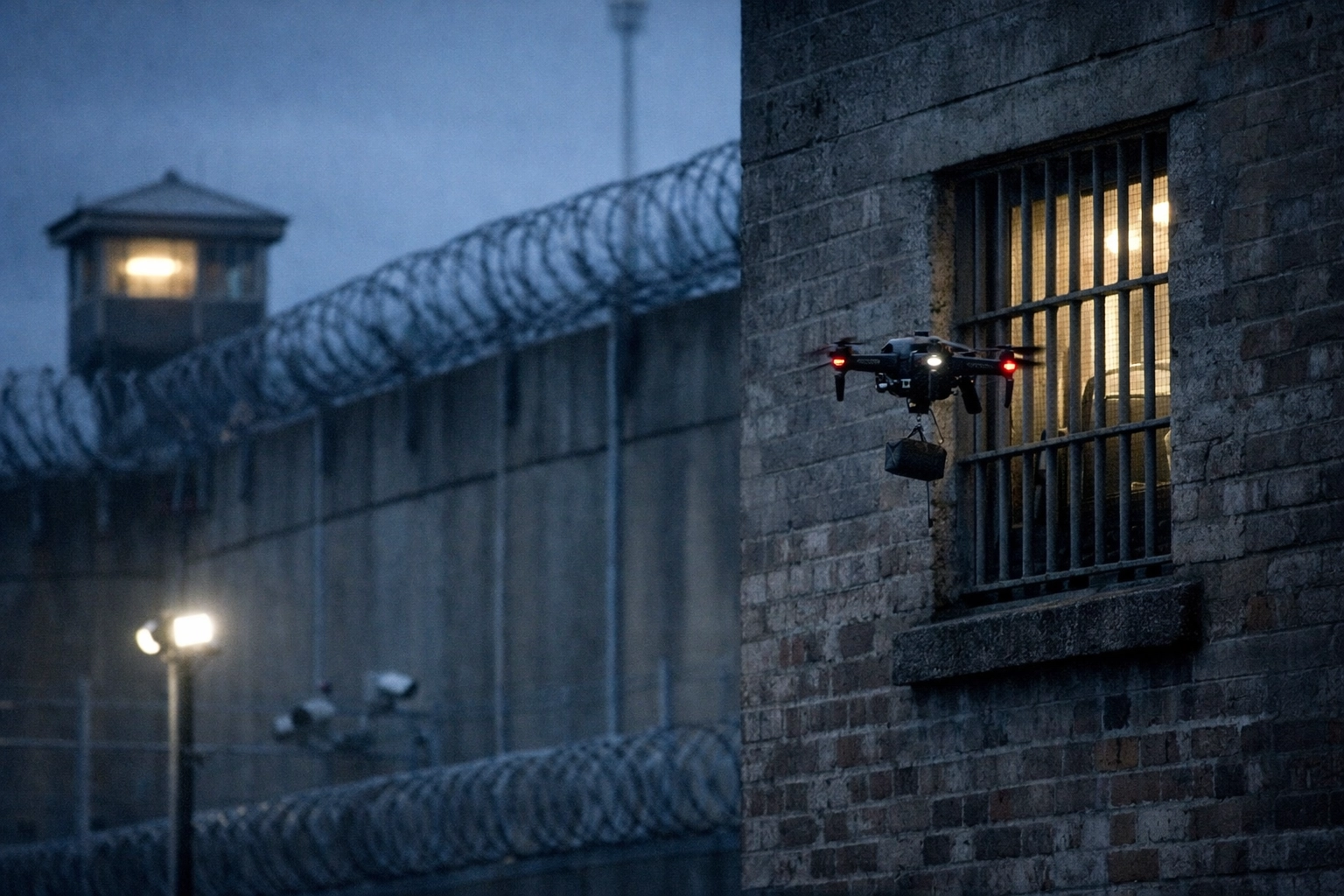
If you have ever stood near a prison wall late at night, you might have expected to hear nothing but the wind or the occasional heavy footstep of a patrol. But lately, in the UK, the soundtrack of the night has changed. There is a new, mechanical hum in the air. It is the sound of a quadcopter hovering just outside a cell window. This isn't a hobbyist taking photos of the landscape; it’s a delivery driver for an illicit market. The drug drone network has become one of the most sophisticated and persistent challenges facing the British justice system in 2026.
At NowPWR, we cover independent news uk and the untold stories that often slip through the cracks of the 24-hour news cycle. The reality of drone smuggling into our prisons is a story of high-tech ingenuity clashing with an ageing infrastructure, and the stakes could hardly be higher.
The High-Tech Invasion of Our Prisons
The evolution of prison smuggling has moved at a breakneck pace. Just a decade ago, contraband was usually "thrown over the wall" in a tennis ball or hidden inside a visitor’s clothing. These methods were risky and limited by the physical strength of the thrower or the scrutiny of a search. Fast forward to April 2026, and the game has completely changed. We are now seeing organised networks using industrial-grade drones that can carry payloads of several kilograms with pinpoint GPS accuracy.
These aren't your average toy shop drones. The criminal networks behind these operations are investing in heavy-lift technology. We are talking about machines that can travel at speeds of over 70 miles per hour, making them incredibly difficult to intercept. They are often modified with "drop mechanisms" operated remotely, allowing a pilot miles away to hover over a specific yard or even a specific window and release a package.
In recent months, reports from across the UK have highlighted a surge in these incidents. Security teams say the pilots are becoming more daring. They use thermal imaging to spot guards on the ground and night-vision cameras to navigate in total darkness. By the time a guard hears the hum, the drone has often already released its cargo and is halfway back to its launch point. This technological gap has created a real "wild west" in the skies above our correctional facilities.
The problem isn't just the frequency of the flights, but the intelligence behind them. Many pilots are former inmates who know exactly where the blind spots in the CCTV are. They know the routines of the shifts and the layout of the wings. It’s a specialised skill set that is being bought and paid for by organised crime groups who see the prison walls not as a barrier, but as a captive market with high profit margins.
Breaking Down the Smuggling Supply Chain
To understand why this is happening, you have to look at what is being delivered. It’s not just about drugs, although narcotics are the primary driver. A single drone delivery can contain a cocktail of items: synthetic cannabinoids (often known as Spice), cocaine, ketamine, and even prescription medication. The value of these substances inside a prison can be five to ten times higher than their street value.
But the "untold stories" of these networks often revolve around the other items in the payload. High-end smartphones are a massive commodity. In a world where communication is restricted, a smartphone is a lifeline to the outside world: and a tool for further crime. These phones allow inmates to continue running their criminal enterprises, coordinate more drone drops, and even intimidate witnesses or victims from behind bars.
The delivery system is surprisingly organised. A drop is rarely a random event. It is usually the result of a coordinated plan involving a "customer" inside and a "supplier" outside. Using illicit phones already in the system, inmates can send their exact coordinates to a pilot. We’ve seen reports of packages being wrapped in dark tape and grass-coloured materials to ensure that if a drop misses its mark slightly, it remains hidden from the guards until an inmate can retrieve it during exercise hours.
What is truly concerning is the sheer volume that these networks can move. One drone flight can carry enough synthetic drugs to supply an entire wing for weeks. This influx of substances doesn't just lead to addiction; it fuels violence, debt, and a breakdown in order. When a shipment gets intercepted, the "debt" doesn't disappear. It often leads to serious assaults or self-harm incidents as inmates struggle to pay back the organised crime groups that funded the flight. It’s a cycle of misery that starts with a simple drone flight and ends with a much more dangerous environment for both staff and prisoners.
The Battle for Secure Skies
So, how do we stop a threat that flies hundreds of feet above the ground? The UK government and prison services have been locked in a cat-and-mouse game with these operators for years, and the results are mixed. One of the biggest hurdles is the legal and technical complexity of "taking down" a drone.
In the UK, drones are considered aircraft. Under current aviation laws, shooting them down or using certain types of electronic jamming can be incredibly complicated. There are concerns about interfering with legitimate air traffic or causing a heavy drone to fall and injure someone on the ground. This has left prison governors in a difficult position. They can see the threat, they can hear the threat, but their hands are often tied when it comes to active interception.
However, we are seeing some progress. Several UK prisons have started trialling advanced "geofencing" and detection systems. These systems use a combination of radar, radio frequency sensors, and acoustic sensors to create a virtual shield around the prison. When an unauthorised drone enters the "no-fly zone," the system alerts security immediately. Some of the more advanced tech can even track the signal back to the pilot’s controller, allowing police to catch the operators in the act.
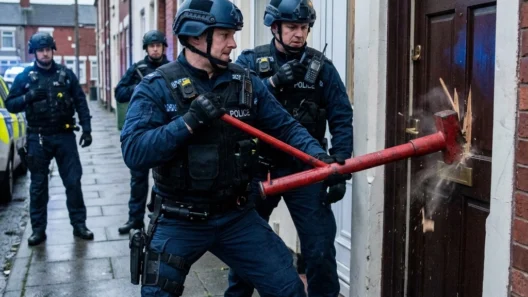
The police have also stepped up their game. Dedicated "prison crime units" are now working closely with local forces to patrol the perimeter of high-risk jails. They are looking for the cars parked in quiet lanes and the individuals standing in fields with VR goggles on. In early 2026, a series of raids across the North of England led to the dismantling of a major drone cell that was responsible for dozens of flights. By extracting data from seized drones, investigators were able to see the flight paths, the launch sites, and even the "test flights" the pilots had conducted in public parks.
Despite these wins, the network remains resilient. As soon as one pilot is arrested, another is recruited. The profit is simply too high for the gangs to walk away. The future of prison security will likely depend on a combination of better physical barriers: like more extensive netting over exercise yards: and a more aggressive electronic warfare approach to keep the skies clear.
As an independent news uk outlet, it is vital to keep a spotlight on these issues. The drug drone network is a symptom of a larger struggle to maintain control and rehabilitation within our prisons. While the technology continues to advance, the human cost remains the same. The battle for the skies is far from over, and it is one of the untold stories that deserves sustained attention.
The integrity of our prison system relies on the ability to keep the outside world out and the inside world focused on reform. Until authorities can effectively "ground" these networks, the mechanical hum of the drone will remain a stark reminder of how easily the walls can be bypassed. Maintaining a secure environment requires constant vigilance and a willingness to adapt as quickly as the criminals do. For now, the authorities are playing catch-up, but the shift towards better detection and legal reform offers a measure of hope that the skies above our prisons might one day be quiet again.