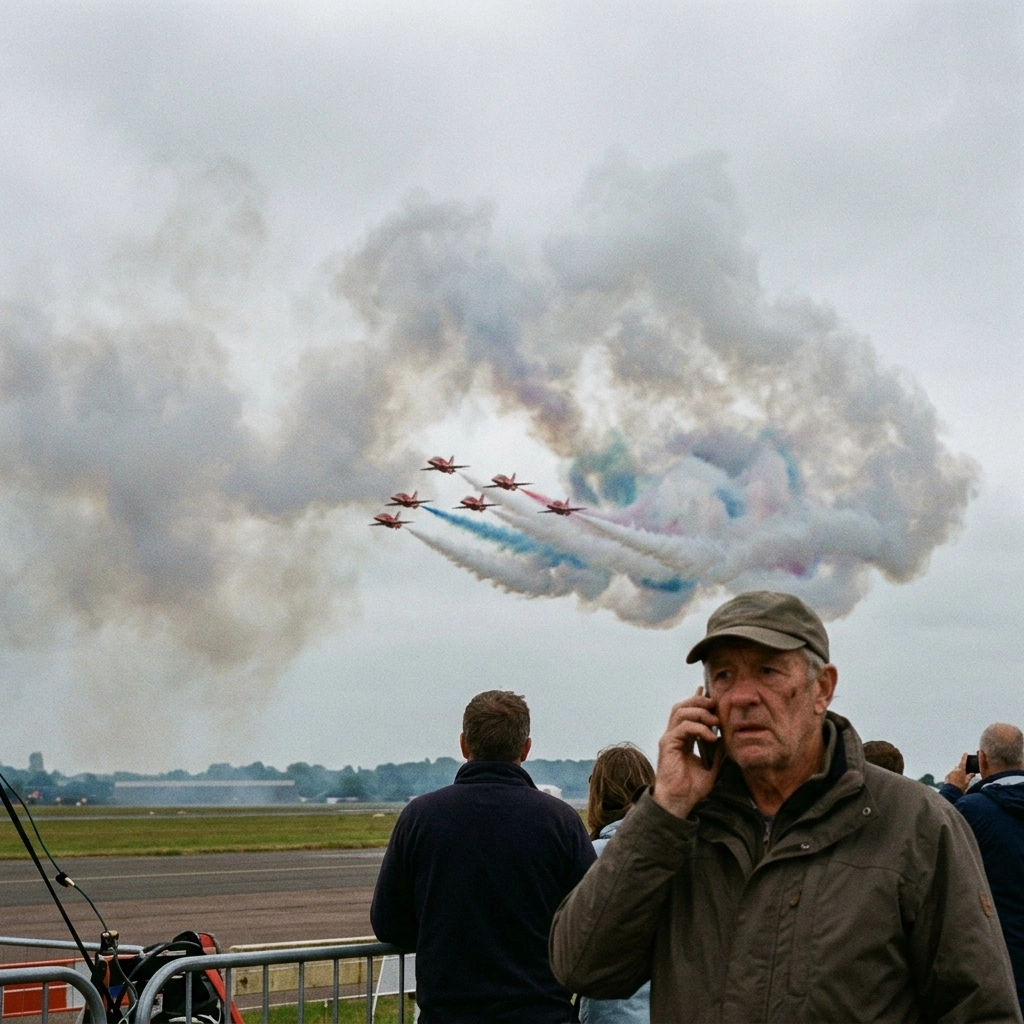
For decades, the Red Arrows have been the ultimate symbol of British precision, pride, and peak performance. When those Hawk T1 jets scream across the sky, painting the clouds with vibrant trails of red, white, and blue, it’s hard not to feel a swell of national nostalgia. They represent the best of us: discipline, teamwork, and nerves of steel. But as any seasoned pilot will tell you, the higher you fly, the harder the fall. Recently, the pristine image of the Royal Air Force’s aerobatic team has been grounded by something far more corrosive than engine wear and tear.
We’re talking about a culture so steeped in toxicity that it’s managed to do what no rival air force could: cripple the team’s operational capability. This isn’t just a few rogue pilots behaving badly at an after-party; this is a systemic failure that has left the "best of the best" looking like a relic of a bygone, far more prejudiced era. At NowPWR, we believe in bringing you the untold stories that the glossy brochures tend to leave out. As part of our commitment to independent news uk, we’re peeling back the canopy to see what’s actually happening inside the cockpit of the nation’s favourite flight crew.
The reality, it turns out, is less 'Top Gun' and more 'Lord of the Flies' with better uniforms. When we talk about allegations of this magnitude, we aren't just looking at office politics. We are looking at a deep-seated crisis of character that has forced the RAF to look itself in the mirror and ask: how did we let it get this bad?
The Glossy Exterior and the G-Force Grime
To understand the weight of the current scandal, you have to understand the prestige of the Red Arrows. Joining the team isn't just about being a good pilot; it’s about being the absolute elite. You need at least 1,500 flying hours and a 'best-in-class' reputation just to get an interview. Once you’re in, you’re a rockstar. You’re the face of the UK at international trade shows and royal celebrations. But that level of prestige often breeds a dangerous sense of invincibility. For too long, it seems, the Red Arrows operated as a "state within a state," where the normal rules of conduct didn't seem to apply.
An internal inquiry, sparked by whistleblowers who had finally had enough, blew the doors off the hangar. Air Chief Marshal Mike Wigston ordered the investigation, and what came back was a 250-hour testimony of horrors. We’re talking about at least 13 categories of misconduct. This included everything from standard bullying to sexual harassment, assault, and a total "misunderstanding of consent." For an organisation that prides itself on precision, the lack of boundaries was staggering.
The inquiry revealed that the culture wasn't just "laddish": it was predatory. Female recruits, who should have been celebrated for reaching the pinnacle of their careers, found themselves entering a lions' den. Insiders reported that young women were referred to as "fresh meat" by senior members of the team. Imagine working your entire life to fly at Mach 1, only to be reduced to a derogatory nickname by the people supposed to be your wingmen. This is the kind of inside story that shows how far the gap is between public perception and private reality.
The "Fresh Meat" Culture and WhatsApp Warfare
The details of the toxicity are particularly grim when you look at how the harassment was digitised. In an era where most of us use WhatsApp to organise Sunday roasts or moan about the weather, certain members of the Red Arrows were using it as a tool for intimidation. Female recruits reported being "bombarded" with messages from senior, predominantly male, leadership figures. These weren't professional updates about flight patterns; they were unwanted advances, pestering, and in some cases, outright harassment.
One insider characterised the environment as being run by "misogynistic white male blokes" who felt they were untouchable because of the badges on their chests. This sense of entitlement didn't just stay in the group chats. It bled into the daily operations of the team. There were reports of indecent exposure, victimisation, and a deliberate attempt to isolate anyone who dared to speak up. The message was clear: if you aren't part of the "club," you’re the target.
Perhaps the most damning part of the untold stories coming out of the investigation is the way the hierarchy allegedly handled complaints. Instead of protecting the victims, the system seemed geared toward protecting the brand. Victims were reportedly told that if they made a fuss, they would be the ones sent home. They were warned that their careers in the RAF would be over before they’d even truly begun. It’s a classic case of institutional gaslighting, where the prestige of the unit is used as a weapon against the very people who make it work. When the people at the top are more worried about the colour of the smoke than the conduct of the crew, you know the engine has stalled.
A Wingman Down: The Operational Implosion
While the cultural rot is a moral disaster, it quickly became an operational one too. You can’t run an elite aerobatic team when your pilots are resigning in disgust or being suspended for inappropriate affairs. The Red Arrows are famous for their "Diamond Nine" formation: nine jets flying in perfect, synchronised harmony. But in 2022, the team was forced to fly as a seven-ship formation. Why? Because they literally didn't have enough people left who weren't under investigation or hadn't quit in protest.
Squadron Leader Nick Critchell, a highly respected pilot, resigned in disgust over the toxic culture during pre-season training. When a senior officer walks away from a dream job like that, it’s a signal fire that something is seriously wrong. Then you had Flight Lieutenant Will Cambridge, who was suspended following allegations of an inappropriate affair with a junior trainee. Another pilot left for "personal reasons." Suddenly, the UK's premier display team was looking like a skeleton crew.
The timing couldn't have been worse. This was the year of the Queen's Platinum Jubilee. The Red Arrows were supposed to be the highlight of the flypast. Instead, they were scrambling to draft in emergency reserves just to put a respectable number of planes in the air. They had to cancel signature manoeuvres because they hadn't had the time or the stability to train for them. The world saw a seven-plane formation and wondered where the other two had gone. Now we know: they were grounded by a culture that prioritised ego over excellence.
The RAF has since claimed a "zero-tolerance approach" to this kind of behaviour. They’ve promised change, and they’ve pointed to the fact that they actually carried out the investigation as proof of their commitment to improvement. But for many, it feels like too little, too late. The damage to the reputation of the Red Arrows isn't something that can be buffed out with a bit of polish. It requires a total overhaul of how elite units are managed.
As we look at these untold stories, it’s clear that the Red Arrows scandal is a microcosm of a larger issue within high-performance institutions. The pressure to be perfect and the status that comes with it often creates a vacuum where accountability disappears. Our role as an independent news uk outlet is to ensure that the smoke clears long enough for everyone to see the truth. The Red Arrows may fly again with nine jets, and the smoke trails might look as beautiful as ever, but the real test will be whether the people inside those cockpits feel safe, respected, and truly part of a team.
The investigation has concluded, and several personnel have been moved or disciplined, but the conversation is far from over. True excellence isn't just about what you can do in the air; it’s about how you treat people on the ground. Until the Red Arrows can prove they’ve cleared the air of more than just jet exhaust, that iconic red suit will carry a bit of a stain.
The Royal Air Force now faces the monumental task of rebuilding trust, not just with the public, but with its own service members. It serves as a stark reminder that no organisation, no matter how storied or beloved, is above the basic requirements of human decency and professional conduct. The smoke might be red, white, and blue, but the reality behind it has been a distinct shade of grey for far too long.