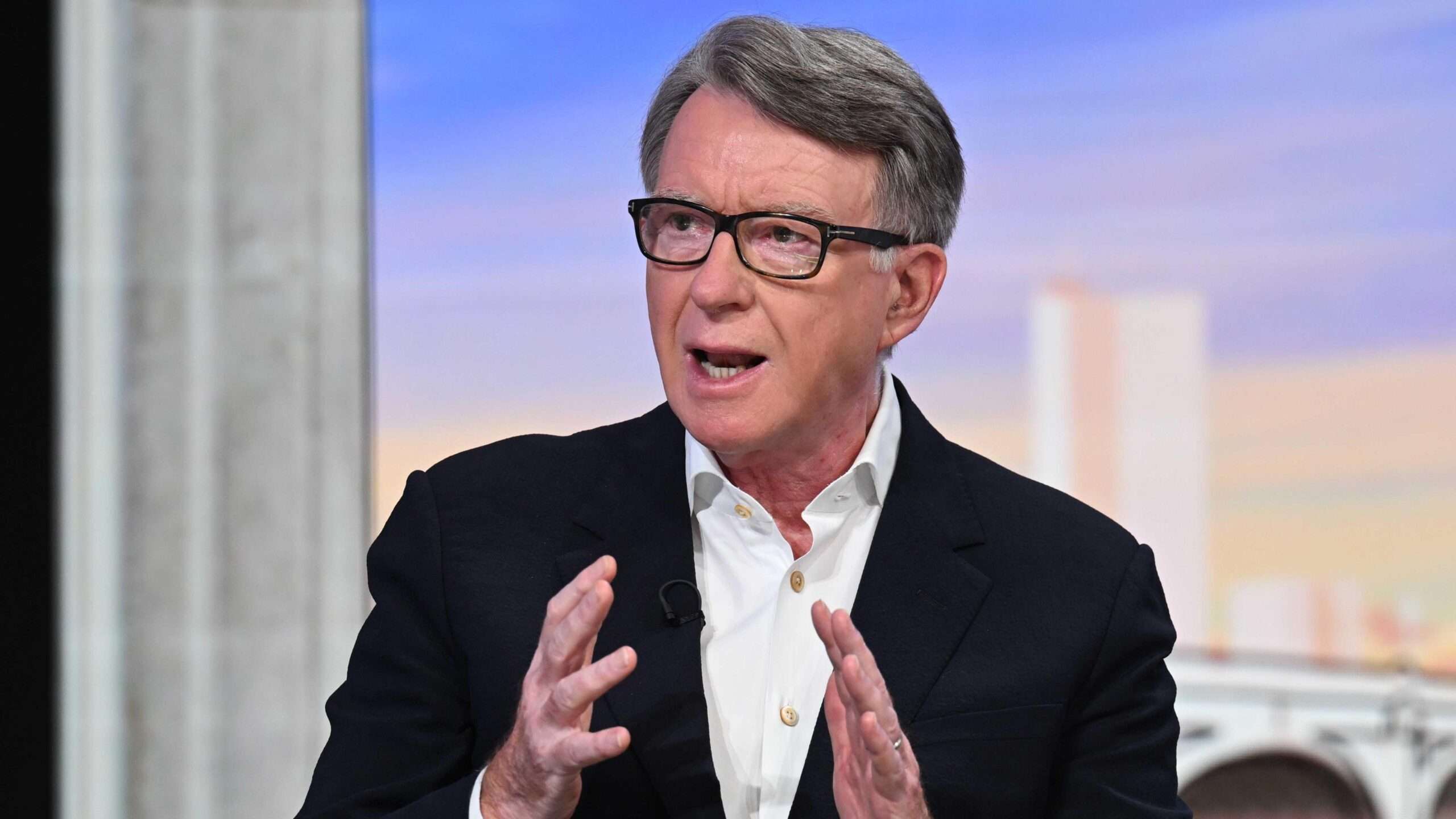
The diplomatic tenure of Lord Peter Mandelson as the United Kingdom’s Ambassador to the United States lasted exactly seven months, yet the reverberations of his appointment continue to challenge the integrity of the British Foreign Office in March 2026. Appointed by Prime Minister Keir Starmer in February 2025, Mandelson’s arrival in Washington D.C. was initially framed as a masterstroke of "heavyweight diplomacy" intended to bridge the gap between a burgeoning Labour government and a volatile American political landscape. However, internal Whitehall documents and recent investigative disclosures have painted a far more complex picture of undisclosed financial interests and overlapping loyalties that spanned from Moscow to Silicon Valley.
The controversy centers on a series of professional relationships and board positions that critics argue should have disqualified the former Cabinet minister from such a sensitive role. While the British public was told that Mandelson had fully divested from his private interests via his consultancy firm, Global Counsel, evidence suggests that the "firewalls" established were porous at best. The subsequent fallout has triggered a wider investigation into the vetting processes managed by the Cabinet Office and the scrutiny applied to political appointees occupying high-profile diplomatic posts.
As the UK navigates a precarious post-Brexit geopolitical environment, the Mandelson affair serves as a case study in the risks of "revolving door" politics. The core of the issue lies not just in the presence of these ties, but in the failure of the Prime Minister’s inner circle to acknowledge the inherent security risks they posed. What follows is an analytical breakdown of the three primary pillars of conflict that ultimately led to Mandelson’s quiet exit from the British Embassy in September 2025.
The Russian Nexus: Sistema and Undisclosed Defence Ties
The most significant area of concern involves Lord Mandelson’s historical and financial links to the Russian conglomerate AFK Sistema. Between 2017 and 2022, Mandelson served as an independent director on the board of Sistema, a massive investment firm with deep ties to the Russian defence and telecommunications sectors.
While Mandelson officially stepped down from the board following the escalation of the conflict in Ukraine, investigative reports in early 2026 suggest that the "consultative relationship" between his firm, Global Counsel, and entities linked to Sistema’s founder, Vladimir Yevtushenkov, persisted long after the formal resignation.
Yevtushenkov, a billionaire tycoon with significant influence in the Kremlin, was previously sanctioned by the UK government, though these sanctions were later modified under complex legal circumstances. The fact that a sitting British Ambassador to the United States had such a recent history of proximity to a Russian defence-adjacent giant caused immediate friction within the US State Department.
Intelligence briefings indicate that American officials expressed "quiet alarm" regarding Mandelson’s access to high-level NATO intelligence while his firm was simultaneously providing "strategic advice" to clients with interests in the Russian energy sector.
Furthermore, the lack of transparency regarding the disposal of Mandelson’s shareholdings in entities managed by Sistema has remained a focal point for the House of Commons Foreign Affairs Committee. It is alleged that the vetting process, overseen by civil servants under pressure from Number 10, failed to account for the indirect financial benefits Mandelson might still accrue through blind trusts tied to the conglomerate’s performance. This connection to a hostile state’s industrial base remains the most damaging aspect of the ambassadorial web, suggesting a fundamental breach of national security protocols.
The Silicon Valley Shadow: Palantir and Global Counsel
Parallel to the Russian connections, Mandelson’s role in facilitating the expansion of Palantir Technologies in the UK and US has come under renewed scrutiny. Palantir, the data analytics giant founded by billionaire Peter Thiel, has long been a controversial figure in British public life due to its extensive contracts with the National Health Service (NHS) and the Ministry of Defence. Global Counsel, the firm co-founded by Mandelson, was instrumental in Palantir’s aggressive lobbying strategy within Westminster between 2020 and 2024.
When Mandelson was appointed Ambassador in 2025, he was tasked with negotiating a new bilateral data-sharing agreement between London and Washington. This agreement held significant implications for Palantir’s ability to integrate its proprietary "Foundry" software into the core of the UK’s national security infrastructure. The conflict of interest was dual-pronged: Mandelson was acting as the chief representative for the UK government while his firm, Global Counsel, stood to gain from the success of one of its most prominent clients in the same technological space.
Internal emails leaked in early 2026 suggest that Mandelson participated in at least three "informal" meetings with Palantir executives at the British Embassy in Washington during his first 100 days in office. These meetings were not officially recorded in the diplomatic diary, leading to accusations that the Ambassador was operating as a "de facto lobbyist" for Silicon Valley interests. The overlap between private profit and public policy in this instance highlights the vulnerability of high-level diplomatic posts to corporate capture, particularly in the sectors of artificial intelligence and mass data surveillance.
The Starmer Doctrine: Vetting Failures and National Security
The third pillar of the crisis focuses on the political decision-making within the Starmer administration. The appointment of Lord Mandelson was a departure from the traditional practice of selecting career diplomats for the Washington post. Prime Minister Keir Starmer reportedly bypassed the standard recommendations of the Foreign, Commonwealth & Development Office (FCDO) board, opting instead for a political "fixer" who could navigate the complexities of a divided American Congress. This decision is now being characterized as a significant error in judgment that prioritized political expediency over institutional security.
The vetting process for Mandelson was unusually rapid, taking less than three weeks to complete. Reports indicate that the Advisory Committee on Business Appointments (ACOBA) was presented with a "sanitised" version of Mandelson’s client list, which omitted several high-risk entities in the Middle East and Eastern Europe.
This failure to perform due diligence has raised questions about the independence of the UK’s ethics watchdogs and the degree to which they can be influenced by the executive branch. The Starmer administration’s defence: that Mandelson’s "unique experience" outweighed the potential for conflict: has largely crumbled in the face of the 2026 disclosures.
The fallout has not been limited to Westminster. In Washington, the "Mandelson affair" has provided ammunition for political factions skeptical of the UK’s commitment to a unified Western front against foreign interference. The perception that the British Ambassador was entangled in a web of conflicting loyalties has cooled the "special relationship," leading to delays in key trade and security summits scheduled for the summer of 2026. As the investigation continues, the focus has shifted from Mandelson himself to the systemic failures that allowed a figure with such extensive private interests to represent the Crown in the world’s most powerful capital.
The Mandelson case serves as a definitive turning point for the UK’s diplomatic strategy. It has prompted a wholesale review of how political peers are vetted for international roles and whether the current rules governing consultancy firms like Global Counsel are fit for the modern age. While Mandelson has returned to the backbenches of the House of Lords, the questions surrounding his seven months in Washington remain unanswered, leaving a legacy of distrust that will take years for the British diplomatic service to repair. The story is a stark reminder that in the high-stakes world of international relations, the perception of a conflict is often as damaging as the conflict itself.