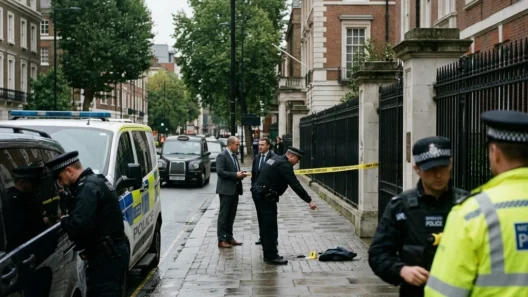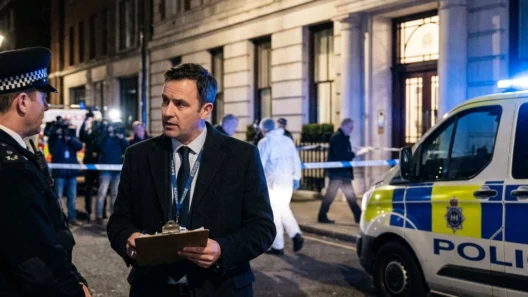
For many people in the UK, the idea of a crime being "solved" usually involves a dramatic police chase, a forensic breakthrough, or a tense courtroom finale. However, the reality of modern law enforcement is becoming increasingly disconnected from this cinematic image. In fact, a quiet crisis has been brewing for years, leaving millions of victims without justice. While violent crime often dominates the headlines, there is a burgeoning fraud scandal that is currently sweeping through the nation, highlighting a systemic failure where the vast majority of crimes simply go unsolved.
As we look at the state of independent news uk, it is becoming clear that the traditional methods of policing are struggling to keep up with the evolution of criminal activity. Fraud is no longer just a series of isolated incidents involving suspicious phone calls; it has become a sophisticated, high-stakes industry that operates across borders and through digital interfaces. Yet, despite being the most common type of crime in the country, it remains one of the least likely to lead to a conviction. This disparity is creating a landscape of untold stories, where victims are left to pick up the pieces of their lives while the perpetrators remain entirely untouched.
The sheer scale of the problem is staggering. When we look at the data surrounding property crimes and financial deception, the numbers paint a bleak picture. In some regions, over 90% of burglaries go unsolved, but fraud presents an even more complex challenge. Because fraud is often perceived as a "victimless" or "non-violent" crime, it frequently slips down the priority list for overstretched local constabularies. This lack of resource allocation has created a "fraud gap," where the sophistication of the criminals far outpaces the technical capabilities of the investigators assigned to catch them.
The Digital Shift and the Resource Gap
The fundamental nature of crime in the UK has shifted. While physical thefts like shoplifting or car break-ins still occur, the most lucrative and frequent offences are now happening behind a screen. This digital transition has caught many investigative bodies off guard. Traditionally, policing has been a local endeavour. If a crime happens in a specific neighbourhood, the local station handles it. However, a fraudster sitting in a flat in London can target someone in Edinburgh, Manchester, or even overseas. This borderless nature of financial crime makes the traditional "bobby on the beat" model almost entirely obsolete for these types of investigations.
The resource gap is not just about the number of officers; it is about the specific skills required to track digital footprints and complex financial trails. We have seen cases where massive VAT fraud schemes, involving tens of millions of pounds, take years to resolve simply because of the sheer volume of data involved. While some major successes do occur: such as the high-profile prosecution of individuals involved in multi-million pound "offset" VAT scams: these are the exceptions rather than the rule. For the average person who loses their life savings to a sophisticated phishing scam or an investment fraud, the chances of seeing that money again, or seeing the criminal in handcuffs, are vanishingly small.
This lack of technical expertise at the local level means that many cases are closed before they even truly begin. Reports are filed, reference numbers are given, and then the trail goes cold. This isn't necessarily due to a lack of will from individual officers, but rather a systemic failure to equip them with the tools needed for modern investigative work. When independent news uk outlets dig into these untold stories, a common theme emerges: a feeling of abandonment by the state. Victims are often told that their case is "too complex" or that there is "insufficient evidence," which is often code for the fact that the department lacks the man-hours or the software to follow the digital breadcrumbs.
The Hidden Cost of Unsolved Financial Crime
The impact of this fraud scandal extends far beyond the immediate financial loss. There is a profound psychological toll on victims who feel that their security has been breached. When a crime goes unsolved, it erodes public trust in the legal system. If people believe that criminals can act with impunity as long as they do it through a computer, the very foundation of the social contract begins to weaken. We are seeing a rise in "fraud fatigue," where citizens become cynical about the point of reporting crimes at all, leading to an even greater underreporting of the true scale of the problem.
Furthermore, the economic impact is massive. Billions of pounds are drained from the UK economy every year through fraudulent activities. This isn't just "bank money": it is money that would have been spent in local businesses, invested in homes, or used to fund retirements. When large-scale fraud goes unpunished, it also creates an environment where organised crime can thrive. The proceeds from VAT fraud or identity theft are rarely kept in a vacuum; they often fund more dangerous activities, including human trafficking and the drug trade. By failing to address the "low-level" fraud epidemic, the system is inadvertently subsidising much larger criminal enterprises.
The untold stories of those affected by these shortcomings often reveal a disturbing pattern. Older generations, who may be less tech-savvy, are frequently targeted by increasingly convincing scams. When these individuals turn to the authorities, they are often met with a bureaucratic wall. The complexity of the financial system, combined with the anonymity of the internet, provides a perfect shield for scammers. Without a significant shift in how we prioritise financial investigations, we are essentially telling criminals that the UK is open for business.
A New Approach to Modern Justice
Fixing a system that is this far behind requires more than just a small increase in the police budget. It requires a complete rethink of what policing looks like in the 21st century. One of the most discussed solutions is the centralisation of fraud investigations. Instead of every local force trying to maintain its own small, underfunded cyber-unit, a national body with high-level technical expertise could take the lead. This would allow for better coordination and the ability to spot patterns that are currently being missed because the data is siloed in different regional databases.
Moreover, there needs to be a stronger partnership between the public sector and the financial institutions themselves. Banks and tech companies hold the keys to much of the data needed to solve these crimes. While privacy is paramount, the current barriers to sharing information about suspected fraudulent accounts mean that criminals can move money through multiple "mule" accounts faster than any investigator can track them. Streamlining these processes is essential if we want to turn the tide on unsolved crimes.
Education also plays a vital role. While we cannot expect every citizen to be a cybersecurity expert, raising awareness about the tactics used by fraudsters can prevent many of these crimes from occurring in the first place. However, prevention should not be a substitute for justice. The message from the legal system must be clear: crime, whether committed in an alleyway or on an encrypted app, will be pursued. The current scandal of unsolved crimes is a wake-up call. If the UK is to remain a global financial hub and a safe place to live, the gap between the evolution of crime and the evolution of the law must be closed.
In conclusion, the current state of fraud investigation in the UK reveals a significant disconnect between modern criminal reality and legacy law enforcement structures. The high volume of unsolved crimes is not merely a statistical anomaly but a reflection of a resource-strained system struggling to adapt to a digital world. Addressing this issue requires a coordinated national strategy, improved technical training, and a shift in how financial crimes are prioritised within the justice system. Without these changes, the silent epidemic of fraud will continue to undermine public confidence and economic stability.